Configure Data Marketplace: Overview
What can you configure?
- You can define who has access to Data Marketplace. For information, go to Data Marketplace permissions.
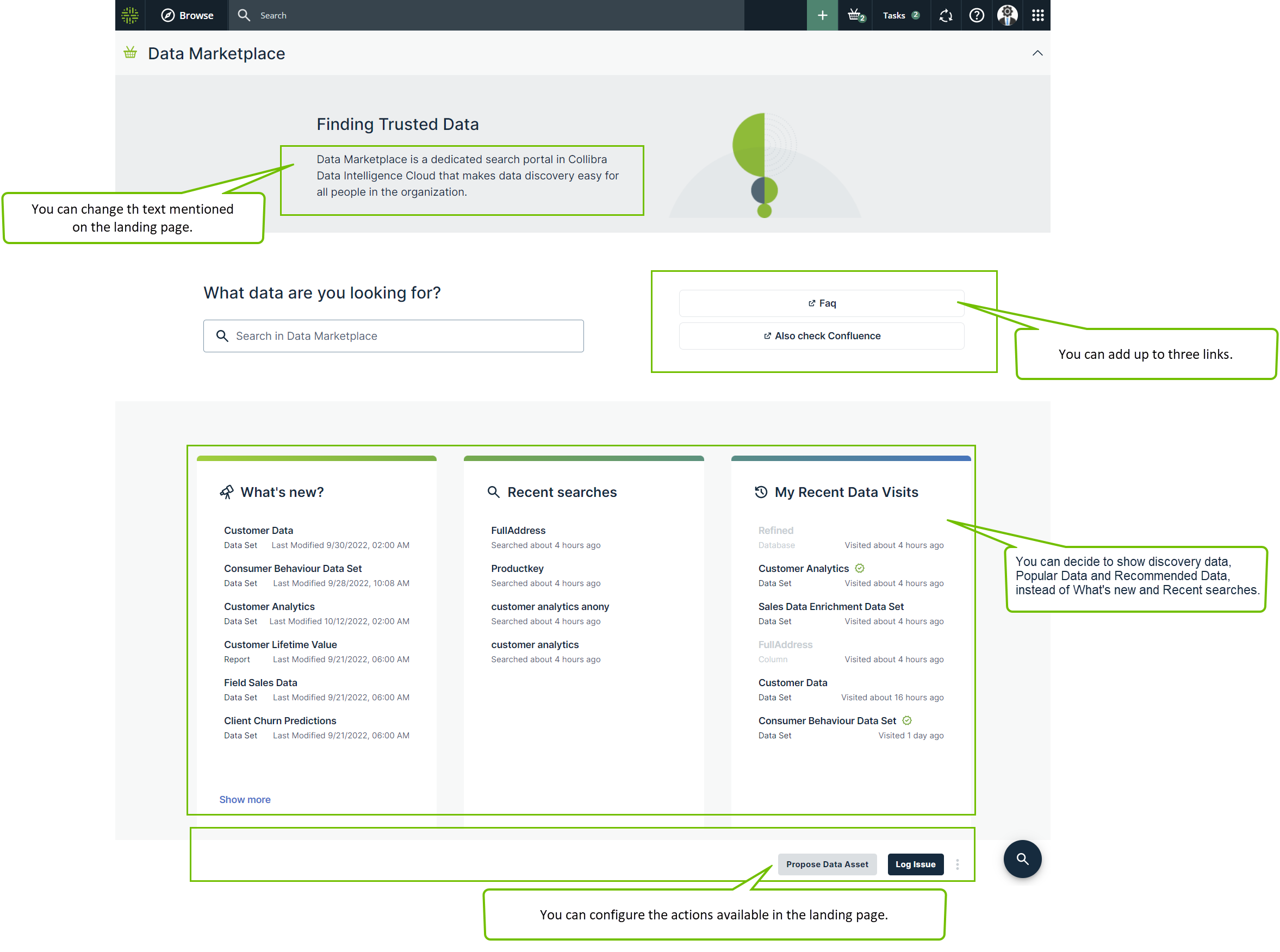
- In the Data Marketplace landing page, you can configure the quick links, introduction text, actions, and define whether discovery data must be available.
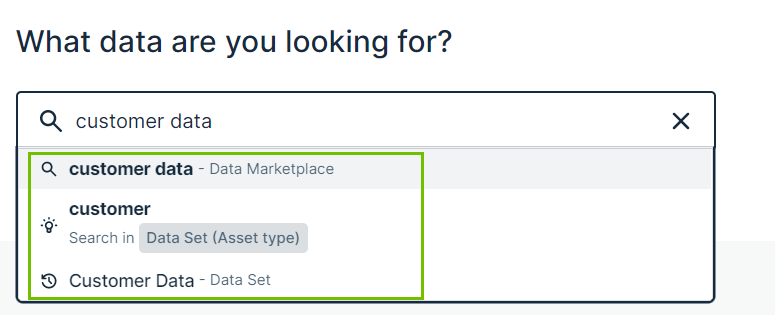
- You can define whether search suggestions are provided once people starts searching for data.
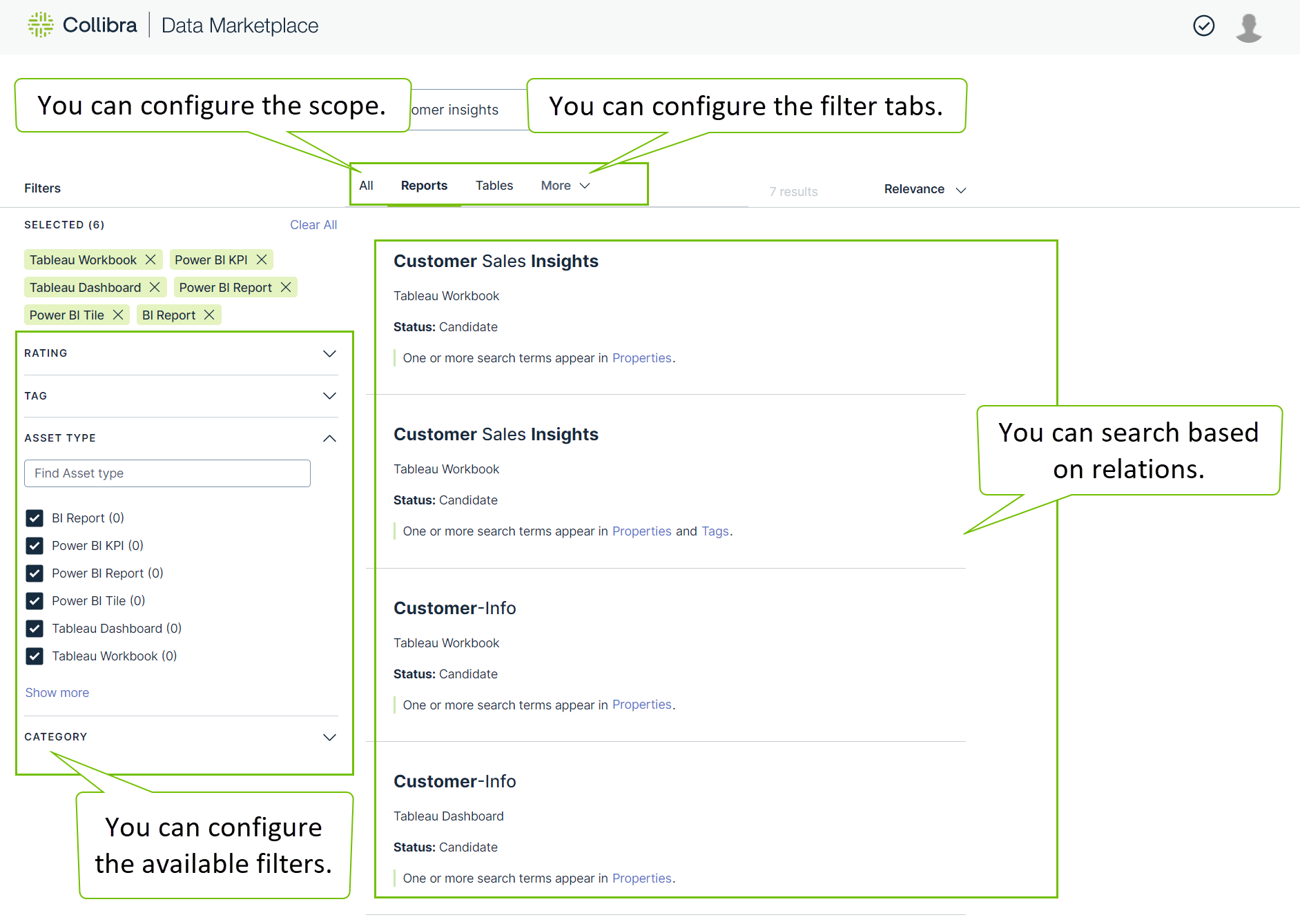
- You can configure the scope, filter tabs, filters and search based on relations.
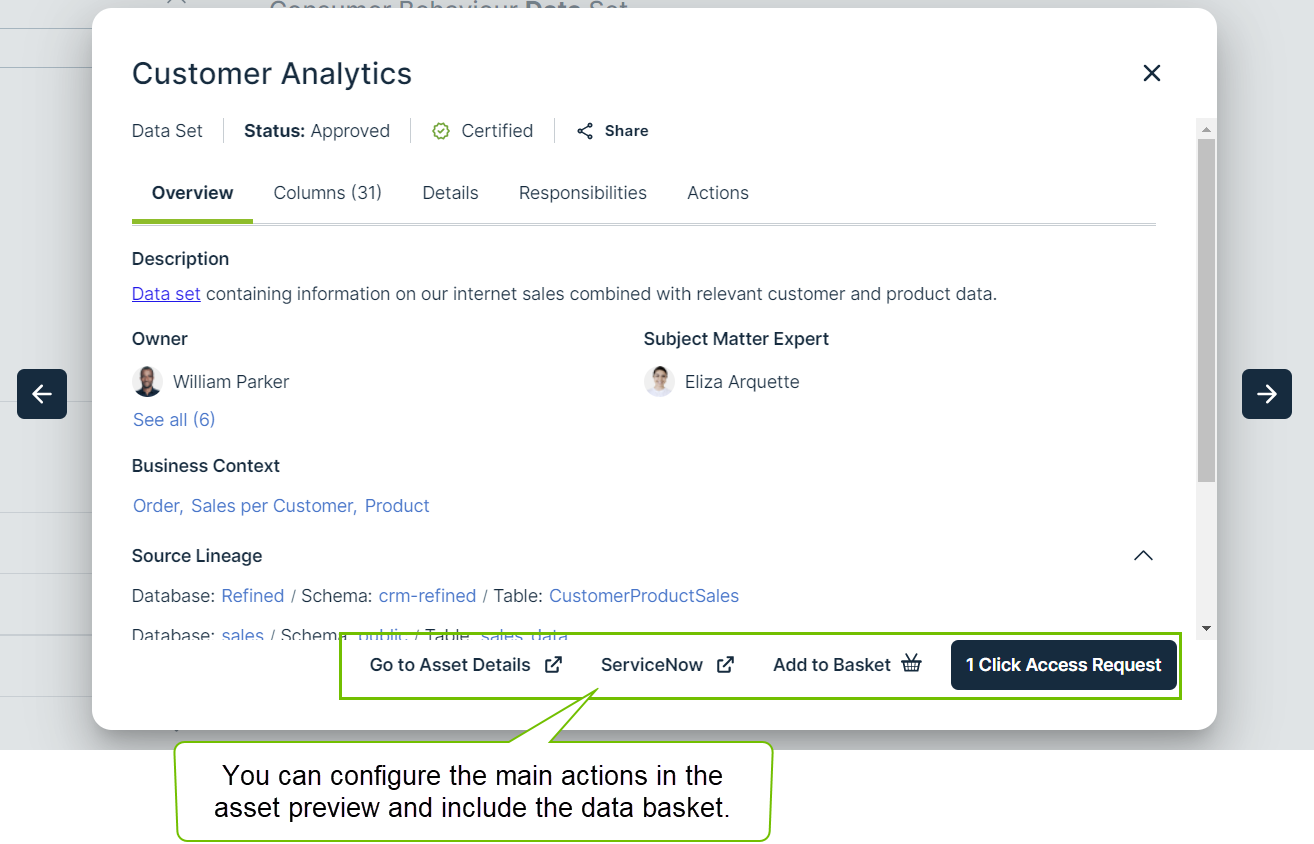
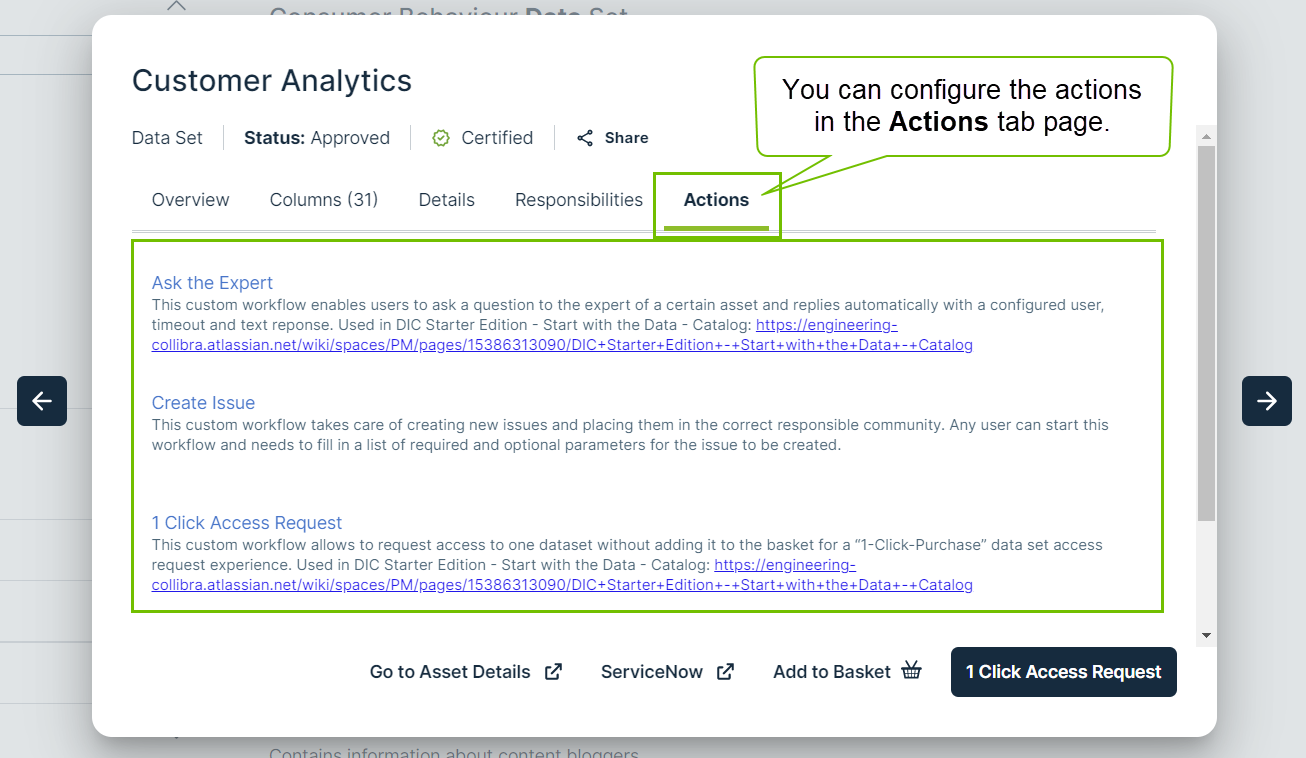
- You can configure the actions available in the asset preview and define whether data consumers can add assets to the data basket from Data Marketplace.
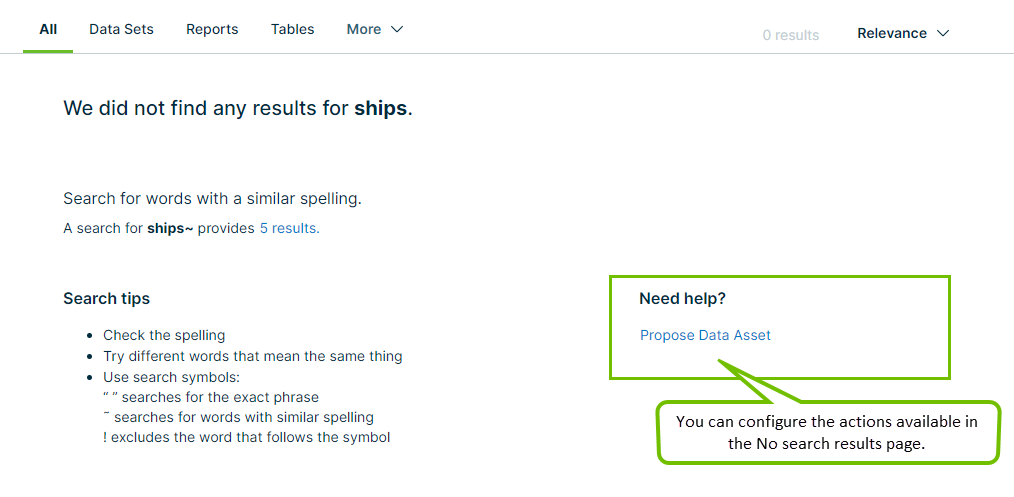
- You can configure the actions available in the No search results page.
How do you configure Data Marketplace?
| Step | Description | |
|---|---|---|
| 1 | Optionally, change the Data Marketplace scope |
By default, Data Marketplace finds assets of specific asset types, with any status, anywhere in your organizations. |
| 2 | Optionally, change the landing page. | You can change the introduction text of Data Marketplace, add up to three quick links to the landing page, and show discovery data. |
| 3 | Optionally, make actions available in Data Marketplace |
By default, an asset can be shared with a colleague and can be opened in Collibra from the asset preview. |
| 4 | Optionally, enable the use of the data basket and search suggestions. | You can activate search suggestions and make the shopping basket available for the data consumers. |
| 5 | Optionally, configure the filters in Data Marketplace |
By default, all out-of-the-box filters that apply to the search results are available to data consumers. |
| 6 | Optionally, configure the filter tabs in Data Marketplace |
By default, all out-of-the-box filter tabs are available in the search results. |
| 7 | Optionally, optimize the search index |
The Collibra search index settings have an impact on the Data Marketplace experience. You can use these settings to further optimize the experience. Note that changing these settings has an impact on Collibra as a whole, not only on Data Marketplace. For information on the Data Marketplace-specific settings such as relation-based search, go to Enable Data Marketplace in your environment. |