After you have created and installed an Edge site, you can add an Edge capability to perform specific tasks on a data source. For example, you can register a data source by using a JDBC connection that belongs to an Edge capability.
Prerequisites
- You have a global role that has the System administration global permission.
- You have a global role that has the Manage connections and capabilities global permission, for example, Edge integration engineer.
- Optional: You have a global role that has the Register profiling information global permission.
- You have created and installed an Edge site.
- You have created a JDBC connection.
- Ensure the max cardinality of the asset attributes is at least 1.
Steps
The information in this section varies depending on the capability template that you select.
Capability template
|
Select a data source and the connection type if needed to see the related information. Currently, the information is shown for: |

Amazon Redshift

Azure SQL Data Warehouse
Azure SQL Server

Azure Synapse Analytics

DB2

Google BigQuery

Greenplum

HiveQL

IBM InfoSphere DataStage
Informatica Intelligent Cloud Services

Informatica PowerCenter

Matillion

Oracle

PostgreSQL

MySQL

Netezza

SAP Hana

Snowflake

Spark SQL

SQL Server
SQL Server Integration Services

Sybase

Teradata

Custom technical lineage
|
Which connection type do you use?
For best technical lineage results, use the JDBC connection to ingest JDBC sources when possible, instead of using the Shared Storage connection with SQL files. |
- Open an Edge site.
-
On the main menu, click
 , and then click
 Settings.
The Settings page opens. -
In the tab pane, click Edge.
The Sites tab opens and shows a table with an overview of the Edge sites. - In the table, click the name of the Edge site whose status is Healthy.
The Edge site page opens.
-
On the main menu, click
- In the Capabilities section, click Add capability.
The Add capability page is shown. - Enter the required information.
Field Description Required Capability
This section contains general information about the capability.
NameThe name of the Edge capability.
 Yes
Description
Yes
DescriptionThe description of the Edge capability.
 No
Capability template
No
Capability templateThe capability template. The value that you select in this field determines which sections appear on the page.
Select the following Edge capability:
S3 synchronization Yes
S3 service account
This section contains information about how to connect to Amazon S3. AWS ConnectionThe AWS connection to be used. Yes
IAM roleThe IAM role used by the AWS Glue crawlers. Yes
Encryption optionsSelect the type of encryption used to store the IAM role.
Default: To be encrypted by Edge management server.
Yes
Delete Glue database left after previous synchronization of the file systemSelect the checkbox if you want the capability to delete the Glue databases created by previous runs of the capability, before the capability starts the synchronization.
If you deselect this checkbox, the Glue databases created by previous runs are not removed. This can be useful for troubleshooting.By default, this checkbox is selected.
No
Save input metadataSelect the checkbox if you want to save the input metadata extracted from the data source in ZIP files. The files can be useful for troubleshooting.
Select this option only on request of Collibra Support. The Collibra Support team can provide the location of the saved ZIP files after the S3 synchronization.By default, this checkbox is not selected.
No
Field Description Required Capability
This section contains general information about the capability.
NameThe name of the Edge capability.
Yes
DescriptionThe description of the Edge capability.
No
Capability templateThe capability template. The value that you select in this field determines which sections appear on the page.
Select the following Edge capability:
Databricks Unity Catalog synchronization Yes
Databricks Connection
Databricks ConnectionThe Databricks connection to be used. Yes
Configuration
This section contains information on how to connect to Databricks Unity Catalog. Save input metadataIf you select this option the metadata extracted from the data source will be saved in a file that can be used for troubleshooting. Select this option only on request of Collibra Support. No
Exclude Schemas (will be removed soon)Comma-separated list of the schemas that you don't want to integrate.
Note The listed schemas will be excluded for all databases. We recommend using this field to list the schemas that are automatically generated in a database, such as information_schema and default, and which you don't want to integrate.
No
Filters and Domain Mapping (Beta)Text in JSON format to include or exclude databases and schemas, and to configure domain mappings.
This feature is intended for non-production use at this moment, as it is in Beta.- The text must be in JSON format and can contain an include and an exclude block.
- In the include block, you can specify the domain in which specific catalogs or schemas must be ingested. The format is:
“Catalog/Database > schema ”: “domain ID”. For example,"HR-db > address-schema": "30000000-0000-0000-0000-000000000000". - In the exclude block, you can specify the catalogs or schemas that you don't want to ingest. For example,
"* > test". - The exclude block has priority over the include block.
- If the include block is not present, we ingest all assets into the same domain as the System asset.
- If there is no explicit domain mapping for a schema, we use the domain specified for the database.
- You can use the keyword
defaultas a domain ID. In that case, the catalog or schema will be ingested in the same domain as the System asset. - A match with a database has priority over a match with a schema.
- The integration fails before the synchronization starts, if one or more domain IDs specified in the include block don't exist.
- The integration fails before the synchronization starts if a domain ID is left empty in the include block.
- You can use the ? and * wildcards in the catalog and schema names. If a catalog or schema matches multiple lines, the most detailed match is taken into account.
Example{"include": {"HR-db": "20000000-0000-0000-0000-000000000000",
"HR-db > address-schema": "30000000-0000-0000-0000-000000000000","Orders > fk*": "40000000-0000-0000-0000-000000000000",
"Orders > *": "50000000-0000-0000-0000-000000000000",
"* > profiling": "60000000-0000-0000-0000-000000000000",
"sales": "default"},"exclude": ["testDB",
" * > information_schema"]}In this example:
- Assets from the "HR-db" database will be ingested into the domain with ID "20000000-0000-0000-0000-000000000000". However, all assets from the "HR-db > address-schema" schema will be ingested into the domain with id "30000000-0000-0000-0000-000000000000".
- All assets from the "Orders” database with schemas starting with fk (fk*) will be ingested into the domain with ID "40000000-0000-0000-0000-000000000000", and all other assets from the "Orders” database will be ingested into the domain with ID "50000000-0000-0000-0000-000000000000".
- All assets from the "sales" database will be ingested in the same domain as the System asset.
- Assets from the "profiling" schema will be ingested into the domain with ID "60000000-0000-0000-0000-000000000000". However, the "profiling" schema in the database "Orders" will be ingested in the domain with ID "50000000-0000-0000-0000-000000000000" because a database match has priority over a schema match.
- All assets from the "testDB” database will be excluded.
- All assets from the “information_schema” schema in all databases will be excluded.
No
Extensible Properties Mapping (Beta) Databricks Unity Catalog allows you to add additional properties to Catalog, Schema, and Table objects.
"properties": {"property1": "string","property2": "string"},Via the Extensible Properties Mapping field, you can ingest the values from the properties field in Table objects into specific attributes in Table assets. You do this by adding the mapping between the Properties fields for Table objects in Databricks Unity Catalog and the attribute IDs to ingest the data in, using a JSON string.
Important- This feature is intended for non-production use at this moment, as it is in Beta.
- Currently, this feature is only available for Tables. Support for Catalog and Schema properties will be added soon.
- If you use this feature, make sure to set up all required characteristic assignments for the asset types.
- The text must be in JSON format and can contain a Tables block.
- In each block, you specify the property name and the attribute ID to which you want to map the value in the property. The format is:
"[property name]": "[attribute resource ID]". For example,"Description from source system": "00000000-0000-0000-0001-000500000074".
Example{"tables": {"delta.lastCommitTimestamp": "00000000-0000-0000-0000-000000003114"},}In this example:
- In the Table assets that we create, we'll add the delta.lastCommitTimestamp value in attribute 00000000-0000-0000-0000-000000003114.
Field Description Required Capability
This section contains general information about the capability.
NameThe name of the Edge capability.
Yes
DescriptionThe description of the Edge capability.
No
Capability templateThe capability template. The value that you select in this field determines which sections appear on the page.
Select the following Edge capability:
ADLS synchronization Yes
ADLS service account
This section contains the information on how to connect to Azure Data Lake Storage. Azure ConnectionThe ADLS connection to be used. Yes
Microsoft Purview Account NameThe name of your Microsoft Purview account.
If you enter a Purview account name, the integration uses Microsoft Purview for the integration. No
Save Input MetadataIf you select this option the metadata extracted from the data source will be saved in a file that can be used for troubleshooting. Select this option only on request of Collibra Support. No
Field Description Required Capability
This section contains general information about the capability.
NameThe name of the Edge capability.
Yes
DescriptionThe description of the Edge capability.
No
Capability templateThe capability template. The value that you select in this field determines which sections appear on the page.
Select the following capability template to ingest Collibra Data Quality & Observability user-defined rules, metrics, and dimensions into Collibra Data Catalog:
DQ Connector Yes
DQ
This section contains information about the Collibra Data Quality & Observability connection. Base URLYour Collibra Data Quality & Observability URL Yes
UsernameThe Collibra Data Quality & Observability username for this connection. Yes
PasswordThe Collibra Data Quality & Observability password for this connection. Yes
Encryption optionsSelect the type of encryption to use.
Default: To be encrypted by Edge management server.
Issuer of the JWTIf you have selected Encrypted with public key, enter your JWT issuer. No
Collibra metadata model This section contains information about where to ingest Collibra Data Quality & Observability assets. DQ Rules domain idThe UUID of the Rulebook Domain for the ingested Collibra Data Quality & Observability rules. Yes
DQ Metrics domain idThe UUID of the Rulebook Domain for the ingested Collibra Data Quality & Observability metrics. Yes
DQ Dimensions domain idThe UUID of the Governance Asset Domain for the ingested Collibra Data Quality & Observability dimensions. Yes
Default DQ Dimension nameThe default Data Quality Dimension, for example Accuracy, Completeness, Consistency and so on.
Default: Completeness.
Yes
DQ Metric classified by DQ Dimension relation type idThe UUID of the Data Quality Metric classified by / classifies Data Quality Dimension relation. If left unspecified, this relation will not be added. No
Assets are imported in batches of this sizeThe batch size of the ingestion.
Default: 5000.
Yes
General
This section contains general information about logging.
DebugAn option to automatically send Edge infrastructure log files to Collibra Data Intelligence Cloud. By default, this option is set to false.
Note We highly recommend to only send Edge infrastructure log files to Collibra Data Intelligence Cloud when you have issues with Edge. If you set it to true, it will automatically revert to false after 24h. No
Log levelAn option to determine the verbosity level of Catalog connector log files. By default, this option is set to No logging.
No
Field Description Required Capability
This section contains general information about the capability.
NameThe name of the Edge capability.
Yes
DescriptionThe description of the Edge capability.
No
Capability templateThe capability template. The value that you select in this field determines which sections appear on the page.
Select your Edge capability template.
Note When you select a capability template, you may need to add required custom properties. For example, if you select the S3 synchronization capability template, you have to add credentials to configure the S3 connection.
Yes
General
This section contains general information about logging.
DebugAn option to automatically send Edge infrastructure log files to Collibra Data Intelligence Cloud. By default, this option is set to false.
Note We highly recommend to only send Edge infrastructure log files to Collibra Data Intelligence Cloud when you have issues with Edge. If you set it to true, it will automatically revert to false after 24h. No
Log levelAn option to determine the verbosity level of Catalog connector log files. By default, this option is set to No logging.
No
Field Description Required Capability
This section contains general information about the capability.
NameThe name of the Edge capability.
Yes
DescriptionThe description of the Edge capability.
No
Capability templateThe capability template. The value that you select in this field determines which sections appear on the page.
Select the following Edge capability:
GCS synchronization Yes
GCP service account
This section contains information on how to connect to Google Cloud Storage. GCP ConnectionThe GCP connection to be used. Yes
Configuration This section contains information on the configuration of the crawlers. Maximum number of files per crawlerThe maximum number of files that can be registered per crawler. The default value is 1,000. Yes
Save input metadataSelect the checkbox if you want to save the input metadata extracted from the data source in ZIP files. The files can be useful for troubleshooting. Select this option only on request of Collibra Support. The Collibra Support team can provide the location of the saved ZIP files after the synchronization.
This checkbox is not selected by default.
No
Integrate Schemas from DataplexSelect the checkbox if you want to integrate the schemas from Dataplex based on the crawler path that will be specified in the GCS integration configuration.
If the checkbox is not selected, no Dataplex data will be ingested.This checkbox is selected by default.
No
Project IDsAdd a comma-separated list of the Project IDs where Dataplex is enabled.
The capability will search in these projects for schemas based on the crawler path that will be specified in the GCS integration configuration. If the Project IDs field is empty, the integration will search in the project included in the provided GCP Service Account Credentials JSON. No
Field Description Required Capability
This section contains general information about the capability.
NameThe name of the Edge capability.
Yes
DescriptionThe description of the Edge capability.
No
Capability templateThe capability template. The value that you select in this field determines which sections appear on the page.
Select the following Edge capability:
Catalog JDBC ingestion Yes
Connection
This section contains information to connect to the data source.
JDBC connection Yes
JDBC data source type (Deprecated)Deprecated field. The field was used to indicate the type of the data source. You no longer need to change this field. The required value is automatically identified.
Note The automatically identified value is not shown in this page.
Yes
Supports schemasA text field where you have to enter True to enable database registration of data sources that have no schema. If the data source has schemas, you can ignore this field.
Tip If the data source does not have a schema, Data Catalog creates a Schema asset with the same name as the full name of the database.
No
Others
This section can contain additional capability properties. Warning Adding additional properties can have a significant impact on your Edge site. Only add or update them together with Collibra Support.
Note No validation is performed on the values you add.
No
General
This section contains general information about logging.
DebugAn option to automatically send Edge infrastructure log files to Collibra Data Intelligence Cloud. By default, this option is set to false.
Note We highly recommend to only send Edge infrastructure log files to Collibra Data Intelligence Cloud when you have issues with Edge. If you set it to true, it will automatically revert to false after 24h. No
Log levelAn option to determine the verbosity level of Catalog connector log files. By default, this option is set to No logging.
No
Field Description Required Capability
This section contains general information about the capability.
NameThe name of the Edge capability.
Yes
DescriptionThe description of the Edge capability.
No
Capability templateThe capability template. The value that you select in this field determines which sections appear on the page.
Select the following Edge capability:
JDBC Profiling Yes
Connection
This section contains information to connect to the data source.
JDBC connection Yes
Others
This section can contain additional capability properties. Warning Adding additional properties can have a significant impact on your Edge site. Only add or update them together with Collibra Support.
Note No validation is performed on the values you add.
No
General
This section contains general information about logging.
DebugAn option to automatically send Edge infrastructure log files to Collibra Data Intelligence Cloud. By default, this option is set to false.
Note We highly recommend to only send Edge infrastructure log files to Collibra Data Intelligence Cloud when you have issues with Edge. If you set it to true, it will automatically revert to false after 24h. No
Log levelAn option to determine the verbosity level of Catalog connector log files. By default, this option is set to No logging.
No
Field Description Required Capability
This section contains general information about the capability.
NameThe name of the Edge capability.
Yes
DescriptionThe description of the Edge capability.
No
Capability templateThe capability template. The value that you select in this field determines which sections appear on the page.
Select the following Edge capability:
Catalog JDBC Sampling Yes
Connection
This section contains information to connect to the data source.
JDBC connection Yes
General
This section contains general information about logging.
DebugAn option to automatically send Edge infrastructure log files to Collibra Data Intelligence Cloud. By default, this option is set to false.
Note We highly recommend to only send Edge infrastructure log files to Collibra Data Intelligence Cloud when you have issues with Edge. If you set it to true, it will automatically revert to false after 24h. No
Log levelAn option to determine the verbosity level of Catalog connector log files. By default, this option is set to No logging.
No
Field Description Required? Capability This section contains general information about the capability.
NameThe name of the Edge capability.
Yes
DescriptionThe description of the Edge capability.
Yes
Capability templateThe capability template. The value that you select in this field determines which sections appear on the page.
Select the following Edge capability:
Technical Lineage for Amazon Redshift Yes
Main Properties This section contains the information for creating a technical lineage.
Source IDThe name of the data source. Specify a name that is unique.
Yes
JDBC ConnectionThe JDBC connection that you created for Catalog JDBC ingestion.
Yes
Collibra System NameThe system or server name of the data source. This field is also the full name of your System asset in Data Catalog.
The value of this field must be the same as the full name of the System asset that you created when you registered the data source.
Yes
Database NameThe name of your database, which is also the name of your Database asset in Data Catalog.
Tip You can add extra database names by clicking Add property.
Yes
Queries
The queries to download all the data that is required to create technical lineage. The queries vary depending on the data source you use. The query code is automatically available. However, you can modify the query code if needed.
Example Enter the following filter in a Views query:
where v.table_schema not in ('pg_catalog', 'information_schema');. This query excludes the pg_catalog and information_schema schemas, which don't contain customer data. If you want to exclude other schemas, adjust the query to, for examplewhere v.table_schema not in ('pg_catalog', 'information_schema', 'another_schema');.Note- If you change queries, you can only use supported SQL syntax.
- Collibra Support does not provide support for customized SQL files.
Query Description Columns This query retrieves all columns, tables, schemas, databases or projects in the form: database or project > schema > table > column. Views This query retrieves the view definitions. Yes
Advanced Properties This section contains the advanced properties for creating a technical lineage.
Delete Raw Metadata After ProcessingTechnical lineage via Edge harvests raw metadata from specified data sources and uploads it in a ZIP file to a Collibra Data Lineage service instance. This option indicates whether the raw metadata should be deleted from the Collibra Data Lineage service instance after the metadata that is targeted for ingestion in Data Catalog is processed.
Select this option to indicate that the raw source metadata is deleted after processing.
Clear the checkbox to keep the raw source metadata after processing. In this case, it is stored in the Collibra infrastructure.
Note Selecting this option can negatively impact performance.
No
Analyze OnlyThis option determines whether to only load and analyze the source data on the Collibra Data Lineage service instances.
When you select this option, the technical lineage of the data source is not created during the synchronization of the capability. Selecting this option is equivalent to entering the
load-sourcesandanalyzecommand with a source specified when you use the lineage harvester.This option is not enabled by default.
Use caseYou can use this option to control when to start full synchronization of data sources. For example if you have three data sources, A, B, and C, you can synchronize the data sources as follows:
- During weekdays, synchronize data sources A and B with the Analyze Only checkbox selected in the capabilities. Collibra Data Lineage only loads and analyzes data sources A and B without synchronizing the technical lineage.
- On the weekend, synchronize data source C without selecting the Analyze Only checkbox in the capability. Collibra Data Lineage synchronizes the technical lineage for all data sources including A, B, and C.
No
ActiveThe option determines whether to include or remove the technical lineage of the data source.
Select this option to include the technical lineage of this data source.
Clear the checkbox to exclude the technical lineage of this data source.
Yes
General This section contains general information about logging.
DebugAn option to automatically send Edge infrastructure log files to Collibra Data Intelligence Cloud. By default, this option is set to false.
Note We highly recommend to only send Edge infrastructure log files to Collibra Data Intelligence Cloud when you have issues with Edge. If you set it to true, it will automatically revert to false after 24h. No
Log levelAn option to determine the verbosity level of Catalog connector log files. By default, this option is set to No logging.
No
Field Description Required? Capability This section contains general information about the capability.
NameThe name of the Edge capability.
Yes
DescriptionThe description of the Edge capability.
Yes
Capability templateThe capability template. The value that you select in this field determines which sections appear on the page.
Select the following Edge capability:
Technical Lineage for SqlDirectory Yes
Main Properties This section contains the information for creating a technical lineage.
Source IDThe name of the data source. Specify a name that is unique.
Yes
Shared Storage ConnectionThe Shared Storage connection that you created.
No
MaskThe pattern of the file names in the directory. By default, the value is
*. Yes
DialectThe dialect of the database.
See the list of allowed values.You can enter one of the following values:
- azure, for an Azure SQL Server data source.
- bigquery, for a Google BigQuery data source.
- db2, for an IBM DB2 data source.
- hana, for an SAP HANA data source.
- hana-cviews, for getting lineage from calculated views in an SAP HANA data source.Important
- The
hana-cviewsdialect is supported for SAP HANA (on-premises). It is not supported for SAP HANA Cloud. - To get technical lineage including calculated views, you must harvest SAP HANA by specifying two data sources in the lineage harvester configuration file. In one data source, specify the hana dialect, and in the other, specify the hana-cviews dialect.
- The
- hive, for a HiveQL data source.
- greenplum, for a Greenplum data source.
- mssql, for a Microsoft SQL Server data source.
- mysql, for a MySQL data source.
- netezza, for a Netezza data source.
- oracle, for an Oracle data source.
- postgres, for a PostgreSQL data source.
- redshift, for an Amazon Redshift data source.
- snowflake, for a Snowflake data source.
- spark, for a Spark SQL data source.
- sybase, for a Sybase data source.
- teradata, for a Teradata data source.
Yes
Collibra System NameThe system or server name of the data source. This field is also the full name of your System asset in Data Catalog.
The value of this field must be the same as the full name of the System asset that you created when you registered the data source.
Yes
DatabaseThe name of your database, which is also the name of your Database asset in Data Catalog.
Note The database and schema names in the SQL statements in your SQL files take precedence over the values that you provide for the Database and Schema fields in the technical lineage for SqlDirectory capability. If your SQL statements contain database and schema names, Collibra Data Lineage uses them for stitching. If your SQL statements do not contain database and schema names, Collibra Data Lineage uses the values of the Database and Schema fields in the capability for stitching. Fore more information, go to Prepare the SQL directory and Automatic stitching for technical lineage. Yes
SchemaThe name of the default schema, if not specified in the data source itself. This corresponds to the name of your Schema asset.
Note The database and schema names in the SQL statements in your SQL files take precedence over the values that you provide for the Database and Schema fields in the technical lineage for SqlDirectory capability. If your SQL statements contain database and schema names, Collibra Data Lineage uses them for stitching. If your SQL statements do not contain database and schema names, Collibra Data Lineage uses the values of the Database and Schema fields in the capability for stitching. Fore more information, go to Prepare the SQL directory and Automatic stitching for technical lineage. Yes
Advanced Properties This section contains the advanced properties for creating a technical lineage.
Delete Raw Metadata After ProcessingTechnical lineage via Edge harvests raw metadata from specified data sources and uploads it in a ZIP file to a Collibra Data Lineage service instance. This option indicates whether the raw metadata should be deleted from the Collibra Data Lineage service instance after the metadata that is targeted for ingestion in Data Catalog is processed.
Select this option to indicate that the raw source metadata is deleted after processing.
Clear the checkbox to keep the raw source metadata after processing. In this case, it is stored in the Collibra infrastructure.
Note Selecting this option can negatively impact performance.
No
Analyze OnlyThis option determines whether to only load and analyze the source data on the Collibra Data Lineage service instances.
When you select this option, the technical lineage of the data source is not created during the synchronization of the capability. Selecting this option is equivalent to entering the
load-sourcesandanalyzecommand with a source specified when you use the lineage harvester.This option is not enabled by default.
Use caseYou can use this option to control when to start full synchronization of data sources. For example if you have three data sources, A, B, and C, you can synchronize the data sources as follows:
- During weekdays, synchronize data sources A and B with the Analyze Only checkbox selected in the capabilities. Collibra Data Lineage only loads and analyzes data sources A and B without synchronizing the technical lineage.
- On the weekend, synchronize data source C without selecting the Analyze Only checkbox in the capability. Collibra Data Lineage synchronizes the technical lineage for all data sources including A, B, and C.
No
ActiveThe option determines whether to include or remove the technical lineage of the data source.
Select this option to include the technical lineage of this data source.
Clear the checkbox to exclude the technical lineage of this data source.
Yes
Field Description Required? Capability This section contains general information about the capability.
NameThe name of the Edge capability.
Yes
DescriptionThe description of the Edge capability.
Yes
Capability templateThe capability template. The value that you select in this field determines which sections appear on the page.
Select the following Edge capability:
Technical Lineage for Azure Yes
Main Properties This section contains the information for creating a technical lineage.
Source IDThe name of the data source. Specify a name that is unique.
Yes
JDBC ConnectionThe JDBC connection that you created for Catalog JDBC ingestion.
Yes
Collibra System NameThe system or server name of the data source. This field is also the full name of your System asset in Data Catalog.
The value of this field must be the same as the full name of the System asset that you created when you registered the data source.
Yes
Database NameThe name of your database, which is also the name of your Database asset in Data Catalog.
Tip You can add extra database names by clicking Add property.
Yes
Queries
The queries to download all the data that is required to create technical lineage. The queries vary depending on the data source you use. The query code is automatically available. However, you can modify the query code if needed.
Example Enter the following filter in a Views query:
where v.table_schema not in ('pg_catalog', 'information_schema');. This query excludes the pg_catalog and information_schema schemas, which don't contain customer data. If you want to exclude other schemas, adjust the query to, for examplewhere v.table_schema not in ('pg_catalog', 'information_schema', 'another_schema');.Note- If you change queries, you can only use supported SQL syntax.
- Collibra Support does not provide support for customized SQL files.
Query Description Columns This query retrieves the columns, tables, schemas, databases or projects fields in the form: database or project > schema > table > column. Synonyms
This query retrieves the alternative names for the database objects.
Views This query retrieves the view definitions.
Other Queries This query retrieves other data that technical lineage needs, for example stored procedures, functions, and packages. Yes
Advanced Properties This section contains the advanced properties for creating a technical lineage.
Delete Raw Metadata After ProcessingTechnical lineage via Edge harvests raw metadata from specified data sources and uploads it in a ZIP file to a Collibra Data Lineage service instance. This option indicates whether the raw metadata should be deleted from the Collibra Data Lineage service instance after the metadata that is targeted for ingestion in Data Catalog is processed.
Select this option to indicate that the raw source metadata is deleted after processing.
Clear the checkbox to keep the raw source metadata after processing. In this case, it is stored in the Collibra infrastructure.
Note Selecting this option can negatively impact performance.
No
Analyze OnlyThis option determines whether to only load and analyze the source data on the Collibra Data Lineage service instances.
When you select this option, the technical lineage of the data source is not created during the synchronization of the capability. Selecting this option is equivalent to entering the
load-sourcesandanalyzecommand with a source specified when you use the lineage harvester.This option is not enabled by default.
Use caseYou can use this option to control when to start full synchronization of data sources. For example if you have three data sources, A, B, and C, you can synchronize the data sources as follows:
- During weekdays, synchronize data sources A and B with the Analyze Only checkbox selected in the capabilities. Collibra Data Lineage only loads and analyzes data sources A and B without synchronizing the technical lineage.
- On the weekend, synchronize data source C without selecting the Analyze Only checkbox in the capability. Collibra Data Lineage synchronizes the technical lineage for all data sources including A, B, and C.
No
ActiveThe option determines whether to include or remove the technical lineage of the data source.
Select this option to include the technical lineage of this data source.
Clear the checkbox to exclude the technical lineage of this data source.
Yes
General This section contains general information about logging.
DebugAn option to automatically send Edge infrastructure log files to Collibra Data Intelligence Cloud. By default, this option is set to false.
Note We highly recommend to only send Edge infrastructure log files to Collibra Data Intelligence Cloud when you have issues with Edge. If you set it to true, it will automatically revert to false after 24h. No
Log levelAn option to determine the verbosity level of Catalog connector log files. By default, this option is set to No logging.
No
Field Description Required? Capability This section contains general information about the capability.
NameThe name of the Edge capability.
Yes
DescriptionThe description of the Edge capability.
Yes
Capability templateThe capability template. The value that you select in this field determines which sections appear on the page.
Select the following Edge capability:
Technical Lineage for SqlDirectory Yes
Main Properties This section contains the information for creating a technical lineage.
Source IDThe name of the data source. Specify a name that is unique.
Yes
Shared Storage ConnectionThe Shared Storage connection that you created.
No
MaskThe pattern of the file names in the directory. By default, the value is
*. Yes
DialectThe dialect of the database.
See the list of allowed values.You can enter one of the following values:
- azure, for an Azure SQL Server data source.
- bigquery, for a Google BigQuery data source.
- db2, for an IBM DB2 data source.
- hana, for an SAP HANA data source.
- hana-cviews, for getting lineage from calculated views in an SAP HANA data source.Important
- The
hana-cviewsdialect is supported for SAP HANA (on-premises). It is not supported for SAP HANA Cloud. - To get technical lineage including calculated views, you must harvest SAP HANA by specifying two data sources in the lineage harvester configuration file. In one data source, specify the hana dialect, and in the other, specify the hana-cviews dialect.
- The
- hive, for a HiveQL data source.
- greenplum, for a Greenplum data source.
- mssql, for a Microsoft SQL Server data source.
- mysql, for a MySQL data source.
- netezza, for a Netezza data source.
- oracle, for an Oracle data source.
- postgres, for a PostgreSQL data source.
- redshift, for an Amazon Redshift data source.
- snowflake, for a Snowflake data source.
- spark, for a Spark SQL data source.
- sybase, for a Sybase data source.
- teradata, for a Teradata data source.
Yes
Collibra System NameThe system or server name of the data source. This field is also the full name of your System asset in Data Catalog.
The value of this field must be the same as the full name of the System asset that you created when you registered the data source.
Yes
DatabaseThe name of your database, which is also the name of your Database asset in Data Catalog.
Note The database and schema names in the SQL statements in your SQL files take precedence over the values that you provide for the Database and Schema fields in the technical lineage for SqlDirectory capability. If your SQL statements contain database and schema names, Collibra Data Lineage uses them for stitching. If your SQL statements do not contain database and schema names, Collibra Data Lineage uses the values of the Database and Schema fields in the capability for stitching. Fore more information, go to Prepare the SQL directory and Automatic stitching for technical lineage. Yes
SchemaThe name of the default schema, if not specified in the data source itself. This corresponds to the name of your Schema asset.
Note The database and schema names in the SQL statements in your SQL files take precedence over the values that you provide for the Database and Schema fields in the technical lineage for SqlDirectory capability. If your SQL statements contain database and schema names, Collibra Data Lineage uses them for stitching. If your SQL statements do not contain database and schema names, Collibra Data Lineage uses the values of the Database and Schema fields in the capability for stitching. Fore more information, go to Prepare the SQL directory and Automatic stitching for technical lineage. Yes
Advanced Properties This section contains the advanced properties for creating a technical lineage.
Delete Raw Metadata After ProcessingTechnical lineage via Edge harvests raw metadata from specified data sources and uploads it in a ZIP file to a Collibra Data Lineage service instance. This option indicates whether the raw metadata should be deleted from the Collibra Data Lineage service instance after the metadata that is targeted for ingestion in Data Catalog is processed.
Select this option to indicate that the raw source metadata is deleted after processing.
Clear the checkbox to keep the raw source metadata after processing. In this case, it is stored in the Collibra infrastructure.
Note Selecting this option can negatively impact performance.
No
Analyze OnlyThis option determines whether to only load and analyze the source data on the Collibra Data Lineage service instances.
When you select this option, the technical lineage of the data source is not created during the synchronization of the capability. Selecting this option is equivalent to entering the
load-sourcesandanalyzecommand with a source specified when you use the lineage harvester.This option is not enabled by default.
Use caseYou can use this option to control when to start full synchronization of data sources. For example if you have three data sources, A, B, and C, you can synchronize the data sources as follows:
- During weekdays, synchronize data sources A and B with the Analyze Only checkbox selected in the capabilities. Collibra Data Lineage only loads and analyzes data sources A and B without synchronizing the technical lineage.
- On the weekend, synchronize data source C without selecting the Analyze Only checkbox in the capability. Collibra Data Lineage synchronizes the technical lineage for all data sources including A, B, and C.
No
ActiveThe option determines whether to include or remove the technical lineage of the data source.
Select this option to include the technical lineage of this data source.
Clear the checkbox to exclude the technical lineage of this data source.
Yes
Field Description Required? Capability This section contains general information about the capability.
NameThe name of the Edge capability.
Yes
DescriptionThe description of the Edge capability.
Yes
Capability templateThe capability template. The value that you select in this field determines which sections appear on the page.
Select the following Edge capability:
Technical Lineage for Azure Yes
Main Properties This section contains the information for creating a technical lineage.
Source IDThe name of the data source. Specify a name that is unique.
Yes
JDBC ConnectionThe JDBC connection that you created for Catalog JDBC ingestion.
Yes
Collibra System NameThe system or server name of the data source. This field is also the full name of your System asset in Data Catalog.
The value of this field must be the same as the full name of the System asset that you created when you registered the data source.
Yes
Database NameThe name of your database, which is also the name of your Database asset in Data Catalog.
Tip You can add extra database names by clicking Add property.
Yes
Queries
The queries to download all the data that is required to create technical lineage. The queries vary depending on the data source you use. The query code is automatically available. However, you can modify the query code if needed.
Example Enter the following filter in a Views query:
where v.table_schema not in ('pg_catalog', 'information_schema');. This query excludes the pg_catalog and information_schema schemas, which don't contain customer data. If you want to exclude other schemas, adjust the query to, for examplewhere v.table_schema not in ('pg_catalog', 'information_schema', 'another_schema');.Note- If you change queries, you can only use supported SQL syntax.
- Collibra Support does not provide support for customized SQL files.
Query Description Columns This query retrieves the columns, tables, schemas, databases or projects fields in the form: database or project > schema > table > column. Synonyms
This query retrieves the alternative names for the database objects.
Views This query retrieves the view definitions.
Other Queries This query retrieves other data that technical lineage needs, for example stored procedures, functions, and packages. Yes
Advanced Properties This section contains the advanced properties for creating a technical lineage.
Delete Raw Metadata After ProcessingTechnical lineage via Edge harvests raw metadata from specified data sources and uploads it in a ZIP file to a Collibra Data Lineage service instance. This option indicates whether the raw metadata should be deleted from the Collibra Data Lineage service instance after the metadata that is targeted for ingestion in Data Catalog is processed.
Select this option to indicate that the raw source metadata is deleted after processing.
Clear the checkbox to keep the raw source metadata after processing. In this case, it is stored in the Collibra infrastructure.
Note Selecting this option can negatively impact performance.
No
Analyze OnlyThis option determines whether to only load and analyze the source data on the Collibra Data Lineage service instances.
When you select this option, the technical lineage of the data source is not created during the synchronization of the capability. Selecting this option is equivalent to entering the
load-sourcesandanalyzecommand with a source specified when you use the lineage harvester.This option is not enabled by default.
Use caseYou can use this option to control when to start full synchronization of data sources. For example if you have three data sources, A, B, and C, you can synchronize the data sources as follows:
- During weekdays, synchronize data sources A and B with the Analyze Only checkbox selected in the capabilities. Collibra Data Lineage only loads and analyzes data sources A and B without synchronizing the technical lineage.
- On the weekend, synchronize data source C without selecting the Analyze Only checkbox in the capability. Collibra Data Lineage synchronizes the technical lineage for all data sources including A, B, and C.
No
ActiveThe option determines whether to include or remove the technical lineage of the data source.
Select this option to include the technical lineage of this data source.
Clear the checkbox to exclude the technical lineage of this data source.
Yes
General This section contains general information about logging.
DebugAn option to automatically send Edge infrastructure log files to Collibra Data Intelligence Cloud. By default, this option is set to false.
Note We highly recommend to only send Edge infrastructure log files to Collibra Data Intelligence Cloud when you have issues with Edge. If you set it to true, it will automatically revert to false after 24h. No
Log levelAn option to determine the verbosity level of Catalog connector log files. By default, this option is set to No logging.
No
Field Description Required? Capability This section contains general information about the capability.
NameThe name of the Edge capability.
Yes
DescriptionThe description of the Edge capability.
Yes
Capability templateThe capability template. The value that you select in this field determines which sections appear on the page.
Select the following Edge capability:
Technical Lineage for SqlDirectory Yes
Main Properties This section contains the information for creating a technical lineage.
Source IDThe name of the data source. Specify a name that is unique.
Yes
Shared Storage ConnectionThe Shared Storage connection that you created.
No
MaskThe pattern of the file names in the directory. By default, the value is
*. Yes
DialectThe dialect of the database.
See the list of allowed values.You can enter one of the following values:
- azure, for an Azure SQL Server data source.
- bigquery, for a Google BigQuery data source.
- db2, for an IBM DB2 data source.
- hana, for an SAP HANA data source.
- hana-cviews, for getting lineage from calculated views in an SAP HANA data source.Important
- The
hana-cviewsdialect is supported for SAP HANA (on-premises). It is not supported for SAP HANA Cloud. - To get technical lineage including calculated views, you must harvest SAP HANA by specifying two data sources in the lineage harvester configuration file. In one data source, specify the hana dialect, and in the other, specify the hana-cviews dialect.
- The
- hive, for a HiveQL data source.
- greenplum, for a Greenplum data source.
- mssql, for a Microsoft SQL Server data source.
- mysql, for a MySQL data source.
- netezza, for a Netezza data source.
- oracle, for an Oracle data source.
- postgres, for a PostgreSQL data source.
- redshift, for an Amazon Redshift data source.
- snowflake, for a Snowflake data source.
- spark, for a Spark SQL data source.
- sybase, for a Sybase data source.
- teradata, for a Teradata data source.
Yes
Collibra System NameThe system or server name of the data source. This field is also the full name of your System asset in Data Catalog.
The value of this field must be the same as the full name of the System asset that you created when you registered the data source.
Yes
DatabaseThe name of your database, which is also the name of your Database asset in Data Catalog.
Note The database and schema names in the SQL statements in your SQL files take precedence over the values that you provide for the Database and Schema fields in the technical lineage for SqlDirectory capability. If your SQL statements contain database and schema names, Collibra Data Lineage uses them for stitching. If your SQL statements do not contain database and schema names, Collibra Data Lineage uses the values of the Database and Schema fields in the capability for stitching. Fore more information, go to Prepare the SQL directory and Automatic stitching for technical lineage. Yes
SchemaThe name of the default schema, if not specified in the data source itself. This corresponds to the name of your Schema asset.
Note The database and schema names in the SQL statements in your SQL files take precedence over the values that you provide for the Database and Schema fields in the technical lineage for SqlDirectory capability. If your SQL statements contain database and schema names, Collibra Data Lineage uses them for stitching. If your SQL statements do not contain database and schema names, Collibra Data Lineage uses the values of the Database and Schema fields in the capability for stitching. Fore more information, go to Prepare the SQL directory and Automatic stitching for technical lineage. Yes
Advanced Properties This section contains the advanced properties for creating a technical lineage.
Delete Raw Metadata After ProcessingTechnical lineage via Edge harvests raw metadata from specified data sources and uploads it in a ZIP file to a Collibra Data Lineage service instance. This option indicates whether the raw metadata should be deleted from the Collibra Data Lineage service instance after the metadata that is targeted for ingestion in Data Catalog is processed.
Select this option to indicate that the raw source metadata is deleted after processing.
Clear the checkbox to keep the raw source metadata after processing. In this case, it is stored in the Collibra infrastructure.
Note Selecting this option can negatively impact performance.
No
Analyze OnlyThis option determines whether to only load and analyze the source data on the Collibra Data Lineage service instances.
When you select this option, the technical lineage of the data source is not created during the synchronization of the capability. Selecting this option is equivalent to entering the
load-sourcesandanalyzecommand with a source specified when you use the lineage harvester.This option is not enabled by default.
Use caseYou can use this option to control when to start full synchronization of data sources. For example if you have three data sources, A, B, and C, you can synchronize the data sources as follows:
- During weekdays, synchronize data sources A and B with the Analyze Only checkbox selected in the capabilities. Collibra Data Lineage only loads and analyzes data sources A and B without synchronizing the technical lineage.
- On the weekend, synchronize data source C without selecting the Analyze Only checkbox in the capability. Collibra Data Lineage synchronizes the technical lineage for all data sources including A, B, and C.
No
ActiveThe option determines whether to include or remove the technical lineage of the data source.
Select this option to include the technical lineage of this data source.
Clear the checkbox to exclude the technical lineage of this data source.
Yes
Field Description Required? Capability This section contains general information about the capability.
NameThe name of the Edge capability.
Yes
DescriptionThe description of the Edge capability.
Yes
Capability templateThe capability template. The value that you select in this field determines which sections appear on the page.
Select the following Edge capability:
Technical Lineage for Azure Yes
Main Properties This section contains the information for creating a technical lineage.
Source IDThe name of the data source. Specify a name that is unique.
Yes
JDBC ConnectionThe JDBC connection that you created for Catalog JDBC ingestion.
Yes
Collibra System NameThe system or server name of the data source. This field is also the full name of your System asset in Data Catalog.
The value of this field must be the same as the full name of the System asset that you created when you registered the data source.
Yes
Database NameThe name of your database, which is also the name of your Database asset in Data Catalog.
Tip You can add extra database names by clicking Add property.
Yes
SchemaThe name of the default schema, if not specified in the data source itself. This corresponds to the name of your Schema asset.
Yes
Queries
The queries to download all the data that is required to create technical lineage. The queries vary depending on the data source you use. The query code is automatically available. However, you can modify the query code if needed.
Example Enter the following filter in a Views query:
where v.table_schema not in ('pg_catalog', 'information_schema');. This query excludes the pg_catalog and information_schema schemas, which don't contain customer data. If you want to exclude other schemas, adjust the query to, for examplewhere v.table_schema not in ('pg_catalog', 'information_schema', 'another_schema');.Note- If you change queries, you can only use supported SQL syntax.
- Collibra Support does not provide support for customized SQL files.
Query Description Columns This query retrieves the columns, tables, schemas, databases or projects fields in the form: database or project > schema > table > column. Synonyms
This query retrieves the alternative names for the database objects.
Views This query retrieves the view definitions.
Other Queries This query retrieves other data that technical lineage needs, for example stored procedures, functions, and packages. Yes
Advanced Properties This section contains the advanced properties for creating a technical lineage.
Delete Raw Metadata After ProcessingTechnical lineage via Edge harvests raw metadata from specified data sources and uploads it in a ZIP file to a Collibra Data Lineage service instance. This option indicates whether the raw metadata should be deleted from the Collibra Data Lineage service instance after the metadata that is targeted for ingestion in Data Catalog is processed.
Select this option to indicate that the raw source metadata is deleted after processing.
Clear the checkbox to keep the raw source metadata after processing. In this case, it is stored in the Collibra infrastructure.
Note Selecting this option can negatively impact performance.
No
Analyze OnlyThis option determines whether to only load and analyze the source data on the Collibra Data Lineage service instances.
When you select this option, the technical lineage of the data source is not created during the synchronization of the capability. Selecting this option is equivalent to entering the
load-sourcesandanalyzecommand with a source specified when you use the lineage harvester.This option is not enabled by default.
Use caseYou can use this option to control when to start full synchronization of data sources. For example if you have three data sources, A, B, and C, you can synchronize the data sources as follows:
- During weekdays, synchronize data sources A and B with the Analyze Only checkbox selected in the capabilities. Collibra Data Lineage only loads and analyzes data sources A and B without synchronizing the technical lineage.
- On the weekend, synchronize data source C without selecting the Analyze Only checkbox in the capability. Collibra Data Lineage synchronizes the technical lineage for all data sources including A, B, and C.
No
ActiveThe option determines whether to include or remove the technical lineage of the data source.
Select this option to include the technical lineage of this data source.
Clear the checkbox to exclude the technical lineage of this data source.
Yes
General This section contains general information about logging.
DebugAn option to automatically send Edge infrastructure log files to Collibra Data Intelligence Cloud. By default, this option is set to false.
Note We highly recommend to only send Edge infrastructure log files to Collibra Data Intelligence Cloud when you have issues with Edge. If you set it to true, it will automatically revert to false after 24h. No
Log levelAn option to determine the verbosity level of Catalog connector log files. By default, this option is set to No logging.
No
Field Description Required? Capability This section contains general information about the capability.
NameThe name of the Edge capability.
Yes
DescriptionThe description of the Edge capability.
Yes
Capability templateThe capability template. The value that you select in this field determines which sections appear on the page.
Select the following Edge capability:
Technical Lineage for SqlDirectory Yes
Main Properties This section contains the information for creating a technical lineage.
Source IDThe name of the data source. Specify a name that is unique.
Yes
Shared Storage ConnectionThe Shared Storage connection that you created.
No
MaskThe pattern of the file names in the directory. By default, the value is
*. Yes
DialectThe dialect of the database.
See the list of allowed values.You can enter one of the following values:
- azure, for an Azure SQL Server data source.
- bigquery, for a Google BigQuery data source.
- db2, for an IBM DB2 data source.
- hana, for an SAP HANA data source.
- hana-cviews, for getting lineage from calculated views in an SAP HANA data source.Important
- The
hana-cviewsdialect is supported for SAP HANA (on-premises). It is not supported for SAP HANA Cloud. - To get technical lineage including calculated views, you must harvest SAP HANA by specifying two data sources in the lineage harvester configuration file. In one data source, specify the hana dialect, and in the other, specify the hana-cviews dialect.
- The
- hive, for a HiveQL data source.
- greenplum, for a Greenplum data source.
- mssql, for a Microsoft SQL Server data source.
- mysql, for a MySQL data source.
- netezza, for a Netezza data source.
- oracle, for an Oracle data source.
- postgres, for a PostgreSQL data source.
- redshift, for an Amazon Redshift data source.
- snowflake, for a Snowflake data source.
- spark, for a Spark SQL data source.
- sybase, for a Sybase data source.
- teradata, for a Teradata data source.
Yes
Collibra System NameThe system or server name of the data source. This field is also the full name of your System asset in Data Catalog.
The value of this field must be the same as the full name of the System asset that you created when you registered the data source.
Yes
DatabaseThe name of your database, which is also the name of your Database asset in Data Catalog.
Note The database and schema names in the SQL statements in your SQL files take precedence over the values that you provide for the Database and Schema fields in the technical lineage for SqlDirectory capability. If your SQL statements contain database and schema names, Collibra Data Lineage uses them for stitching. If your SQL statements do not contain database and schema names, Collibra Data Lineage uses the values of the Database and Schema fields in the capability for stitching. Fore more information, go to Prepare the SQL directory and Automatic stitching for technical lineage. Yes
SchemaThe name of the default schema, if not specified in the data source itself. This corresponds to the name of your Schema asset.
Note The database and schema names in the SQL statements in your SQL files take precedence over the values that you provide for the Database and Schema fields in the technical lineage for SqlDirectory capability. If your SQL statements contain database and schema names, Collibra Data Lineage uses them for stitching. If your SQL statements do not contain database and schema names, Collibra Data Lineage uses the values of the Database and Schema fields in the capability for stitching. Fore more information, go to Prepare the SQL directory and Automatic stitching for technical lineage. Yes
Advanced Properties This section contains the advanced properties for creating a technical lineage.
Delete Raw Metadata After ProcessingTechnical lineage via Edge harvests raw metadata from specified data sources and uploads it in a ZIP file to a Collibra Data Lineage service instance. This option indicates whether the raw metadata should be deleted from the Collibra Data Lineage service instance after the metadata that is targeted for ingestion in Data Catalog is processed.
Select this option to indicate that the raw source metadata is deleted after processing.
Clear the checkbox to keep the raw source metadata after processing. In this case, it is stored in the Collibra infrastructure.
Note Selecting this option can negatively impact performance.
No
Analyze OnlyThis option determines whether to only load and analyze the source data on the Collibra Data Lineage service instances.
When you select this option, the technical lineage of the data source is not created during the synchronization of the capability. Selecting this option is equivalent to entering the
load-sourcesandanalyzecommand with a source specified when you use the lineage harvester.This option is not enabled by default.
Use caseYou can use this option to control when to start full synchronization of data sources. For example if you have three data sources, A, B, and C, you can synchronize the data sources as follows:
- During weekdays, synchronize data sources A and B with the Analyze Only checkbox selected in the capabilities. Collibra Data Lineage only loads and analyzes data sources A and B without synchronizing the technical lineage.
- On the weekend, synchronize data source C without selecting the Analyze Only checkbox in the capability. Collibra Data Lineage synchronizes the technical lineage for all data sources including A, B, and C.
No
ActiveThe option determines whether to include or remove the technical lineage of the data source.
Select this option to include the technical lineage of this data source.
Clear the checkbox to exclude the technical lineage of this data source.
Yes
Field Description Required? Capability This section contains general information about the capability.
NameThe name of the Edge capability.
Yes
DescriptionThe description of the Edge capability.
Yes
Capability templateThe capability template. The value that you select in this field determines which sections appear on the page.
Select the following Edge capability:
Technical Lineage for Custom Technical Lineage Yes
Main Properties This section contains the information for creating a technical lineage.
Source IDThe name of the data source. Specify a name that is unique.
Yes
Shared Storage ConnectionThe Shared Storage connection that you created.
Yes
Advanced Properties This section contains the advanced properties for creating a technical lineage.
Delete Raw Metadata After ProcessingTechnical lineage via Edge harvests raw metadata from specified data sources and uploads it in a ZIP file to a Collibra Data Lineage service instance. This option indicates whether the raw metadata should be deleted from the Collibra Data Lineage service instance after the metadata that is targeted for ingestion in Data Catalog is processed.
Select this option to indicate that the raw source metadata is deleted after processing.
Clear the checkbox to keep the raw source metadata after processing. In this case, it is stored in the Collibra infrastructure.
Note Selecting this option can negatively impact performance.
No
Analyze OnlyThis option determines whether to only load and analyze the source data on the Collibra Data Lineage service instances.
When you select this option, the technical lineage of the data source is not created during the synchronization of the capability. Selecting this option is equivalent to entering the
load-sourcesandanalyzecommand with a source specified when you use the lineage harvester.This option is not enabled by default.
Use caseYou can use this option to control when to start full synchronization of data sources. For example if you have three data sources, A, B, and C, you can synchronize the data sources as follows:
- During weekdays, synchronize data sources A and B with the Analyze Only checkbox selected in the capabilities. Collibra Data Lineage only loads and analyzes data sources A and B without synchronizing the technical lineage.
- On the weekend, synchronize data source C without selecting the Analyze Only checkbox in the capability. Collibra Data Lineage synchronizes the technical lineage for all data sources including A, B, and C.
No
ActiveThe option determines whether to include or remove the technical lineage of the data source.
Select this option to include the technical lineage of this data source.
Clear the checkbox to exclude the technical lineage of this data source.
Yes
Field Description Required? Capability This section contains general information about the capability.
NameThe name of the Edge capability.
Yes
DescriptionThe description of the Edge capability.
Yes
Capability templateThe capability template. The value that you select in this field determines which sections appear on the page.
Select the following Edge capability:
Technical Lineage for DataStage Yes
Main Properties This section contains the information for creating a technical lineage.
Source IDThe name of the data source. Specify a name that is unique.
Yes
Shared Storage ConnectionThe Shared Storage connection that you created.
Yes
MaskThe pattern of the file names in the directory. By default, the value is
*. No
Source ConfigurationThe connection definitions, where you specify relevant translations for each data source. Specify the following properties in JSON format and enter the content in this field.
Connetion definition propertiesProperty
Description OdbcDataSources
Open Database Connectivity data sources in IBM InfoSphere DataStage for which you want to create a technical lineage.
<data-source-name>The ODBC data source name that you use in your DataStage projects.
This section contains the properties to translate the database, schema and dialect.
dbnameThe name of your database, to which the ODBC data source connection refers. schemaThe name of your schema, to which the ODBC data source connection refers.
dialectThe dialect of the referenced database.
See the list of allowed values.You can enter one of the following values:
- azure, for an Azure SQL Server data source.
- bigquery, for a Google BigQuery data source.
- db2, for an IBM DB2 data source.
- hana, for an SAP HANA data source.
- hana-cviews, for getting lineage from calculated views in an SAP HANA data source.Important
- The
hana-cviewsdialect is supported for SAP HANA (on-premises). It is not supported for SAP HANA Cloud. - To get technical lineage including calculated views, you must harvest SAP HANA by specifying two data sources in the lineage harvester configuration file. In one data source, specify the hana dialect, and in the other, specify the hana-cviews dialect.
- The
- hive, for a HiveQL data source.
- greenplum, for a Greenplum data source.
- mssql, for a Microsoft SQL Server data source.
- mysql, for a MySQL data source.
- netezza, for a Netezza data source.
- oracle, for an Oracle data source.
- postgres, for a PostgreSQL data source.
- redshift, for an Amazon Redshift data source.
- snowflake, for a Snowflake data source.
- spark, for a Spark SQL data source.
- sybase, for a Sybase data source.
- teradata, for a Teradata data source.
collibraSystemNameThe name of the data source's system or server.
This property is only required when you set the value of the Collibra system name flag setting to
 True. NoteSpecify this property with the same name as the full name of the System asset that you created when you registered the data source.
NonOdbcConnectors
Other data source connectors in IBM InfoSphere DataStage for which you want to create a technical lineage. For example, DB2, Oracle or Netezza.
Note This section is optional.
<data-source-connector-ID>The data source username and database of the connector that you use in your DataStage projects. This usually looks like for example admin@database-name. The combination of the username and database name should be unique.
The following section contains the properties to translate the database, schema and dialect.
dbnameThe name of your database, to which the data source connection refers. schemaThe name of your schema, to which the data source connection refers.
dialectThe dialect of the referenced database.
collibraSystemNameThe name of the data source's system or server.
This property is only required when you set the value of the Collibra system name flag setting to
True. NoteSpecify this property with the same name as the full name of the System asset that you created when you registered the data source.Jobs
This section is optional. The following rules apply when you specify this section:
- Specify jobs that are executed so that the technical lineage graph does not include any job parameters with undefined values.
- Specify only the first and parent jobs in a sequence of executed jobs. For example, if you have the a sequence of jobs that include job1, job2, job3, job4, and job5, where job1 calls job2, job2 calls job3, job3 calls job5, and job4 calls job3. Specify only job1 and job4, and
If you do not specify this section,
JobParametersThe runtime parameters that are not in the DSX and ENV files. You can specify multiple job parameters. nameThe name of the job parameter. valueThe value of the job parameter. See an example.{ "OdbcDataSources": { "oracle-data-source": { "dbname": "my-oracle-database", "schema": "my-oracle-schema", "dialect": "oracle", "collibraSystemName": "my-system" }, "mssql-data-source": { "dbname": "my-mssql-database", "schema": "my-mssql-schema", "dialect": "mssql", "collibraSystemName": "my-system" } }, "NonOdbcConnectors": { "admin@database-name": { "dbname": "my-netezza-database", "schema": "my-netezza-schema", "dialect": "netezza", "collibraSystemName": "my-system" }, "admin@second-database-name": { "dbname": "my-second-netezza-database", "schema": "my-second-netezza-schema", "dialect": "netezza", "collibraSystemName": "my-system" } }, "jobs": [ "my_job_1", "my_job_2" ], "jobParameters": [ { "name": "job_parameter_name_1", "value": "job_parameter_value_1" }, { "name": "job_parameter_name_2", "value": "job_parameter_value_2" } ] }Tip Click
 to copy the example to your clipboard.Example of the connection_definitions.conf fileTip If you previously created a technical lineage for this data source with connection definitions by using the lineage harvester, you can enter the content from the connection_definitions.conf file in this field. No
Advanced Properties This section contains the advanced properties for creating a technical lineage.
Delete Raw Metadata After ProcessingTechnical lineage via Edge harvests raw metadata from specified data sources and uploads it in a ZIP file to a Collibra Data Lineage service instance. This option indicates whether the raw metadata should be deleted from the Collibra Data Lineage service instance after the metadata that is targeted for ingestion in Data Catalog is processed.
Select this option to indicate that the raw source metadata is deleted after processing.
Clear the checkbox to keep the raw source metadata after processing. In this case, it is stored in the Collibra infrastructure.
Note Selecting this option can negatively impact performance.
No
Analyze OnlyThis option determines whether to only load and analyze the source data on the Collibra Data Lineage service instances.
When you select this option, the technical lineage of the data source is not created during the synchronization of the capability. Selecting this option is equivalent to entering the
load-sourcesandanalyzecommand with a source specified when you use the lineage harvester.This option is not enabled by default.
Use caseYou can use this option to control when to start full synchronization of data sources. For example if you have three data sources, A, B, and C, you can synchronize the data sources as follows:
- During weekdays, synchronize data sources A and B with the Analyze Only checkbox selected in the capabilities. Collibra Data Lineage only loads and analyzes data sources A and B without synchronizing the technical lineage.
- On the weekend, synchronize data source C without selecting the Analyze Only checkbox in the capability. Collibra Data Lineage synchronizes the technical lineage for all data sources including A, B, and C.
No
ActiveThe option determines whether to include or remove the technical lineage of the data source.
Select this option to include the technical lineage of this data source.
Clear the checkbox to exclude the technical lineage of this data source.
Yes
Field Description Required? Capability This section contains general information about the capability.
NameThe name of the Edge capability.
Yes
DescriptionThe description of the Edge capability.
Yes
Capability templateThe capability template. The value that you select in this field determines which sections appear on the page.
Select the following Edge capability:
Technical Lineage for Db2 Yes
Main Properties This section contains the information for creating a technical lineage.
Source IDThe name of the data source. Specify a name that is unique.
Yes
JDBC ConnectionThe JDBC connection that you created for Catalog JDBC ingestion.
Yes
Collibra System NameThe system or server name of the data source. This field is also the full name of your System asset in Data Catalog.
The value of this field must be the same as the full name of the System asset that you created when you registered the data source.
Yes
Database NameThe name of your database, which is also the name of your Database asset in Data Catalog.
Tip You can add extra database names by clicking Add property.
Yes
Queries
The queries to download all the data that is required to create technical lineage. The queries vary depending on the data source you use. The query code is automatically available. However, you can modify the query code if needed.
Example Enter the following filter in a Views query:
where v.table_schema not in ('pg_catalog', 'information_schema');. This query excludes the pg_catalog and information_schema schemas, which don't contain customer data. If you want to exclude other schemas, adjust the query to, for examplewhere v.table_schema not in ('pg_catalog', 'information_schema', 'another_schema');.Note- If you change queries, you can only use supported SQL syntax.
- Collibra Support does not provide support for customized SQL files.
Query Description Columns This query retrieves all columns, tables, schemas, databases or projects in the form: database or project > schema > table > column. Views This query retrieves the view definitions. Yes
Advanced Properties This section contains the advanced properties for creating a technical lineage.
Delete Raw Metadata After ProcessingTechnical lineage via Edge harvests raw metadata from specified data sources and uploads it in a ZIP file to a Collibra Data Lineage service instance. This option indicates whether the raw metadata should be deleted from the Collibra Data Lineage service instance after the metadata that is targeted for ingestion in Data Catalog is processed.
Select this option to indicate that the raw source metadata is deleted after processing.
Clear the checkbox to keep the raw source metadata after processing. In this case, it is stored in the Collibra infrastructure.
Note Selecting this option can negatively impact performance.
No
Analyze OnlyThis option determines whether to only load and analyze the source data on the Collibra Data Lineage service instances.
When you select this option, the technical lineage of the data source is not created during the synchronization of the capability. Selecting this option is equivalent to entering the
load-sourcesandanalyzecommand with a source specified when you use the lineage harvester.This option is not enabled by default.
Use caseYou can use this option to control when to start full synchronization of data sources. For example if you have three data sources, A, B, and C, you can synchronize the data sources as follows:
- During weekdays, synchronize data sources A and B with the Analyze Only checkbox selected in the capabilities. Collibra Data Lineage only loads and analyzes data sources A and B without synchronizing the technical lineage.
- On the weekend, synchronize data source C without selecting the Analyze Only checkbox in the capability. Collibra Data Lineage synchronizes the technical lineage for all data sources including A, B, and C.
No
ActiveThe option determines whether to include or remove the technical lineage of the data source.
Select this option to include the technical lineage of this data source.
Clear the checkbox to exclude the technical lineage of this data source.
Yes
General This section contains general information about logging.
DebugAn option to automatically send Edge infrastructure log files to Collibra Data Intelligence Cloud. By default, this option is set to false.
Note We highly recommend to only send Edge infrastructure log files to Collibra Data Intelligence Cloud when you have issues with Edge. If you set it to true, it will automatically revert to false after 24h. No
Log levelAn option to determine the verbosity level of Catalog connector log files. By default, this option is set to No logging.
No
Field Description Required? Capability This section contains general information about the capability.
NameThe name of the Edge capability.
Yes
DescriptionThe description of the Edge capability.
Yes
Capability templateThe capability template. The value that you select in this field determines which sections appear on the page.
Select the following Edge capability:
Technical Lineage for SqlDirectory Yes
Main Properties This section contains the information for creating a technical lineage.
Source IDThe name of the data source. Specify a name that is unique.
Yes
Shared Storage ConnectionThe Shared Storage connection that you created.
No
MaskThe pattern of the file names in the directory. By default, the value is
*. Yes
DialectThe dialect of the database.
See the list of allowed values.You can enter one of the following values:
- azure, for an Azure SQL Server data source.
- bigquery, for a Google BigQuery data source.
- db2, for an IBM DB2 data source.
- hana, for an SAP HANA data source.
- hana-cviews, for getting lineage from calculated views in an SAP HANA data source.Important
- The
hana-cviewsdialect is supported for SAP HANA (on-premises). It is not supported for SAP HANA Cloud. - To get technical lineage including calculated views, you must harvest SAP HANA by specifying two data sources in the lineage harvester configuration file. In one data source, specify the hana dialect, and in the other, specify the hana-cviews dialect.
- The
- hive, for a HiveQL data source.
- greenplum, for a Greenplum data source.
- mssql, for a Microsoft SQL Server data source.
- mysql, for a MySQL data source.
- netezza, for a Netezza data source.
- oracle, for an Oracle data source.
- postgres, for a PostgreSQL data source.
- redshift, for an Amazon Redshift data source.
- snowflake, for a Snowflake data source.
- spark, for a Spark SQL data source.
- sybase, for a Sybase data source.
- teradata, for a Teradata data source.
Yes
Collibra System NameThe system or server name of the data source. This field is also the full name of your System asset in Data Catalog.
The value of this field must be the same as the full name of the System asset that you created when you registered the data source.
Yes
DatabaseThe name of your database, which is also the name of your Database asset in Data Catalog.
Note The database and schema names in the SQL statements in your SQL files take precedence over the values that you provide for the Database and Schema fields in the technical lineage for SqlDirectory capability. If your SQL statements contain database and schema names, Collibra Data Lineage uses them for stitching. If your SQL statements do not contain database and schema names, Collibra Data Lineage uses the values of the Database and Schema fields in the capability for stitching. Fore more information, go to Prepare the SQL directory and Automatic stitching for technical lineage. Yes
SchemaThe name of the default schema, if not specified in the data source itself. This corresponds to the name of your Schema asset.
Note The database and schema names in the SQL statements in your SQL files take precedence over the values that you provide for the Database and Schema fields in the technical lineage for SqlDirectory capability. If your SQL statements contain database and schema names, Collibra Data Lineage uses them for stitching. If your SQL statements do not contain database and schema names, Collibra Data Lineage uses the values of the Database and Schema fields in the capability for stitching. Fore more information, go to Prepare the SQL directory and Automatic stitching for technical lineage. Yes
Advanced Properties This section contains the advanced properties for creating a technical lineage.
Delete Raw Metadata After ProcessingTechnical lineage via Edge harvests raw metadata from specified data sources and uploads it in a ZIP file to a Collibra Data Lineage service instance. This option indicates whether the raw metadata should be deleted from the Collibra Data Lineage service instance after the metadata that is targeted for ingestion in Data Catalog is processed.
Select this option to indicate that the raw source metadata is deleted after processing.
Clear the checkbox to keep the raw source metadata after processing. In this case, it is stored in the Collibra infrastructure.
Note Selecting this option can negatively impact performance.
No
Analyze OnlyThis option determines whether to only load and analyze the source data on the Collibra Data Lineage service instances.
When you select this option, the technical lineage of the data source is not created during the synchronization of the capability. Selecting this option is equivalent to entering the
load-sourcesandanalyzecommand with a source specified when you use the lineage harvester.This option is not enabled by default.
Use caseYou can use this option to control when to start full synchronization of data sources. For example if you have three data sources, A, B, and C, you can synchronize the data sources as follows:
- During weekdays, synchronize data sources A and B with the Analyze Only checkbox selected in the capabilities. Collibra Data Lineage only loads and analyzes data sources A and B without synchronizing the technical lineage.
- On the weekend, synchronize data source C without selecting the Analyze Only checkbox in the capability. Collibra Data Lineage synchronizes the technical lineage for all data sources including A, B, and C.
No
ActiveThe option determines whether to include or remove the technical lineage of the data source.
Select this option to include the technical lineage of this data source.
Clear the checkbox to exclude the technical lineage of this data source.
Yes
Field Description Required? Capability This section contains general information about the capability.
NameThe name of the Edge capability.
Yes
DescriptionThe description of the Edge capability.
Yes
Capability templateThe capability template. The value that you select in this field determines which sections appear on the page.
Select the following Edge capability:
Technical Lineage for BigQuery Yes
Main Properties This section contains the information for creating a technical lineage.
Source IDThe name of the data source. Specify a name that is unique.
Yes
JDBC ConnectionThe JDBC connection that you created for Catalog JDBC ingestion.
Yes
Collibra System NameThe system or server name of the data source. This field is also the full name of your System asset in Data Catalog.
The value of this field must be the same as the full name of the System asset that you created when you registered the data source.
Yes
Project IDThe ID of the project.
Tip You can add extra project IDs by clicking Add property.
Yes
RegionThe location of your BigQuery data. This is the region that you specified when you create a data set. No
Queries
The queries to download all the data that is required to create technical lineage. The queries vary depending on the data source you use. The query code is automatically available. However, you can modify the query code if needed.
Example Enter the following filter in a Views query:
where v.table_schema not in ('pg_catalog', 'information_schema');. This query excludes the pg_catalog and information_schema schemas, which don't contain customer data. If you want to exclude other schemas, adjust the query to, for examplewhere v.table_schema not in ('pg_catalog', 'information_schema', 'another_schema');.Note- If you change queries, you can only use supported SQL syntax.
- Collibra Support does not provide support for customized SQL files.
Query Description Columns
This query retrieves the columns, tables, schemas, databases or projects fields in the form: database or project > schema > table > column.
Columns Tail
This query retrieves all columns tails.
Views
This query retrieves the view definitions.
Dataset names
This query retrieves all logical units in the project.
Other Queries
This query retrieves other data that technical lineage needs, for example stored procedures, functions, and packages.
Yes
Advanced Properties This section contains the advanced properties for creating a technical lineage.
Delete Raw Metadata After ProcessingTechnical lineage via Edge harvests raw metadata from specified data sources and uploads it in a ZIP file to a Collibra Data Lineage service instance. This option indicates whether the raw metadata should be deleted from the Collibra Data Lineage service instance after the metadata that is targeted for ingestion in Data Catalog is processed.
Select this option to indicate that the raw source metadata is deleted after processing.
Clear the checkbox to keep the raw source metadata after processing. In this case, it is stored in the Collibra infrastructure.
Note Selecting this option can negatively impact performance.
No
Analyze OnlyThis option determines whether to only load and analyze the source data on the Collibra Data Lineage service instances.
When you select this option, the technical lineage of the data source is not created during the synchronization of the capability. Selecting this option is equivalent to entering the
load-sourcesandanalyzecommand with a source specified when you use the lineage harvester.This option is not enabled by default.
Use caseYou can use this option to control when to start full synchronization of data sources. For example if you have three data sources, A, B, and C, you can synchronize the data sources as follows:
- During weekdays, synchronize data sources A and B with the Analyze Only checkbox selected in the capabilities. Collibra Data Lineage only loads and analyzes data sources A and B without synchronizing the technical lineage.
- On the weekend, synchronize data source C without selecting the Analyze Only checkbox in the capability. Collibra Data Lineage synchronizes the technical lineage for all data sources including A, B, and C.
No
ActiveThe option determines whether to include or remove the technical lineage of the data source.
Select this option to include the technical lineage of this data source.
Clear the checkbox to exclude the technical lineage of this data source.
Yes
General This section contains general information about logging.
DebugAn option to automatically send Edge infrastructure log files to Collibra Data Intelligence Cloud. By default, this option is set to false.
Note We highly recommend to only send Edge infrastructure log files to Collibra Data Intelligence Cloud when you have issues with Edge. If you set it to true, it will automatically revert to false after 24h. No
Log levelAn option to determine the verbosity level of Catalog connector log files. By default, this option is set to No logging.
No
Field Description Required? Capability This section contains general information about the capability.
NameThe name of the Edge capability.
Yes
DescriptionThe description of the Edge capability.
Yes
Capability templateThe capability template. The value that you select in this field determines which sections appear on the page.
Select the following Edge capability:
Technical Lineage for SqlDirectory Yes
Main Properties This section contains the information for creating a technical lineage.
Source IDThe name of the data source. Specify a name that is unique.
Yes
Shared Storage ConnectionThe Shared Storage connection that you created.
No
MaskThe pattern of the file names in the directory. By default, the value is
*. Yes
DialectThe dialect of the database.
See the list of allowed values.You can enter one of the following values:
- azure, for an Azure SQL Server data source.
- bigquery, for a Google BigQuery data source.
- db2, for an IBM DB2 data source.
- hana, for an SAP HANA data source.
- hana-cviews, for getting lineage from calculated views in an SAP HANA data source.Important
- The
hana-cviewsdialect is supported for SAP HANA (on-premises). It is not supported for SAP HANA Cloud. - To get technical lineage including calculated views, you must harvest SAP HANA by specifying two data sources in the lineage harvester configuration file. In one data source, specify the hana dialect, and in the other, specify the hana-cviews dialect.
- The
- hive, for a HiveQL data source.
- greenplum, for a Greenplum data source.
- mssql, for a Microsoft SQL Server data source.
- mysql, for a MySQL data source.
- netezza, for a Netezza data source.
- oracle, for an Oracle data source.
- postgres, for a PostgreSQL data source.
- redshift, for an Amazon Redshift data source.
- snowflake, for a Snowflake data source.
- spark, for a Spark SQL data source.
- sybase, for a Sybase data source.
- teradata, for a Teradata data source.
Yes
Collibra System NameThe system or server name of the data source. This field is also the full name of your System asset in Data Catalog.
The value of this field must be the same as the full name of the System asset that you created when you registered the data source.
Yes
DatabaseThe name of your database, which is also the name of your Database asset in Data Catalog.
Note The database and schema names in the SQL statements in your SQL files take precedence over the values that you provide for the Database and Schema fields in the technical lineage for SqlDirectory capability. If your SQL statements contain database and schema names, Collibra Data Lineage uses them for stitching. If your SQL statements do not contain database and schema names, Collibra Data Lineage uses the values of the Database and Schema fields in the capability for stitching. Fore more information, go to Prepare the SQL directory and Automatic stitching for technical lineage. Yes
SchemaThe name of the default schema, if not specified in the data source itself. This corresponds to the name of your Schema asset.
Note The database and schema names in the SQL statements in your SQL files take precedence over the values that you provide for the Database and Schema fields in the technical lineage for SqlDirectory capability. If your SQL statements contain database and schema names, Collibra Data Lineage uses them for stitching. If your SQL statements do not contain database and schema names, Collibra Data Lineage uses the values of the Database and Schema fields in the capability for stitching. Fore more information, go to Prepare the SQL directory and Automatic stitching for technical lineage. Yes
Advanced Properties This section contains the advanced properties for creating a technical lineage.
Delete Raw Metadata After ProcessingTechnical lineage via Edge harvests raw metadata from specified data sources and uploads it in a ZIP file to a Collibra Data Lineage service instance. This option indicates whether the raw metadata should be deleted from the Collibra Data Lineage service instance after the metadata that is targeted for ingestion in Data Catalog is processed.
Select this option to indicate that the raw source metadata is deleted after processing.
Clear the checkbox to keep the raw source metadata after processing. In this case, it is stored in the Collibra infrastructure.
Note Selecting this option can negatively impact performance.
No
Analyze OnlyThis option determines whether to only load and analyze the source data on the Collibra Data Lineage service instances.
When you select this option, the technical lineage of the data source is not created during the synchronization of the capability. Selecting this option is equivalent to entering the
load-sourcesandanalyzecommand with a source specified when you use the lineage harvester.This option is not enabled by default.
Use caseYou can use this option to control when to start full synchronization of data sources. For example if you have three data sources, A, B, and C, you can synchronize the data sources as follows:
- During weekdays, synchronize data sources A and B with the Analyze Only checkbox selected in the capabilities. Collibra Data Lineage only loads and analyzes data sources A and B without synchronizing the technical lineage.
- On the weekend, synchronize data source C without selecting the Analyze Only checkbox in the capability. Collibra Data Lineage synchronizes the technical lineage for all data sources including A, B, and C.
No
ActiveThe option determines whether to include or remove the technical lineage of the data source.
Select this option to include the technical lineage of this data source.
Clear the checkbox to exclude the technical lineage of this data source.
Yes
Field Description Required? Capability This section contains general information about the capability.
NameThe name of the Edge capability.
Yes
DescriptionThe description of the Edge capability.
Yes
Capability templateThe capability template. The value that you select in this field determines which sections appear on the page.
Select the following Edge capability:
Technical Lineage for Greenplum Yes
Main Properties This section contains the information for creating a technical lineage.
Source IDThe name of the data source. Specify a name that is unique.
Yes
JDBC ConnectionThe JDBC connection that you created for Catalog JDBC ingestion.
Yes
Collibra System NameThe system or server name of the data source. This field is also the full name of your System asset in Data Catalog.
The value of this field must be the same as the full name of the System asset that you created when you registered the data source.
Yes
Database NameThe name of your database, which is also the name of your Database asset in Data Catalog.
Tip You can add extra database names by clicking Add property.
Yes
Queries
The queries to download all the data that is required to create technical lineage. The queries vary depending on the data source you use. The query code is automatically available. However, you can modify the query code if needed.
Example Enter the following filter in a Views query:
where v.table_schema not in ('pg_catalog', 'information_schema');. This query excludes the pg_catalog and information_schema schemas, which don't contain customer data. If you want to exclude other schemas, adjust the query to, for examplewhere v.table_schema not in ('pg_catalog', 'information_schema', 'another_schema');.Note- If you change queries, you can only use supported SQL syntax.
- Collibra Support does not provide support for customized SQL files.
Query Description Columns This query retrieves all columns, tables, schemas, databases or projects in the form: database or project > schema > table > column. Views This query retrieves the view definitions. Yes
Advanced Properties This section contains the advanced properties for creating a technical lineage.
Delete Raw Metadata After ProcessingTechnical lineage via Edge harvests raw metadata from specified data sources and uploads it in a ZIP file to a Collibra Data Lineage service instance. This option indicates whether the raw metadata should be deleted from the Collibra Data Lineage service instance after the metadata that is targeted for ingestion in Data Catalog is processed.
Select this option to indicate that the raw source metadata is deleted after processing.
Clear the checkbox to keep the raw source metadata after processing. In this case, it is stored in the Collibra infrastructure.
Note Selecting this option can negatively impact performance.
No
Analyze OnlyThis option determines whether to only load and analyze the source data on the Collibra Data Lineage service instances.
When you select this option, the technical lineage of the data source is not created during the synchronization of the capability. Selecting this option is equivalent to entering the
load-sourcesandanalyzecommand with a source specified when you use the lineage harvester.This option is not enabled by default.
Use caseYou can use this option to control when to start full synchronization of data sources. For example if you have three data sources, A, B, and C, you can synchronize the data sources as follows:
- During weekdays, synchronize data sources A and B with the Analyze Only checkbox selected in the capabilities. Collibra Data Lineage only loads and analyzes data sources A and B without synchronizing the technical lineage.
- On the weekend, synchronize data source C without selecting the Analyze Only checkbox in the capability. Collibra Data Lineage synchronizes the technical lineage for all data sources including A, B, and C.
No
ActiveThe option determines whether to include or remove the technical lineage of the data source.
Select this option to include the technical lineage of this data source.
Clear the checkbox to exclude the technical lineage of this data source.
Yes
General This section contains general information about logging.
DebugAn option to automatically send Edge infrastructure log files to Collibra Data Intelligence Cloud. By default, this option is set to false.
Note We highly recommend to only send Edge infrastructure log files to Collibra Data Intelligence Cloud when you have issues with Edge. If you set it to true, it will automatically revert to false after 24h. No
Log levelAn option to determine the verbosity level of Catalog connector log files. By default, this option is set to No logging.
No
Field Description Required? Capability This section contains general information about the capability.
NameThe name of the Edge capability.
Yes
DescriptionThe description of the Edge capability.
Yes
Capability templateThe capability template. The value that you select in this field determines which sections appear on the page.
Select the following Edge capability:
Technical Lineage for SqlDirectory Yes
Main Properties This section contains the information for creating a technical lineage.
Source IDThe name of the data source. Specify a name that is unique.
Yes
Shared Storage ConnectionThe Shared Storage connection that you created.
No
MaskThe pattern of the file names in the directory. By default, the value is
*. Yes
DialectThe dialect of the database.
See the list of allowed values.You can enter one of the following values:
- azure, for an Azure SQL Server data source.
- bigquery, for a Google BigQuery data source.
- db2, for an IBM DB2 data source.
- hana, for an SAP HANA data source.
- hana-cviews, for getting lineage from calculated views in an SAP HANA data source.Important
- The
hana-cviewsdialect is supported for SAP HANA (on-premises). It is not supported for SAP HANA Cloud. - To get technical lineage including calculated views, you must harvest SAP HANA by specifying two data sources in the lineage harvester configuration file. In one data source, specify the hana dialect, and in the other, specify the hana-cviews dialect.
- The
- hive, for a HiveQL data source.
- greenplum, for a Greenplum data source.
- mssql, for a Microsoft SQL Server data source.
- mysql, for a MySQL data source.
- netezza, for a Netezza data source.
- oracle, for an Oracle data source.
- postgres, for a PostgreSQL data source.
- redshift, for an Amazon Redshift data source.
- snowflake, for a Snowflake data source.
- spark, for a Spark SQL data source.
- sybase, for a Sybase data source.
- teradata, for a Teradata data source.
Yes
Collibra System NameThe system or server name of the data source. This field is also the full name of your System asset in Data Catalog.
The value of this field must be the same as the full name of the System asset that you created when you registered the data source.
Yes
DatabaseThe name of your database, which is also the name of your Database asset in Data Catalog.
Note The database and schema names in the SQL statements in your SQL files take precedence over the values that you provide for the Database and Schema fields in the technical lineage for SqlDirectory capability. If your SQL statements contain database and schema names, Collibra Data Lineage uses them for stitching. If your SQL statements do not contain database and schema names, Collibra Data Lineage uses the values of the Database and Schema fields in the capability for stitching. Fore more information, go to Prepare the SQL directory and Automatic stitching for technical lineage. Yes
SchemaThe name of the default schema, if not specified in the data source itself. This corresponds to the name of your Schema asset.
Note The database and schema names in the SQL statements in your SQL files take precedence over the values that you provide for the Database and Schema fields in the technical lineage for SqlDirectory capability. If your SQL statements contain database and schema names, Collibra Data Lineage uses them for stitching. If your SQL statements do not contain database and schema names, Collibra Data Lineage uses the values of the Database and Schema fields in the capability for stitching. Fore more information, go to Prepare the SQL directory and Automatic stitching for technical lineage. Yes
Advanced Properties This section contains the advanced properties for creating a technical lineage.
Delete Raw Metadata After ProcessingTechnical lineage via Edge harvests raw metadata from specified data sources and uploads it in a ZIP file to a Collibra Data Lineage service instance. This option indicates whether the raw metadata should be deleted from the Collibra Data Lineage service instance after the metadata that is targeted for ingestion in Data Catalog is processed.
Select this option to indicate that the raw source metadata is deleted after processing.
Clear the checkbox to keep the raw source metadata after processing. In this case, it is stored in the Collibra infrastructure.
Note Selecting this option can negatively impact performance.
No
Analyze OnlyThis option determines whether to only load and analyze the source data on the Collibra Data Lineage service instances.
When you select this option, the technical lineage of the data source is not created during the synchronization of the capability. Selecting this option is equivalent to entering the
load-sourcesandanalyzecommand with a source specified when you use the lineage harvester.This option is not enabled by default.
Use caseYou can use this option to control when to start full synchronization of data sources. For example if you have three data sources, A, B, and C, you can synchronize the data sources as follows:
- During weekdays, synchronize data sources A and B with the Analyze Only checkbox selected in the capabilities. Collibra Data Lineage only loads and analyzes data sources A and B without synchronizing the technical lineage.
- On the weekend, synchronize data source C without selecting the Analyze Only checkbox in the capability. Collibra Data Lineage synchronizes the technical lineage for all data sources including A, B, and C.
No
ActiveThe option determines whether to include or remove the technical lineage of the data source.
Select this option to include the technical lineage of this data source.
Clear the checkbox to exclude the technical lineage of this data source.
Yes
Field Description Required? Capability This section contains general information about the capability.
NameThe name of the Edge capability.
Yes
DescriptionThe description of the Edge capability.
Yes
Capability templateThe capability template. The value that you select in this field determines which sections appear on the page.
Select the following Edge capability:
Technical Lineage for Hive Yes
Main Properties This section contains the information for creating a technical lineage.
Source IDThe name of the data source. Specify a name that is unique.
Yes
JDBC ConnectionThe JDBC connection that you created for Catalog JDBC ingestion.
Yes
Collibra System NameThe system or server name of the data source. This field is also the full name of your System asset in Data Catalog.
The value of this field must be the same as the full name of the System asset that you created when you registered the data source.
Yes
External Database NameThe database value to be used in the asset path (system -> database -> schema -> table).
No
Database NameThe name of your database, which is also the name of your Database asset in Data Catalog.
Tip You can add extra database names by clicking Add property.
Yes
Queries
The queries to download all the data that is required to create technical lineage. The queries vary depending on the data source you use. The query code is automatically available. However, you can modify the query code if needed.
Example Enter the following filter in a Views query:
where v.table_schema not in ('pg_catalog', 'information_schema');. This query excludes the pg_catalog and information_schema schemas, which don't contain customer data. If you want to exclude other schemas, adjust the query to, for examplewhere v.table_schema not in ('pg_catalog', 'information_schema', 'another_schema');.Note- If you change queries, you can only use supported SQL syntax.
- Collibra Support does not provide support for customized SQL files.
Query Description Columns
This query retrieves the columns, tables, schemas, databases or projects fields in the form: database or project > schema > table > column.
Object Names
This query retrieves a list of object names from which technical lineage can be created. The objects can include stored procedures, views, macros, and so on. Yes
Advanced Properties This section contains the advanced properties for creating a technical lineage.
Delete Raw Metadata After ProcessingTechnical lineage via Edge harvests raw metadata from specified data sources and uploads it in a ZIP file to a Collibra Data Lineage service instance. This option indicates whether the raw metadata should be deleted from the Collibra Data Lineage service instance after the metadata that is targeted for ingestion in Data Catalog is processed.
Select this option to indicate that the raw source metadata is deleted after processing.
Clear the checkbox to keep the raw source metadata after processing. In this case, it is stored in the Collibra infrastructure.
Note Selecting this option can negatively impact performance.
No
Analyze OnlyThis option determines whether to only load and analyze the source data on the Collibra Data Lineage service instances.
When you select this option, the technical lineage of the data source is not created during the synchronization of the capability. Selecting this option is equivalent to entering the
load-sourcesandanalyzecommand with a source specified when you use the lineage harvester.This option is not enabled by default.
Use caseYou can use this option to control when to start full synchronization of data sources. For example if you have three data sources, A, B, and C, you can synchronize the data sources as follows:
- During weekdays, synchronize data sources A and B with the Analyze Only checkbox selected in the capabilities. Collibra Data Lineage only loads and analyzes data sources A and B without synchronizing the technical lineage.
- On the weekend, synchronize data source C without selecting the Analyze Only checkbox in the capability. Collibra Data Lineage synchronizes the technical lineage for all data sources including A, B, and C.
No
ActiveThe option determines whether to include or remove the technical lineage of the data source.
Select this option to include the technical lineage of this data source.
Clear the checkbox to exclude the technical lineage of this data source.
Yes
General This section contains general information about logging.
DebugAn option to automatically send Edge infrastructure log files to Collibra Data Intelligence Cloud. By default, this option is set to false.
Note We highly recommend to only send Edge infrastructure log files to Collibra Data Intelligence Cloud when you have issues with Edge. If you set it to true, it will automatically revert to false after 24h. No
Log levelAn option to determine the verbosity level of Catalog connector log files. By default, this option is set to No logging.
No
Field Description Required? Capability This section contains general information about the capability.
NameThe name of the Edge capability.
Yes
DescriptionThe description of the Edge capability.
Yes
Capability templateThe capability template. The value that you select in this field determines which sections appear on the page.
Select the following Edge capability:
Technical Lineage for SqlDirectory Yes
Main Properties This section contains the information for creating a technical lineage.
Source IDThe name of the data source. Specify a name that is unique.
Yes
Shared Storage ConnectionThe Shared Storage connection that you created.
No
MaskThe pattern of the file names in the directory. By default, the value is
*. Yes
DialectThe dialect of the database.
See the list of allowed values.You can enter one of the following values:
- azure, for an Azure SQL Server data source.
- bigquery, for a Google BigQuery data source.
- db2, for an IBM DB2 data source.
- hana, for an SAP HANA data source.
- hana-cviews, for getting lineage from calculated views in an SAP HANA data source.Important
- The
hana-cviewsdialect is supported for SAP HANA (on-premises). It is not supported for SAP HANA Cloud. - To get technical lineage including calculated views, you must harvest SAP HANA by specifying two data sources in the lineage harvester configuration file. In one data source, specify the hana dialect, and in the other, specify the hana-cviews dialect.
- The
- hive, for a HiveQL data source.
- greenplum, for a Greenplum data source.
- mssql, for a Microsoft SQL Server data source.
- mysql, for a MySQL data source.
- netezza, for a Netezza data source.
- oracle, for an Oracle data source.
- postgres, for a PostgreSQL data source.
- redshift, for an Amazon Redshift data source.
- snowflake, for a Snowflake data source.
- spark, for a Spark SQL data source.
- sybase, for a Sybase data source.
- teradata, for a Teradata data source.
Yes
Collibra System NameThe system or server name of the data source. This field is also the full name of your System asset in Data Catalog.
The value of this field must be the same as the full name of the System asset that you created when you registered the data source.
Yes
DatabaseThe name of your database, which is also the name of your Database asset in Data Catalog.
Note The database and schema names in the SQL statements in your SQL files take precedence over the values that you provide for the Database and Schema fields in the technical lineage for SqlDirectory capability. If your SQL statements contain database and schema names, Collibra Data Lineage uses them for stitching. If your SQL statements do not contain database and schema names, Collibra Data Lineage uses the values of the Database and Schema fields in the capability for stitching. Fore more information, go to Prepare the SQL directory and Automatic stitching for technical lineage. Yes
SchemaThe name of the default schema, if not specified in the data source itself. This corresponds to the name of your Schema asset.
Note The database and schema names in the SQL statements in your SQL files take precedence over the values that you provide for the Database and Schema fields in the technical lineage for SqlDirectory capability. If your SQL statements contain database and schema names, Collibra Data Lineage uses them for stitching. If your SQL statements do not contain database and schema names, Collibra Data Lineage uses the values of the Database and Schema fields in the capability for stitching. Fore more information, go to Prepare the SQL directory and Automatic stitching for technical lineage. Yes
Advanced Properties This section contains the advanced properties for creating a technical lineage.
Delete Raw Metadata After ProcessingTechnical lineage via Edge harvests raw metadata from specified data sources and uploads it in a ZIP file to a Collibra Data Lineage service instance. This option indicates whether the raw metadata should be deleted from the Collibra Data Lineage service instance after the metadata that is targeted for ingestion in Data Catalog is processed.
Select this option to indicate that the raw source metadata is deleted after processing.
Clear the checkbox to keep the raw source metadata after processing. In this case, it is stored in the Collibra infrastructure.
Note Selecting this option can negatively impact performance.
No
Analyze OnlyThis option determines whether to only load and analyze the source data on the Collibra Data Lineage service instances.
When you select this option, the technical lineage of the data source is not created during the synchronization of the capability. Selecting this option is equivalent to entering the
load-sourcesandanalyzecommand with a source specified when you use the lineage harvester.This option is not enabled by default.
Use caseYou can use this option to control when to start full synchronization of data sources. For example if you have three data sources, A, B, and C, you can synchronize the data sources as follows:
- During weekdays, synchronize data sources A and B with the Analyze Only checkbox selected in the capabilities. Collibra Data Lineage only loads and analyzes data sources A and B without synchronizing the technical lineage.
- On the weekend, synchronize data source C without selecting the Analyze Only checkbox in the capability. Collibra Data Lineage synchronizes the technical lineage for all data sources including A, B, and C.
No
ActiveThe option determines whether to include or remove the technical lineage of the data source.
Select this option to include the technical lineage of this data source.
Clear the checkbox to exclude the technical lineage of this data source.
Yes
Field Description Required? Capability This section contains general information about the capability.
NameThe name of the Edge capability.
Yes
DescriptionThe description of the Edge capability.
Yes
Capability templateThe capability template. The value that you select in this field determines which sections appear on the page.
Select the following Edge capability:
Technical lineage for Informatica Intelligent Cloud Services (IICS) Yes
Main Properties This section contains the information for creating a technical lineage.
Source IDThe name of the data source. Specify a name that is unique.
Yes
IICS connectionThe Informatica Intelligent Cloud Services (IICS) connection that you created.
Note Collibra Data Intelligence Cloud 2023.03 or newer is required to use the Informatica Intelligent Cloud Services (IICS) connection.
No
ObjectsThe objects that you want to export.
Each object requires a path and a type as shown in the following example, where,
path- The path to the object, which is relative to the Explore directory in IICS, for example,
Sales. type- The type of the object, for example, Taskflow. IICS scanner's starting point is a Taskflow. Therefore, the only meaningful types to export are: Taskflow, Project, and Folder. The types are not case sensitive.
Note This field is required. An error occurs if this field is not specified."objects": [ { "path" : "Sales", "type" : "Project" }, { "path" : "Finance/Task_Flows", "type" : "Folder" }, { "path" : "Common/Task_Flows/tf_CalendarDimension", "type" : "Taskflow" } ]Tip For more information about the objects that you can export and the required information, go to the Informatica documentation.
Yes
Parameter FilesThe Informatica Intelligent Cloud Services parameter files.
No
Source ConfigurationThe connection definitions and system names. Specify the following properties in JSON format and enter the content in this field.
Connection definitionsProperty
Description Required? collibraSystemNames
This section contains the system information for Informatica Intelligent Cloud Services.
connectionsThis section contains the system connection information. This is required to reference to the system or server of the connection.
connectionNameThe name of the connection.
Yes collibraSystemNameThe system or server name of the connection.
Yes connectionDefinitions
This section contains the database, schema and dialect information for each connection in Informatica Intelligent Cloud Services.
Note You can add connection information for each connection in the
connectionssection.connectionNameThe name of the connection. The name must match with the name in a connection name in the
connectionssection. This property is required.Yes databaseNameThe name of your database.
Yes schemaNameThe name of your schema.
Yes dialectThe dialect of the connection. Specify this property to properly extract and parse queries that are related to this connection.
You can enter one of the following values:
bigquerydb2hanahivegreenplummssqlmysqlnetezzaoraclepostgresredshiftsnowflakesparkteradata
No See an example.{ "collibraSystemNames": { "connections": [ { "connectionName": "DG_con_standby_cmdm_clientors", "collibraSystemName": "PUBLIC" }, { "connectionName": "DG_con_dev_dg_dgiauser_su", "collibraSystemName": "PUBLIC" } ] }, "connectionDefinitions": [ { "connectionName": "DG_con_standby_cmdm_clientors", "databaseName": "main", "schemaName": "dbo", "dialect": "oracle" }, { "connectionName": "DG_con_dev_dg_dgiauser_su", "databaseName": "main", "schemaName": "dbo", "dialect": "oracle" } ] }Tip Click
to copy the example to your clipboard.Tip If you previously created a technical lineage for this data source with connection definitions by using the lineage harvester, you can enter the content from the source ID configuration file in this field. No
Advanced Properties This section contains the advanced properties for creating a technical lineage.
Delete Raw Metadata After ProcessingTechnical lineage via Edge harvests raw metadata from specified data sources and uploads it in a ZIP file to a Collibra Data Lineage service instance. This option indicates whether the raw metadata should be deleted from the Collibra Data Lineage service instance after the metadata that is targeted for ingestion in Data Catalog is processed.
Select this option to indicate that the raw source metadata is deleted after processing.
Clear the checkbox to keep the raw source metadata after processing. In this case, it is stored in the Collibra infrastructure.
Note Selecting this option can negatively impact performance.
No
Analyze OnlyThis option determines whether to only load and analyze the source data on the Collibra Data Lineage service instances.
When you select this option, the technical lineage of the data source is not created during the synchronization of the capability. Selecting this option is equivalent to entering the
load-sourcesandanalyzecommand with a source specified when you use the lineage harvester.This option is not enabled by default.
Use caseYou can use this option to control when to start full synchronization of data sources. For example if you have three data sources, A, B, and C, you can synchronize the data sources as follows:
- During weekdays, synchronize data sources A and B with the Analyze Only checkbox selected in the capabilities. Collibra Data Lineage only loads and analyzes data sources A and B without synchronizing the technical lineage.
- On the weekend, synchronize data source C without selecting the Analyze Only checkbox in the capability. Collibra Data Lineage synchronizes the technical lineage for all data sources including A, B, and C.
No
ActiveThe option determines whether to include or remove the technical lineage of the data source.
Select this option to include the technical lineage of this data source.
Clear the checkbox to exclude the technical lineage of this data source.
Yes
Field Description Required? Capability This section contains general information about the capability.
NameThe name of the Edge capability.
Yes
DescriptionThe description of the Edge capability.
Yes
Capability templateThe capability template. The value that you select in this field determines which sections appear on the page.
Select the following Edge capability:
Technical Lineage for Informatica PowerCenter Yes
Main Properties This section contains the information for creating a technical lineage.
Source IDThe name of the data source. Specify a name that is unique.
Yes
Shared Storage ConnectionThe Shared Storage connection that you created.
Yes
MaskThe pattern of the file names in the directory. By default, the value is
*. No
Source ConfigurationThe connection definitions and system names. Specify the following properties in JSON format and enter the content in this field.
Connection definitionsProperty
Description connectionDefinitions
This section contains the connection properties to a source in Informatica PowerCenter.
<connectionName>The type of your source or target data source.
This section contains the connection properties to a source or target in Informatica PowerCenter.
dbnameThe name of your source or target database. schemaThe name of your source or target schema.
dialectThe dialect of the referenced database.
See the list of allowed values.You can enter one of the following values:
- azure, for an Azure SQL Server data source.
- bigquery, for a Google BigQuery data source.
- db2, for an IBM DB2 data source.
- hana, for an SAP HANA data source.
- hana-cviews, for getting lineage from calculated views in an SAP HANA data source.Important
- The
hana-cviewsdialect is supported for SAP HANA (on-premises). It is not supported for SAP HANA Cloud. - To get technical lineage including calculated views, you must harvest SAP HANA by specifying two data sources in the lineage harvester configuration file. In one data source, specify the hana dialect, and in the other, specify the hana-cviews dialect.
- The
- hive, for a HiveQL data source.
- greenplum, for a Greenplum data source.
- mssql, for a Microsoft SQL Server data source.
- mysql, for a MySQL data source.
- netezza, for a Netezza data source.
- oracle, for an Oracle data source.
- postgres, for a PostgreSQL data source.
- redshift, for an Amazon Redshift data source.
- snowflake, for a Snowflake data source.
- spark, for a Spark SQL data source.
- sybase, for a Sybase data source.
- teradata, for a Teradata data source.
collibraSystemNames
This section contains the system or server name that is specified in your database and referenced in your connection.
Note This section is only required when you set the Collibra system name flag setting to
True.databasesThis section contains the database information. This is required to connect directly to the system or server of the database.
dbnameThe name of the database. The database name is the same as the name you entered in the <connectionName> section. collibraSystemNameThe system or server name of the database.
connectionsThis section contains the connection information. This is required to reference to the system or server of the connection.
connectionNameThe name of the connection.
collibraSystemNameThe system or server name of the connection.
See an example.{ "connectionDefinitions": { "oracle_source": { "dbname": "oracle-source-database-name1", "schema": "my Oracle source schema", "dialect": "oracle" }, "oracle_target": { "dbname": "oracle-target-database-name2", "schema": "my other oracle target schema", "dialect": "oracle" } }, "collibraSystemNames": { "databases": [ { "dbname": "oracle-source-database-name1", "collibraSystemName": "oracle-system-name1" }, { "dbname": "oracle-target-database-name2", "collibraSystemName": "oracle-system-name2" } ], "connections": [ { "connectionName": "oracle-connection-name1", "collibraSystemName": "oracle-system-name1" }, { "connectionName": "oracle-connection-name2", "collibraSystemName": "oracle-system-name2" } ] } }Tip Click
to copy the example to your clipboard.Important If you are using variables in Informatica PowerCenter, add the value of the variable instead of the name in the connection definitions. For example, if the parameter file contains$DBConnection_dwh=DWH_EXPORTthen you add the following connection definitions:{ "DWH_EXPORT": { "dbname": "DWH", "schema": "DBO" } }{ "connectionDefinitions": { "oracle_source": { "dbname": "oracle-source-database-name1", "schema": "my Oracle source schema", "dialect": "oracle" }, "oracle_target": { "dbname": "oracle-target-database-name2", "schema": "my other oracle target schema", "dialect": "oracle" } }, "collibraSystemNames": { "databases": [ { "dbname": "oracle-source-database-name1", "collibraSystemName": "oracle-system-name1" }, { "dbname": "oracle-target-database-name2", "collibraSystemName": "oracle-system-name2" } ], "connections": [ { "connectionName": "oracle-connection-name1", "collibraSystemName": "oracle-system-name1" }, { "connectionName": "oracle-connection-name2", "collibraSystemName": "oracle-system-name2" } ] } }Tip If you previously created a technical lineage for this data source with connection definitions by using the lineage harvester, you can enter the content from the source ID configuration file in this field. No
Advanced Properties This section contains the advanced properties for creating a technical lineage.
Delete Raw Metadata After ProcessingTechnical lineage via Edge harvests raw metadata from specified data sources and uploads it in a ZIP file to a Collibra Data Lineage service instance. This option indicates whether the raw metadata should be deleted from the Collibra Data Lineage service instance after the metadata that is targeted for ingestion in Data Catalog is processed.
Select this option to indicate that the raw source metadata is deleted after processing.
Clear the checkbox to keep the raw source metadata after processing. In this case, it is stored in the Collibra infrastructure.
Note Selecting this option can negatively impact performance.
No
Analyze OnlyThis option determines whether to only load and analyze the source data on the Collibra Data Lineage service instances.
When you select this option, the technical lineage of the data source is not created during the synchronization of the capability. Selecting this option is equivalent to entering the
load-sourcesandanalyzecommand with a source specified when you use the lineage harvester.This option is not enabled by default.
Use caseYou can use this option to control when to start full synchronization of data sources. For example if you have three data sources, A, B, and C, you can synchronize the data sources as follows:
- During weekdays, synchronize data sources A and B with the Analyze Only checkbox selected in the capabilities. Collibra Data Lineage only loads and analyzes data sources A and B without synchronizing the technical lineage.
- On the weekend, synchronize data source C without selecting the Analyze Only checkbox in the capability. Collibra Data Lineage synchronizes the technical lineage for all data sources including A, B, and C.
No
ActiveThe option determines whether to include or remove the technical lineage of the data source.
Select this option to include the technical lineage of this data source.
Clear the checkbox to exclude the technical lineage of this data source.
Yes
Field Description Required? Capability This section contains general information about the capability.
NameThe name of the Edge capability.
Yes
DescriptionThe description of the Edge capability.
Yes
Capability templateThe capability template. The value that you select in this field determines which sections appear on the page.
Select the following Edge capability:
Technical Lineage for Matillion Yes
Main Properties This section contains the information for creating a technical lineage.
Source IDThe name of the data source. Specify a name that is unique.
Yes
Matillion connectionThe Matillion connection that you created.
Note Collibra Data Intelligence Cloud 2023.03 or newer is required to use the Matillion connection.
No
Group NameThe name of your group in Matillion. Yes
Project NameThe name of your project in Matillion.
You can only add the name of one project. If you want to create a technical lineage for other projects, add a technical lineage for Matillion capability for each project.
Yes
Environment NameThe name of your environment in Matillion.
You can only add the name of one environment. If you want to create a technical lineage for other environments, add a technical lineage for Matillion capability for each environment.
Yes
DialectThe dialect of the database.
Select one of the following values:
Snowflake- A Snowflake data source.
Redshift- An Amazon Redshift data source.
Yes
Start timestampThe timestamp of tasks in Matillion, which indicates the amount of metadata that technical lineage via Edge collects.
Specify this field with a UNIX timestamp in milliseconds. The default value is
1, which gets as much history as Matillion provides. Matillion provides 7 days of history by default. Yes
Source ConfigurationThe source configuration for the data source.
No
Collibra System NameThe system or server name of the data source. This field is also the full name of your System asset in Data Catalog.
The value of this field must be the same as the full name of the System asset that you created when you registered the data source.
Yes
Advanced Properties This section contains the advanced properties for creating a technical lineage.
Delete Raw Metadata After ProcessingTechnical lineage via Edge harvests raw metadata from specified data sources and uploads it in a ZIP file to a Collibra Data Lineage service instance. This option indicates whether the raw metadata should be deleted from the Collibra Data Lineage service instance after the metadata that is targeted for ingestion in Data Catalog is processed.
Select this option to indicate that the raw source metadata is deleted after processing.
Clear the checkbox to keep the raw source metadata after processing. In this case, it is stored in the Collibra infrastructure.
Note Selecting this option can negatively impact performance.
No
Analyze OnlyThis option determines whether to only load and analyze the source data on the Collibra Data Lineage service instances.
When you select this option, the technical lineage of the data source is not created during the synchronization of the capability. Selecting this option is equivalent to entering the
load-sourcesandanalyzecommand with a source specified when you use the lineage harvester.This option is not enabled by default.
Use caseYou can use this option to control when to start full synchronization of data sources. For example if you have three data sources, A, B, and C, you can synchronize the data sources as follows:
- During weekdays, synchronize data sources A and B with the Analyze Only checkbox selected in the capabilities. Collibra Data Lineage only loads and analyzes data sources A and B without synchronizing the technical lineage.
- On the weekend, synchronize data source C without selecting the Analyze Only checkbox in the capability. Collibra Data Lineage synchronizes the technical lineage for all data sources including A, B, and C.
No
ActiveThe option determines whether to include or remove the technical lineage of the data source.
Select this option to include the technical lineage of this data source.
Clear the checkbox to exclude the technical lineage of this data source.
Yes
Field Description Required? Capability This section contains general information about the capability.
NameThe name of the Edge capability.
Yes
DescriptionThe description of the Edge capability.
Yes
Capability templateThe capability template. The value that you select in this field determines which sections appear on the page.
Select the following Edge capability:
Technical Lineage for MySQL Yes
Main Properties This section contains the information for creating a technical lineage.
Source IDThe name of the data source. Specify a name that is unique.
Yes
JDBC ConnectionThe JDBC connection that you created for Catalog JDBC ingestion.
Yes
Collibra System NameThe system or server name of the data source. This field is also the full name of your System asset in Data Catalog.
The value of this field must be the same as the full name of the System asset that you created when you registered the data source.
Yes
Database NameThe name of your database, which is also the name of your Database asset in Data Catalog.
Tip You can add extra database names by clicking Add property.
Yes
Queries
The queries to download all the data that is required to create technical lineage. The queries vary depending on the data source you use. The query code is automatically available. However, you can modify the query code if needed.
Example Enter the following filter in a Views query:
where v.table_schema not in ('pg_catalog', 'information_schema');. This query excludes the pg_catalog and information_schema schemas, which don't contain customer data. If you want to exclude other schemas, adjust the query to, for examplewhere v.table_schema not in ('pg_catalog', 'information_schema', 'another_schema');.Note- If you change queries, you can only use supported SQL syntax.
- Collibra Support does not provide support for customized SQL files.
Query Description Columns This query retrieves all columns, tables, schemas, databases or projects in the form: database or project > schema > table > column. Views This query retrieves the view definitions. Yes
Advanced Properties This section contains the advanced properties for creating a technical lineage.
Delete Raw Metadata After ProcessingTechnical lineage via Edge harvests raw metadata from specified data sources and uploads it in a ZIP file to a Collibra Data Lineage service instance. This option indicates whether the raw metadata should be deleted from the Collibra Data Lineage service instance after the metadata that is targeted for ingestion in Data Catalog is processed.
Select this option to indicate that the raw source metadata is deleted after processing.
Clear the checkbox to keep the raw source metadata after processing. In this case, it is stored in the Collibra infrastructure.
Note Selecting this option can negatively impact performance.
No
Analyze OnlyThis option determines whether to only load and analyze the source data on the Collibra Data Lineage service instances.
When you select this option, the technical lineage of the data source is not created during the synchronization of the capability. Selecting this option is equivalent to entering the
load-sourcesandanalyzecommand with a source specified when you use the lineage harvester.This option is not enabled by default.
Use caseYou can use this option to control when to start full synchronization of data sources. For example if you have three data sources, A, B, and C, you can synchronize the data sources as follows:
- During weekdays, synchronize data sources A and B with the Analyze Only checkbox selected in the capabilities. Collibra Data Lineage only loads and analyzes data sources A and B without synchronizing the technical lineage.
- On the weekend, synchronize data source C without selecting the Analyze Only checkbox in the capability. Collibra Data Lineage synchronizes the technical lineage for all data sources including A, B, and C.
No
ActiveThe option determines whether to include or remove the technical lineage of the data source.
Select this option to include the technical lineage of this data source.
Clear the checkbox to exclude the technical lineage of this data source.
Yes
General This section contains general information about logging.
DebugAn option to automatically send Edge infrastructure log files to Collibra Data Intelligence Cloud. By default, this option is set to false.
Note We highly recommend to only send Edge infrastructure log files to Collibra Data Intelligence Cloud when you have issues with Edge. If you set it to true, it will automatically revert to false after 24h. No
Log levelAn option to determine the verbosity level of Catalog connector log files. By default, this option is set to No logging.
No
Field Description Required? Capability This section contains general information about the capability.
NameThe name of the Edge capability.
Yes
DescriptionThe description of the Edge capability.
Yes
Capability templateThe capability template. The value that you select in this field determines which sections appear on the page.
Select the following Edge capability:
Technical Lineage for SqlDirectory Yes
Main Properties This section contains the information for creating a technical lineage.
Source IDThe name of the data source. Specify a name that is unique.
Yes
Shared Storage ConnectionThe Shared Storage connection that you created.
No
MaskThe pattern of the file names in the directory. By default, the value is
*. Yes
DialectThe dialect of the database.
See the list of allowed values.You can enter one of the following values:
- azure, for an Azure SQL Server data source.
- bigquery, for a Google BigQuery data source.
- db2, for an IBM DB2 data source.
- hana, for an SAP HANA data source.
- hana-cviews, for getting lineage from calculated views in an SAP HANA data source.Important
- The
hana-cviewsdialect is supported for SAP HANA (on-premises). It is not supported for SAP HANA Cloud. - To get technical lineage including calculated views, you must harvest SAP HANA by specifying two data sources in the lineage harvester configuration file. In one data source, specify the hana dialect, and in the other, specify the hana-cviews dialect.
- The
- hive, for a HiveQL data source.
- greenplum, for a Greenplum data source.
- mssql, for a Microsoft SQL Server data source.
- mysql, for a MySQL data source.
- netezza, for a Netezza data source.
- oracle, for an Oracle data source.
- postgres, for a PostgreSQL data source.
- redshift, for an Amazon Redshift data source.
- snowflake, for a Snowflake data source.
- spark, for a Spark SQL data source.
- sybase, for a Sybase data source.
- teradata, for a Teradata data source.
Yes
Collibra System NameThe system or server name of the data source. This field is also the full name of your System asset in Data Catalog.
The value of this field must be the same as the full name of the System asset that you created when you registered the data source.
Yes
DatabaseThe name of your database, which is also the name of your Database asset in Data Catalog.
Note The database and schema names in the SQL statements in your SQL files take precedence over the values that you provide for the Database and Schema fields in the technical lineage for SqlDirectory capability. If your SQL statements contain database and schema names, Collibra Data Lineage uses them for stitching. If your SQL statements do not contain database and schema names, Collibra Data Lineage uses the values of the Database and Schema fields in the capability for stitching. Fore more information, go to Prepare the SQL directory and Automatic stitching for technical lineage. Yes
SchemaThe name of the default schema, if not specified in the data source itself. This corresponds to the name of your Schema asset.
Note The database and schema names in the SQL statements in your SQL files take precedence over the values that you provide for the Database and Schema fields in the technical lineage for SqlDirectory capability. If your SQL statements contain database and schema names, Collibra Data Lineage uses them for stitching. If your SQL statements do not contain database and schema names, Collibra Data Lineage uses the values of the Database and Schema fields in the capability for stitching. Fore more information, go to Prepare the SQL directory and Automatic stitching for technical lineage. Yes
Advanced Properties This section contains the advanced properties for creating a technical lineage.
Delete Raw Metadata After ProcessingTechnical lineage via Edge harvests raw metadata from specified data sources and uploads it in a ZIP file to a Collibra Data Lineage service instance. This option indicates whether the raw metadata should be deleted from the Collibra Data Lineage service instance after the metadata that is targeted for ingestion in Data Catalog is processed.
Select this option to indicate that the raw source metadata is deleted after processing.
Clear the checkbox to keep the raw source metadata after processing. In this case, it is stored in the Collibra infrastructure.
Note Selecting this option can negatively impact performance.
No
Analyze OnlyThis option determines whether to only load and analyze the source data on the Collibra Data Lineage service instances.
When you select this option, the technical lineage of the data source is not created during the synchronization of the capability. Selecting this option is equivalent to entering the
load-sourcesandanalyzecommand with a source specified when you use the lineage harvester.This option is not enabled by default.
Use caseYou can use this option to control when to start full synchronization of data sources. For example if you have three data sources, A, B, and C, you can synchronize the data sources as follows:
- During weekdays, synchronize data sources A and B with the Analyze Only checkbox selected in the capabilities. Collibra Data Lineage only loads and analyzes data sources A and B without synchronizing the technical lineage.
- On the weekend, synchronize data source C without selecting the Analyze Only checkbox in the capability. Collibra Data Lineage synchronizes the technical lineage for all data sources including A, B, and C.
No
ActiveThe option determines whether to include or remove the technical lineage of the data source.
Select this option to include the technical lineage of this data source.
Clear the checkbox to exclude the technical lineage of this data source.
Yes
Field Description Required? Capability This section contains general information about the capability.
NameThe name of the Edge capability.
Yes
DescriptionThe description of the Edge capability.
Yes
Capability templateThe capability template. The value that you select in this field determines which sections appear on the page.
Select the following Edge capability:
Technical Lineage for Netezza Yes
Main Properties This section contains the information for creating a technical lineage.
Source IDThe name of the data source. Specify a name that is unique.
Yes
JDBC ConnectionThe JDBC connection that you created for Catalog JDBC ingestion.
Yes
Collibra System NameThe system or server name of the data source. This field is also the full name of your System asset in Data Catalog.
The value of this field must be the same as the full name of the System asset that you created when you registered the data source.
Yes
Database NameThe name of your database, which is also the name of your Database asset in Data Catalog.
Tip You can add extra database names by clicking Add property.
Yes
Queries
The queries to download all the data that is required to create technical lineage. The queries vary depending on the data source you use. The query code is automatically available. However, you can modify the query code if needed.
Example Enter the following filter in a Views query:
where v.table_schema not in ('pg_catalog', 'information_schema');. This query excludes the pg_catalog and information_schema schemas, which don't contain customer data. If you want to exclude other schemas, adjust the query to, for examplewhere v.table_schema not in ('pg_catalog', 'information_schema', 'another_schema');.Note- If you change queries, you can only use supported SQL syntax.
- Collibra Support does not provide support for customized SQL files.
Query Description Columns This query retrieves all columns, tables, schemas, databases or projects in the form: database or project > schema > table > column. Views This query retrieves the view definitions. Yes
Advanced Properties This section contains the advanced properties for creating a technical lineage.
Delete Raw Metadata After ProcessingTechnical lineage via Edge harvests raw metadata from specified data sources and uploads it in a ZIP file to a Collibra Data Lineage service instance. This option indicates whether the raw metadata should be deleted from the Collibra Data Lineage service instance after the metadata that is targeted for ingestion in Data Catalog is processed.
Select this option to indicate that the raw source metadata is deleted after processing.
Clear the checkbox to keep the raw source metadata after processing. In this case, it is stored in the Collibra infrastructure.
Note Selecting this option can negatively impact performance.
No
Analyze OnlyThis option determines whether to only load and analyze the source data on the Collibra Data Lineage service instances.
When you select this option, the technical lineage of the data source is not created during the synchronization of the capability. Selecting this option is equivalent to entering the
load-sourcesandanalyzecommand with a source specified when you use the lineage harvester.This option is not enabled by default.
Use caseYou can use this option to control when to start full synchronization of data sources. For example if you have three data sources, A, B, and C, you can synchronize the data sources as follows:
- During weekdays, synchronize data sources A and B with the Analyze Only checkbox selected in the capabilities. Collibra Data Lineage only loads and analyzes data sources A and B without synchronizing the technical lineage.
- On the weekend, synchronize data source C without selecting the Analyze Only checkbox in the capability. Collibra Data Lineage synchronizes the technical lineage for all data sources including A, B, and C.
No
ActiveThe option determines whether to include or remove the technical lineage of the data source.
Select this option to include the technical lineage of this data source.
Clear the checkbox to exclude the technical lineage of this data source.
Yes
General This section contains general information about logging.
DebugAn option to automatically send Edge infrastructure log files to Collibra Data Intelligence Cloud. By default, this option is set to false.
Note We highly recommend to only send Edge infrastructure log files to Collibra Data Intelligence Cloud when you have issues with Edge. If you set it to true, it will automatically revert to false after 24h. No
Log levelAn option to determine the verbosity level of Catalog connector log files. By default, this option is set to No logging.
No
Field Description Required? Capability This section contains general information about the capability.
NameThe name of the Edge capability.
Yes
DescriptionThe description of the Edge capability.
Yes
Capability templateThe capability template. The value that you select in this field determines which sections appear on the page.
Select the following Edge capability:
Technical Lineage for SqlDirectory Yes
Main Properties This section contains the information for creating a technical lineage.
Source IDThe name of the data source. Specify a name that is unique.
Yes
Shared Storage ConnectionThe Shared Storage connection that you created.
No
MaskThe pattern of the file names in the directory. By default, the value is
*. Yes
DialectThe dialect of the database.
See the list of allowed values.You can enter one of the following values:
- azure, for an Azure SQL Server data source.
- bigquery, for a Google BigQuery data source.
- db2, for an IBM DB2 data source.
- hana, for an SAP HANA data source.
- hana-cviews, for getting lineage from calculated views in an SAP HANA data source.Important
- The
hana-cviewsdialect is supported for SAP HANA (on-premises). It is not supported for SAP HANA Cloud. - To get technical lineage including calculated views, you must harvest SAP HANA by specifying two data sources in the lineage harvester configuration file. In one data source, specify the hana dialect, and in the other, specify the hana-cviews dialect.
- The
- hive, for a HiveQL data source.
- greenplum, for a Greenplum data source.
- mssql, for a Microsoft SQL Server data source.
- mysql, for a MySQL data source.
- netezza, for a Netezza data source.
- oracle, for an Oracle data source.
- postgres, for a PostgreSQL data source.
- redshift, for an Amazon Redshift data source.
- snowflake, for a Snowflake data source.
- spark, for a Spark SQL data source.
- sybase, for a Sybase data source.
- teradata, for a Teradata data source.
Yes
Collibra System NameThe system or server name of the data source. This field is also the full name of your System asset in Data Catalog.
The value of this field must be the same as the full name of the System asset that you created when you registered the data source.
Yes
DatabaseThe name of your database, which is also the name of your Database asset in Data Catalog.
Note The database and schema names in the SQL statements in your SQL files take precedence over the values that you provide for the Database and Schema fields in the technical lineage for SqlDirectory capability. If your SQL statements contain database and schema names, Collibra Data Lineage uses them for stitching. If your SQL statements do not contain database and schema names, Collibra Data Lineage uses the values of the Database and Schema fields in the capability for stitching. Fore more information, go to Prepare the SQL directory and Automatic stitching for technical lineage. Yes
SchemaThe name of the default schema, if not specified in the data source itself. This corresponds to the name of your Schema asset.
Note The database and schema names in the SQL statements in your SQL files take precedence over the values that you provide for the Database and Schema fields in the technical lineage for SqlDirectory capability. If your SQL statements contain database and schema names, Collibra Data Lineage uses them for stitching. If your SQL statements do not contain database and schema names, Collibra Data Lineage uses the values of the Database and Schema fields in the capability for stitching. Fore more information, go to Prepare the SQL directory and Automatic stitching for technical lineage. Yes
Advanced Properties This section contains the advanced properties for creating a technical lineage.
Delete Raw Metadata After ProcessingTechnical lineage via Edge harvests raw metadata from specified data sources and uploads it in a ZIP file to a Collibra Data Lineage service instance. This option indicates whether the raw metadata should be deleted from the Collibra Data Lineage service instance after the metadata that is targeted for ingestion in Data Catalog is processed.
Select this option to indicate that the raw source metadata is deleted after processing.
Clear the checkbox to keep the raw source metadata after processing. In this case, it is stored in the Collibra infrastructure.
Note Selecting this option can negatively impact performance.
No
Analyze OnlyThis option determines whether to only load and analyze the source data on the Collibra Data Lineage service instances.
When you select this option, the technical lineage of the data source is not created during the synchronization of the capability. Selecting this option is equivalent to entering the
load-sourcesandanalyzecommand with a source specified when you use the lineage harvester.This option is not enabled by default.
Use caseYou can use this option to control when to start full synchronization of data sources. For example if you have three data sources, A, B, and C, you can synchronize the data sources as follows:
- During weekdays, synchronize data sources A and B with the Analyze Only checkbox selected in the capabilities. Collibra Data Lineage only loads and analyzes data sources A and B without synchronizing the technical lineage.
- On the weekend, synchronize data source C without selecting the Analyze Only checkbox in the capability. Collibra Data Lineage synchronizes the technical lineage for all data sources including A, B, and C.
No
ActiveThe option determines whether to include or remove the technical lineage of the data source.
Select this option to include the technical lineage of this data source.
Clear the checkbox to exclude the technical lineage of this data source.
Yes
Field Description Required? Capability This section contains general information about the capability.
NameThe name of the Edge capability.
Yes
DescriptionThe description of the Edge capability.
Yes
Capability templateThe capability template. The value that you select in this field determines which sections appear on the page.
Select the following Edge capability:
Technical Lineage for Oracle Yes
Main Properties This section contains the information for creating a technical lineage.
Source IDThe name of the data source. Specify a name that is unique.
Yes
JDBC ConnectionThe JDBC connection that you created for Catalog JDBC ingestion.
Yes
Collibra System NameThe system or server name of the data source. This field is also the full name of your System asset in Data Catalog.
The value of this field must be the same as the full name of the System asset that you created when you registered the data source.
Yes
Database NameThe name of your database, which is also the name of your Database asset in Data Catalog.
Tip You can add extra database names by clicking Add property.
Yes
Queries
The queries to download all the data that is required to create technical lineage. The queries vary depending on the data source you use. The query code is automatically available. However, you can modify the query code if needed.
Example Enter the following filter in a Views query:
where v.table_schema not in ('pg_catalog', 'information_schema');. This query excludes the pg_catalog and information_schema schemas, which don't contain customer data. If you want to exclude other schemas, adjust the query to, for examplewhere v.table_schema not in ('pg_catalog', 'information_schema', 'another_schema');.Note- If you change queries, you can only use supported SQL syntax.
- Collibra Support does not provide support for customized SQL files.
Query Description Columns This query retrieves the columns, tables, schemas, databases or projects fields in the form: database or project > schema > table > column. Database Links This query retrieves links to other databases. Synonyms This query retrieves the alternative names for the database objects. Views This query retrieves the view definitions. Materialized Views This query retrieves materialized view definitions. Other Queries This query retrieves other data that technical lineage needs, for example stored procedures, functions, and packages. Yes
Advanced Properties This section contains the advanced properties for creating a technical lineage.
Delete Raw Metadata After ProcessingTechnical lineage via Edge harvests raw metadata from specified data sources and uploads it in a ZIP file to a Collibra Data Lineage service instance. This option indicates whether the raw metadata should be deleted from the Collibra Data Lineage service instance after the metadata that is targeted for ingestion in Data Catalog is processed.
Select this option to indicate that the raw source metadata is deleted after processing.
Clear the checkbox to keep the raw source metadata after processing. In this case, it is stored in the Collibra infrastructure.
Note Selecting this option can negatively impact performance.
No
Analyze OnlyThis option determines whether to only load and analyze the source data on the Collibra Data Lineage service instances.
When you select this option, the technical lineage of the data source is not created during the synchronization of the capability. Selecting this option is equivalent to entering the
load-sourcesandanalyzecommand with a source specified when you use the lineage harvester.This option is not enabled by default.
Use caseYou can use this option to control when to start full synchronization of data sources. For example if you have three data sources, A, B, and C, you can synchronize the data sources as follows:
- During weekdays, synchronize data sources A and B with the Analyze Only checkbox selected in the capabilities. Collibra Data Lineage only loads and analyzes data sources A and B without synchronizing the technical lineage.
- On the weekend, synchronize data source C without selecting the Analyze Only checkbox in the capability. Collibra Data Lineage synchronizes the technical lineage for all data sources including A, B, and C.
No
ActiveThe option determines whether to include or remove the technical lineage of the data source.
Select this option to include the technical lineage of this data source.
Clear the checkbox to exclude the technical lineage of this data source.
Yes
General This section contains general information about logging.
DebugAn option to automatically send Edge infrastructure log files to Collibra Data Intelligence Cloud. By default, this option is set to false.
Note We highly recommend to only send Edge infrastructure log files to Collibra Data Intelligence Cloud when you have issues with Edge. If you set it to true, it will automatically revert to false after 24h. No
Log levelAn option to determine the verbosity level of Catalog connector log files. By default, this option is set to No logging.
No
Field Description Required? Capability This section contains general information about the capability.
NameThe name of the Edge capability.
Yes
DescriptionThe description of the Edge capability.
Yes
Capability templateThe capability template. The value that you select in this field determines which sections appear on the page.
Select the following Edge capability:
Technical Lineage for SqlDirectory Yes
Main Properties This section contains the information for creating a technical lineage.
Source IDThe name of the data source. Specify a name that is unique.
Yes
Shared Storage ConnectionThe Shared Storage connection that you created.
No
MaskThe pattern of the file names in the directory. By default, the value is
*. Yes
DialectThe dialect of the database.
See the list of allowed values.You can enter one of the following values:
- azure, for an Azure SQL Server data source.
- bigquery, for a Google BigQuery data source.
- db2, for an IBM DB2 data source.
- hana, for an SAP HANA data source.
- hana-cviews, for getting lineage from calculated views in an SAP HANA data source.Important
- The
hana-cviewsdialect is supported for SAP HANA (on-premises). It is not supported for SAP HANA Cloud. - To get technical lineage including calculated views, you must harvest SAP HANA by specifying two data sources in the lineage harvester configuration file. In one data source, specify the hana dialect, and in the other, specify the hana-cviews dialect.
- The
- hive, for a HiveQL data source.
- greenplum, for a Greenplum data source.
- mssql, for a Microsoft SQL Server data source.
- mysql, for a MySQL data source.
- netezza, for a Netezza data source.
- oracle, for an Oracle data source.
- postgres, for a PostgreSQL data source.
- redshift, for an Amazon Redshift data source.
- snowflake, for a Snowflake data source.
- spark, for a Spark SQL data source.
- sybase, for a Sybase data source.
- teradata, for a Teradata data source.
Yes
Collibra System NameThe system or server name of the data source. This field is also the full name of your System asset in Data Catalog.
The value of this field must be the same as the full name of the System asset that you created when you registered the data source.
Yes
DatabaseThe name of your database, which is also the name of your Database asset in Data Catalog.
Note The database and schema names in the SQL statements in your SQL files take precedence over the values that you provide for the Database and Schema fields in the technical lineage for SqlDirectory capability. If your SQL statements contain database and schema names, Collibra Data Lineage uses them for stitching. If your SQL statements do not contain database and schema names, Collibra Data Lineage uses the values of the Database and Schema fields in the capability for stitching. Fore more information, go to Prepare the SQL directory and Automatic stitching for technical lineage. Yes
SchemaThe name of the default schema, if not specified in the data source itself. This corresponds to the name of your Schema asset.
Note The database and schema names in the SQL statements in your SQL files take precedence over the values that you provide for the Database and Schema fields in the technical lineage for SqlDirectory capability. If your SQL statements contain database and schema names, Collibra Data Lineage uses them for stitching. If your SQL statements do not contain database and schema names, Collibra Data Lineage uses the values of the Database and Schema fields in the capability for stitching. Fore more information, go to Prepare the SQL directory and Automatic stitching for technical lineage. Yes
Advanced Properties This section contains the advanced properties for creating a technical lineage.
Delete Raw Metadata After ProcessingTechnical lineage via Edge harvests raw metadata from specified data sources and uploads it in a ZIP file to a Collibra Data Lineage service instance. This option indicates whether the raw metadata should be deleted from the Collibra Data Lineage service instance after the metadata that is targeted for ingestion in Data Catalog is processed.
Select this option to indicate that the raw source metadata is deleted after processing.
Clear the checkbox to keep the raw source metadata after processing. In this case, it is stored in the Collibra infrastructure.
Note Selecting this option can negatively impact performance.
No
Analyze OnlyThis option determines whether to only load and analyze the source data on the Collibra Data Lineage service instances.
When you select this option, the technical lineage of the data source is not created during the synchronization of the capability. Selecting this option is equivalent to entering the
load-sourcesandanalyzecommand with a source specified when you use the lineage harvester.This option is not enabled by default.
Use caseYou can use this option to control when to start full synchronization of data sources. For example if you have three data sources, A, B, and C, you can synchronize the data sources as follows:
- During weekdays, synchronize data sources A and B with the Analyze Only checkbox selected in the capabilities. Collibra Data Lineage only loads and analyzes data sources A and B without synchronizing the technical lineage.
- On the weekend, synchronize data source C without selecting the Analyze Only checkbox in the capability. Collibra Data Lineage synchronizes the technical lineage for all data sources including A, B, and C.
No
ActiveThe option determines whether to include or remove the technical lineage of the data source.
Select this option to include the technical lineage of this data source.
Clear the checkbox to exclude the technical lineage of this data source.
Yes
Field Description Required? Capability This section contains general information about the capability.
NameThe name of the Edge capability.
Yes
DescriptionThe description of the Edge capability.
Yes
Capability templateThe capability template. The value that you select in this field determines which sections appear on the page.
Select the following Edge capability:
Technical Lineage for PostgreSQL Yes
Main Properties This section contains the information for creating a technical lineage.
Source IDThe name of the data source. Specify a name that is unique.
Yes
JDBC ConnectionThe JDBC connection that you created for Catalog JDBC ingestion.
Yes
Collibra System NameThe system or server name of the data source. This field is also the full name of your System asset in Data Catalog.
The value of this field must be the same as the full name of the System asset that you created when you registered the data source.
Yes
Database NameThe name of your database, which is also the name of your Database asset in Data Catalog.
Tip You can add extra database names by clicking Add property.
Yes
Queries
The queries to download all the data that is required to create technical lineage. The queries vary depending on the data source you use. The query code is automatically available. However, you can modify the query code if needed.
Example Enter the following filter in a Views query:
where v.table_schema not in ('pg_catalog', 'information_schema');. This query excludes the pg_catalog and information_schema schemas, which don't contain customer data. If you want to exclude other schemas, adjust the query to, for examplewhere v.table_schema not in ('pg_catalog', 'information_schema', 'another_schema');.Note- If you change queries, you can only use supported SQL syntax.
- Collibra Support does not provide support for customized SQL files.
Query Description Columns This query retrieves all columns, tables, schemas, databases or projects in the form: database or project > schema > table > column. Views This query retrieves the view definitions. Yes
Advanced Properties This section contains the advanced properties for creating a technical lineage.
Delete Raw Metadata After ProcessingTechnical lineage via Edge harvests raw metadata from specified data sources and uploads it in a ZIP file to a Collibra Data Lineage service instance. This option indicates whether the raw metadata should be deleted from the Collibra Data Lineage service instance after the metadata that is targeted for ingestion in Data Catalog is processed.
Select this option to indicate that the raw source metadata is deleted after processing.
Clear the checkbox to keep the raw source metadata after processing. In this case, it is stored in the Collibra infrastructure.
Note Selecting this option can negatively impact performance.
No
Analyze OnlyThis option determines whether to only load and analyze the source data on the Collibra Data Lineage service instances.
When you select this option, the technical lineage of the data source is not created during the synchronization of the capability. Selecting this option is equivalent to entering the
load-sourcesandanalyzecommand with a source specified when you use the lineage harvester.This option is not enabled by default.
Use caseYou can use this option to control when to start full synchronization of data sources. For example if you have three data sources, A, B, and C, you can synchronize the data sources as follows:
- During weekdays, synchronize data sources A and B with the Analyze Only checkbox selected in the capabilities. Collibra Data Lineage only loads and analyzes data sources A and B without synchronizing the technical lineage.
- On the weekend, synchronize data source C without selecting the Analyze Only checkbox in the capability. Collibra Data Lineage synchronizes the technical lineage for all data sources including A, B, and C.
No
ActiveThe option determines whether to include or remove the technical lineage of the data source.
Select this option to include the technical lineage of this data source.
Clear the checkbox to exclude the technical lineage of this data source.
Yes
General This section contains general information about logging.
DebugAn option to automatically send Edge infrastructure log files to Collibra Data Intelligence Cloud. By default, this option is set to false.
Note We highly recommend to only send Edge infrastructure log files to Collibra Data Intelligence Cloud when you have issues with Edge. If you set it to true, it will automatically revert to false after 24h. No
Log levelAn option to determine the verbosity level of Catalog connector log files. By default, this option is set to No logging.
No
Field Description Required? Capability This section contains general information about the capability.
NameThe name of the Edge capability.
Yes
DescriptionThe description of the Edge capability.
Yes
Capability templateThe capability template. The value that you select in this field determines which sections appear on the page.
Select the following Edge capability:
Technical Lineage for SqlDirectory Yes
Main Properties This section contains the information for creating a technical lineage.
Source IDThe name of the data source. Specify a name that is unique.
Yes
Shared Storage ConnectionThe Shared Storage connection that you created.
No
MaskThe pattern of the file names in the directory. By default, the value is
*. Yes
DialectThe dialect of the database.
See the list of allowed values.You can enter one of the following values:
- azure, for an Azure SQL Server data source.
- bigquery, for a Google BigQuery data source.
- db2, for an IBM DB2 data source.
- hana, for an SAP HANA data source.
- hana-cviews, for getting lineage from calculated views in an SAP HANA data source.Important
- The
hana-cviewsdialect is supported for SAP HANA (on-premises). It is not supported for SAP HANA Cloud. - To get technical lineage including calculated views, you must harvest SAP HANA by specifying two data sources in the lineage harvester configuration file. In one data source, specify the hana dialect, and in the other, specify the hana-cviews dialect.
- The
- hive, for a HiveQL data source.
- greenplum, for a Greenplum data source.
- mssql, for a Microsoft SQL Server data source.
- mysql, for a MySQL data source.
- netezza, for a Netezza data source.
- oracle, for an Oracle data source.
- postgres, for a PostgreSQL data source.
- redshift, for an Amazon Redshift data source.
- snowflake, for a Snowflake data source.
- spark, for a Spark SQL data source.
- sybase, for a Sybase data source.
- teradata, for a Teradata data source.
Yes
Collibra System NameThe system or server name of the data source. This field is also the full name of your System asset in Data Catalog.
The value of this field must be the same as the full name of the System asset that you created when you registered the data source.
Yes
DatabaseThe name of your database, which is also the name of your Database asset in Data Catalog.
Note The database and schema names in the SQL statements in your SQL files take precedence over the values that you provide for the Database and Schema fields in the technical lineage for SqlDirectory capability. If your SQL statements contain database and schema names, Collibra Data Lineage uses them for stitching. If your SQL statements do not contain database and schema names, Collibra Data Lineage uses the values of the Database and Schema fields in the capability for stitching. Fore more information, go to Prepare the SQL directory and Automatic stitching for technical lineage. Yes
SchemaThe name of the default schema, if not specified in the data source itself. This corresponds to the name of your Schema asset.
Note The database and schema names in the SQL statements in your SQL files take precedence over the values that you provide for the Database and Schema fields in the technical lineage for SqlDirectory capability. If your SQL statements contain database and schema names, Collibra Data Lineage uses them for stitching. If your SQL statements do not contain database and schema names, Collibra Data Lineage uses the values of the Database and Schema fields in the capability for stitching. Fore more information, go to Prepare the SQL directory and Automatic stitching for technical lineage. Yes
Advanced Properties This section contains the advanced properties for creating a technical lineage.
Delete Raw Metadata After ProcessingTechnical lineage via Edge harvests raw metadata from specified data sources and uploads it in a ZIP file to a Collibra Data Lineage service instance. This option indicates whether the raw metadata should be deleted from the Collibra Data Lineage service instance after the metadata that is targeted for ingestion in Data Catalog is processed.
Select this option to indicate that the raw source metadata is deleted after processing.
Clear the checkbox to keep the raw source metadata after processing. In this case, it is stored in the Collibra infrastructure.
Note Selecting this option can negatively impact performance.
No
Analyze OnlyThis option determines whether to only load and analyze the source data on the Collibra Data Lineage service instances.
When you select this option, the technical lineage of the data source is not created during the synchronization of the capability. Selecting this option is equivalent to entering the
load-sourcesandanalyzecommand with a source specified when you use the lineage harvester.This option is not enabled by default.
Use caseYou can use this option to control when to start full synchronization of data sources. For example if you have three data sources, A, B, and C, you can synchronize the data sources as follows:
- During weekdays, synchronize data sources A and B with the Analyze Only checkbox selected in the capabilities. Collibra Data Lineage only loads and analyzes data sources A and B without synchronizing the technical lineage.
- On the weekend, synchronize data source C without selecting the Analyze Only checkbox in the capability. Collibra Data Lineage synchronizes the technical lineage for all data sources including A, B, and C.
No
ActiveThe option determines whether to include or remove the technical lineage of the data source.
Select this option to include the technical lineage of this data source.
Clear the checkbox to exclude the technical lineage of this data source.
Yes
Field Description Required? Capability This section contains general information about the capability.
NameThe name of the Edge capability.
Yes
DescriptionThe description of the Edge capability.
Yes
Capability templateThe capability template. The value that you select in this field determines which sections appear on the page.
Select the following Edge capability:
Technical Lineage for SAP HANA Yes
Main Properties This section contains the information for creating a technical lineage.
Source IDThe name of the data source. Specify a name that is unique.
Note If you are migrating an SAP HANA data source from the lineage harvester, ensure that you run theignore-sourcecommand with the source ID from the lineage harvester configuration file. When you synchronize this capability, an error occurs if the source ID from the lineage harvester exists even if you use the same source ID for this field. For more information, go to Migrate the technical lineage of a data source. Yes
JDBC ConnectionThe JDBC connection that you created for Catalog JDBC ingestion.
Yes
Collibra System NameThe system or server name of the data source. This field is also the full name of your System asset in Data Catalog.
The value of this field must be the same as the full name of the System asset that you created when you registered the data source.
Yes
Database NameThe name of your database, which is also the name of your Database asset in Data Catalog.
Tip You can add extra database names by clicking Add property.
Yes
Queries
The queries to download all the data that is required to create technical lineage. The queries vary depending on the data source you use. The query code is automatically available. However, you can modify the query code if needed.
Example Enter the following filter in a Views query:
where v.table_schema not in ('pg_catalog', 'information_schema');. This query excludes the pg_catalog and information_schema schemas, which don't contain customer data. If you want to exclude other schemas, adjust the query to, for examplewhere v.table_schema not in ('pg_catalog', 'information_schema', 'another_schema');.Note- If you change queries, you can only use supported SQL syntax.
- Collibra Support does not provide support for customized SQL files.
Query Description Columns
This query retrieves the columns, tables, schemas, databases or projects fields in the form: database or project > schema > table > column. Views This query retrieves the view definitions. Calculated Views
This query retrieves calculated views.
Dependencies of Calculated Views
This query retrieves dependencies of calculated views.
Cross-references of Calculated Views
Cross-references of Calculated Views Yes
Advanced Properties This section contains the advanced properties for creating a technical lineage.
Delete Raw Metadata After ProcessingTechnical lineage via Edge harvests raw metadata from specified data sources and uploads it in a ZIP file to a Collibra Data Lineage service instance. This option indicates whether the raw metadata should be deleted from the Collibra Data Lineage service instance after the metadata that is targeted for ingestion in Data Catalog is processed.
Select this option to indicate that the raw source metadata is deleted after processing.
Clear the checkbox to keep the raw source metadata after processing. In this case, it is stored in the Collibra infrastructure.
Note Selecting this option can negatively impact performance.
No
Analyze OnlyThis option determines whether to only load and analyze the source data on the Collibra Data Lineage service instances.
When you select this option, the technical lineage of the data source is not created during the synchronization of the capability. Selecting this option is equivalent to entering the
load-sourcesandanalyzecommand with a source specified when you use the lineage harvester.This option is not enabled by default.
Use caseYou can use this option to control when to start full synchronization of data sources. For example if you have three data sources, A, B, and C, you can synchronize the data sources as follows:
- During weekdays, synchronize data sources A and B with the Analyze Only checkbox selected in the capabilities. Collibra Data Lineage only loads and analyzes data sources A and B without synchronizing the technical lineage.
- On the weekend, synchronize data source C without selecting the Analyze Only checkbox in the capability. Collibra Data Lineage synchronizes the technical lineage for all data sources including A, B, and C.
No
SQL ActiveAn option to determine whether to include or remove the technical lineage of the data source with the SQL based input.
Select this option to include the technical lineage of this data source.
Clear the checkbox to exclude the technical lineage of this data source.
No
Calculated Views ActiveAn option to determine whether to include or remove the technical lineage of the data source with the calculated views input.
Select this option to include the technical lineage of this data source.
Clear the checkbox to exclude the technical lineage of this data source.
Important Calculated views are not supported for SAP HANA Cloud. For details, go to Supported data sources for technical lineage. No
General This section contains general information about logging.
DebugAn option to automatically send Edge infrastructure log files to Collibra Data Intelligence Cloud. By default, this option is set to false.
Note We highly recommend to only send Edge infrastructure log files to Collibra Data Intelligence Cloud when you have issues with Edge. If you set it to true, it will automatically revert to false after 24h. No
Log levelAn option to determine the verbosity level of Catalog connector log files. By default, this option is set to No logging.
No
Field Description Required? Capability This section contains general information about the capability.
NameThe name of the Edge capability.
Yes
DescriptionThe description of the Edge capability.
Yes
Capability templateThe capability template. The value that you select in this field determines which sections appear on the page.
Select the following Edge capability:
Technical Lineage for SqlDirectory Yes
Main Properties This section contains the information for creating a technical lineage.
Source IDThe name of the data source. Specify a name that is unique.
Yes
Shared Storage ConnectionThe Shared Storage connection that you created.
No
MaskThe pattern of the file names in the directory. By default, the value is
*. Yes
DialectThe dialect of the database.
See the list of allowed values.You can enter one of the following values:
- azure, for an Azure SQL Server data source.
- bigquery, for a Google BigQuery data source.
- db2, for an IBM DB2 data source.
- hana, for an SAP HANA data source.
- hana-cviews, for getting lineage from calculated views in an SAP HANA data source.Important
- The
hana-cviewsdialect is supported for SAP HANA (on-premises). It is not supported for SAP HANA Cloud. - To get technical lineage including calculated views, you must harvest SAP HANA by specifying two data sources in the lineage harvester configuration file. In one data source, specify the hana dialect, and in the other, specify the hana-cviews dialect.
- The
- hive, for a HiveQL data source.
- greenplum, for a Greenplum data source.
- mssql, for a Microsoft SQL Server data source.
- mysql, for a MySQL data source.
- netezza, for a Netezza data source.
- oracle, for an Oracle data source.
- postgres, for a PostgreSQL data source.
- redshift, for an Amazon Redshift data source.
- snowflake, for a Snowflake data source.
- spark, for a Spark SQL data source.
- sybase, for a Sybase data source.
- teradata, for a Teradata data source.
Yes
Collibra System NameThe system or server name of the data source. This field is also the full name of your System asset in Data Catalog.
The value of this field must be the same as the full name of the System asset that you created when you registered the data source.
Yes
DatabaseThe name of your database, which is also the name of your Database asset in Data Catalog.
Note The database and schema names in the SQL statements in your SQL files take precedence over the values that you provide for the Database and Schema fields in the technical lineage for SqlDirectory capability. If your SQL statements contain database and schema names, Collibra Data Lineage uses them for stitching. If your SQL statements do not contain database and schema names, Collibra Data Lineage uses the values of the Database and Schema fields in the capability for stitching. Fore more information, go to Prepare the SQL directory and Automatic stitching for technical lineage. Yes
SchemaThe name of the default schema, if not specified in the data source itself. This corresponds to the name of your Schema asset.
Note The database and schema names in the SQL statements in your SQL files take precedence over the values that you provide for the Database and Schema fields in the technical lineage for SqlDirectory capability. If your SQL statements contain database and schema names, Collibra Data Lineage uses them for stitching. If your SQL statements do not contain database and schema names, Collibra Data Lineage uses the values of the Database and Schema fields in the capability for stitching. Fore more information, go to Prepare the SQL directory and Automatic stitching for technical lineage. Yes
Advanced Properties This section contains the advanced properties for creating a technical lineage.
Delete Raw Metadata After ProcessingTechnical lineage via Edge harvests raw metadata from specified data sources and uploads it in a ZIP file to a Collibra Data Lineage service instance. This option indicates whether the raw metadata should be deleted from the Collibra Data Lineage service instance after the metadata that is targeted for ingestion in Data Catalog is processed.
Select this option to indicate that the raw source metadata is deleted after processing.
Clear the checkbox to keep the raw source metadata after processing. In this case, it is stored in the Collibra infrastructure.
Note Selecting this option can negatively impact performance.
No
Analyze OnlyThis option determines whether to only load and analyze the source data on the Collibra Data Lineage service instances.
When you select this option, the technical lineage of the data source is not created during the synchronization of the capability. Selecting this option is equivalent to entering the
load-sourcesandanalyzecommand with a source specified when you use the lineage harvester.This option is not enabled by default.
Use caseYou can use this option to control when to start full synchronization of data sources. For example if you have three data sources, A, B, and C, you can synchronize the data sources as follows:
- During weekdays, synchronize data sources A and B with the Analyze Only checkbox selected in the capabilities. Collibra Data Lineage only loads and analyzes data sources A and B without synchronizing the technical lineage.
- On the weekend, synchronize data source C without selecting the Analyze Only checkbox in the capability. Collibra Data Lineage synchronizes the technical lineage for all data sources including A, B, and C.
No
ActiveThe option determines whether to include or remove the technical lineage of the data source.
Select this option to include the technical lineage of this data source.
Clear the checkbox to exclude the technical lineage of this data source.
Yes
Field Description Required? Capability This section contains general information about the capability.
NameThe name of the Edge capability.
Yes
DescriptionThe description of the Edge capability.
Yes
Capability templateThe capability template. The value that you select in this field determines which sections appear on the page.
Select the following Edge capability:
Technical Lineage for Snowflake Yes
Main Properties This section contains the information for creating a technical lineage.
Source IDThe name of the data source. Specify a name that is unique.
Yes
JDBC ConnectionThe JDBC connection that you created for Catalog JDBC ingestion.
Yes
Collibra System NameThe system or server name of the data source. This field is also the full name of your System asset in Data Catalog.
The value of this field must be the same as the full name of the System asset that you created when you registered the data source.
Yes
Database NameThe name of your database, which is also the name of your Database asset in Data Catalog.
Tip You can add extra database names by clicking Add property.
Yes
Ingestion MethodThe Snowflake ingestion methods that Collibra Data Lineage uses to ingest metadata from Snowflake data sources. Select one of the following values:
- SQL
- The SQL Snowflake ingestion mode. Collibra Data Lineage creates a column-level technical lineage based on SQL statements.
- SQL-API
- The SQL-API Snowflake ingestion mode. Collibra Data Lineage creates a column-level technical lineage based on Snowflake schemas and the access history.
For more information, go to Technical lineage for Snowflake ingestion methods.
Yes
DaysThe number of days of the user access history that Collibra Data Lineage collects and processes. For example, if you set the value to 20, Collibra Data Lineage collects the last 20 days of user access history.
You can use this
Specify a value in the range of 1 - 366. If you do not enter a value, all user access history is collected by default.
No
Extra Database DefinitionsTip You can add extra database definitions by clicking Add property. No
Schema NamesThe schema name of your data source. This field takes effect only when you use the SQL-API Snowflake ingestion mode. You can use this field as a filter to include lineage for objects only in the specified schema.
Ensure that the schema name you specify matches the Schema asset name that you created when you registered the data source in Data Catalog.
Tip You can add extra schema names by clicking Add property. No
Source ConfigurationThe source configuration for the data source. Specify the following property in JSON format and enter the content in this field. This field applies only when you select the SQL-API Snowflake ingestion mode.
Property
Description Required?
displaySampleQueries Indicates whether to display transformations with a question mark (?) or with actual values from queries in the Source code pane in the technical lineage graph. For example, you can choose to display
WHERE amount < 100orWHERE amount < ?.Specify one of the following values:
true- Actual values from queries are displayed.
false- A question mark (?) is displayed. This is the default value
No Example{ "displaySampleQueries": true }Tip Click
to copy the example to your clipboard. No
Queries
The queries to download all the data that is required to create technical lineage. The queries vary depending on the data source you use. The query code is automatically available. However, you can modify the query code if needed.
Example Enter the following filter in a Views query:
where v.table_schema not in ('pg_catalog', 'information_schema');. This query excludes the pg_catalog and information_schema schemas, which don't contain customer data. If you want to exclude other schemas, adjust the query to, for examplewhere v.table_schema not in ('pg_catalog', 'information_schema', 'another_schema');.Note- If you change queries, you can only use supported SQL syntax.
- Collibra Support does not provide support for customized SQL files.
If you select the SQL Snowflake ingestion mode, the following queries apply:
Query Description Columns This query retrieves the columns, tables, schemas, databases or projects fields in the form: database or project > schema > table > column. Views
This query retrieves the view definitions.
If you select the SQL-API Snowflake ingestion mode, the following queries apply:
Query Description Object Dependencies
This query retrieves view definitions.
Columns Joined
This query retrieves table and column definition information.
Access History
This query retrieves lineage and transformation details.
Yes
Advanced Properties This section contains the advanced properties for creating a technical lineage.
Delete Raw Metadata After ProcessingTechnical lineage via Edge harvests raw metadata from specified data sources and uploads it in a ZIP file to a Collibra Data Lineage service instance. This option indicates whether the raw metadata should be deleted from the Collibra Data Lineage service instance after the metadata that is targeted for ingestion in Data Catalog is processed.
Select this option to indicate that the raw source metadata is deleted after processing.
Clear the checkbox to keep the raw source metadata after processing. In this case, it is stored in the Collibra infrastructure.
Note Selecting this option can negatively impact performance.
No
Analyze OnlyThis option determines whether to only load and analyze the source data on the Collibra Data Lineage service instances.
When you select this option, the technical lineage of the data source is not created during the synchronization of the capability. Selecting this option is equivalent to entering the
load-sourcesandanalyzecommand with a source specified when you use the lineage harvester.This option is not enabled by default.
Use caseYou can use this option to control when to start full synchronization of data sources. For example if you have three data sources, A, B, and C, you can synchronize the data sources as follows:
- During weekdays, synchronize data sources A and B with the Analyze Only checkbox selected in the capabilities. Collibra Data Lineage only loads and analyzes data sources A and B without synchronizing the technical lineage.
- On the weekend, synchronize data source C without selecting the Analyze Only checkbox in the capability. Collibra Data Lineage synchronizes the technical lineage for all data sources including A, B, and C.
No
ActiveThe option determines whether to include or remove the technical lineage of the data source.
Select this option to include the technical lineage of this data source.
Clear the checkbox to exclude the technical lineage of this data source.
Yes
General This section contains general information about logging.
DebugAn option to automatically send Edge infrastructure log files to Collibra Data Intelligence Cloud. By default, this option is set to false.
Note We highly recommend to only send Edge infrastructure log files to Collibra Data Intelligence Cloud when you have issues with Edge. If you set it to true, it will automatically revert to false after 24h. No
Log levelAn option to determine the verbosity level of Catalog connector log files. By default, this option is set to No logging.
No
Field Description Required? Capability This section contains general information about the capability.
NameThe name of the Edge capability.
Yes
DescriptionThe description of the Edge capability.
Yes
Capability templateThe capability template. The value that you select in this field determines which sections appear on the page.
Select the following Edge capability:
Technical Lineage for SqlDirectory Yes
Main Properties This section contains the information for creating a technical lineage.
Source IDThe name of the data source. Specify a name that is unique.
Yes
Shared Storage ConnectionThe Shared Storage connection that you created.
No
MaskThe pattern of the file names in the directory. By default, the value is
*. Yes
DialectThe dialect of the database.
See the list of allowed values.You can enter one of the following values:
- azure, for an Azure SQL Server data source.
- bigquery, for a Google BigQuery data source.
- db2, for an IBM DB2 data source.
- hana, for an SAP HANA data source.
- hana-cviews, for getting lineage from calculated views in an SAP HANA data source.Important
- The
hana-cviewsdialect is supported for SAP HANA (on-premises). It is not supported for SAP HANA Cloud. - To get technical lineage including calculated views, you must harvest SAP HANA by specifying two data sources in the lineage harvester configuration file. In one data source, specify the hana dialect, and in the other, specify the hana-cviews dialect.
- The
- hive, for a HiveQL data source.
- greenplum, for a Greenplum data source.
- mssql, for a Microsoft SQL Server data source.
- mysql, for a MySQL data source.
- netezza, for a Netezza data source.
- oracle, for an Oracle data source.
- postgres, for a PostgreSQL data source.
- redshift, for an Amazon Redshift data source.
- snowflake, for a Snowflake data source.
- spark, for a Spark SQL data source.
- sybase, for a Sybase data source.
- teradata, for a Teradata data source.
Yes
Collibra System NameThe system or server name of the data source. This field is also the full name of your System asset in Data Catalog.
The value of this field must be the same as the full name of the System asset that you created when you registered the data source.
Yes
DatabaseThe name of your database, which is also the name of your Database asset in Data Catalog.
Note The database and schema names in the SQL statements in your SQL files take precedence over the values that you provide for the Database and Schema fields in the technical lineage for SqlDirectory capability. If your SQL statements contain database and schema names, Collibra Data Lineage uses them for stitching. If your SQL statements do not contain database and schema names, Collibra Data Lineage uses the values of the Database and Schema fields in the capability for stitching. Fore more information, go to Prepare the SQL directory and Automatic stitching for technical lineage. Yes
SchemaThe name of the default schema, if not specified in the data source itself. This corresponds to the name of your Schema asset.
Note The database and schema names in the SQL statements in your SQL files take precedence over the values that you provide for the Database and Schema fields in the technical lineage for SqlDirectory capability. If your SQL statements contain database and schema names, Collibra Data Lineage uses them for stitching. If your SQL statements do not contain database and schema names, Collibra Data Lineage uses the values of the Database and Schema fields in the capability for stitching. Fore more information, go to Prepare the SQL directory and Automatic stitching for technical lineage. Yes
Advanced Properties This section contains the advanced properties for creating a technical lineage.
Delete Raw Metadata After ProcessingTechnical lineage via Edge harvests raw metadata from specified data sources and uploads it in a ZIP file to a Collibra Data Lineage service instance. This option indicates whether the raw metadata should be deleted from the Collibra Data Lineage service instance after the metadata that is targeted for ingestion in Data Catalog is processed.
Select this option to indicate that the raw source metadata is deleted after processing.
Clear the checkbox to keep the raw source metadata after processing. In this case, it is stored in the Collibra infrastructure.
Note Selecting this option can negatively impact performance.
No
Analyze OnlyThis option determines whether to only load and analyze the source data on the Collibra Data Lineage service instances.
When you select this option, the technical lineage of the data source is not created during the synchronization of the capability. Selecting this option is equivalent to entering the
load-sourcesandanalyzecommand with a source specified when you use the lineage harvester.This option is not enabled by default.
Use caseYou can use this option to control when to start full synchronization of data sources. For example if you have three data sources, A, B, and C, you can synchronize the data sources as follows:
- During weekdays, synchronize data sources A and B with the Analyze Only checkbox selected in the capabilities. Collibra Data Lineage only loads and analyzes data sources A and B without synchronizing the technical lineage.
- On the weekend, synchronize data source C without selecting the Analyze Only checkbox in the capability. Collibra Data Lineage synchronizes the technical lineage for all data sources including A, B, and C.
No
ActiveThe option determines whether to include or remove the technical lineage of the data source.
Select this option to include the technical lineage of this data source.
Clear the checkbox to exclude the technical lineage of this data source.
Yes
Field Description Required? Capability The capability template. The value that you select in this field determines which sections appear on the page.
Select the following Edge capability:
Technical Lineage for Spark SQLNameThe name of the Edge capability.
Yes
DescriptionThe description of the Edge capability.
Yes
Capability templateThe capability template. The value that you select in this field determines which sections appear on the page.
Select the following Edge capability:
Select the Technical lineage capability template for your data source to create a technical lineage for the JDBC data source.
Important Technical lineage via Edge is only available in private beta. Please create a support ticket to get access.
Yes
Main Properties This section contains the information for creating a technical lineage.
Source IDThe name of the data source. Specify a name that is unique.
Yes
JDBC ConnectionThe JDBC connection that you created for Catalog JDBC ingestion.
Yes
Collibra System NameThe system or server name of the data source. This field is also the full name of your System asset in Data Catalog.
The value of this field must be the same as the full name of the System asset that you created when you registered the data source.
Yes
External Database NameThe database value to be used in the asset path (system -> database -> schema -> table).
When ingesting Spark SQL via Edge with a CData driver, the database name is set to CData. Use this field to specify the true database name, to achieve stitching.
No
Database NameThe name of your database, which is also the name of your Database asset in Data Catalog.
Tip You can add extra database names by clicking Add property.
Yes
Queries
The queries to download all the data that is required to create technical lineage. The queries vary depending on the data source you use. The query code is automatically available. However, you can modify the query code if needed.
Example Enter the following filter in a Views query:
where v.table_schema not in ('pg_catalog', 'information_schema');. This query excludes the pg_catalog and information_schema schemas, which don't contain customer data. If you want to exclude other schemas, adjust the query to, for examplewhere v.table_schema not in ('pg_catalog', 'information_schema', 'another_schema');.Note- If you change queries, you can only use supported SQL syntax.
- Collibra Support does not provide support for customized SQL files.
Query Description Columns This query retrieves all columns, tables, schemas, databases or projects in the form: database or project > schema > table > column. Object names This query retrieves a list of object names from which technical lineage can be created. The objects can include stored procedures, views, macros, and so on. Yes
Advanced Properties This section contains the advanced properties for creating a technical lineage.
Delete Raw Metadata After ProcessingTechnical lineage via Edge harvests raw metadata from specified data sources and uploads it in a ZIP file to a Collibra Data Lineage service instance. This option indicates whether the raw metadata should be deleted from the Collibra Data Lineage service instance after the metadata that is targeted for ingestion in Data Catalog is processed.
Select this option to indicate that the raw source metadata is deleted after processing.
Clear the checkbox to keep the raw source metadata after processing. In this case, it is stored in the Collibra infrastructure.
Note Selecting this option can negatively impact performance.
No
Analyze OnlyThis option determines whether to only load and analyze the source data on the Collibra Data Lineage service instances.
When you select this option, the technical lineage of the data source is not created during the synchronization of the capability. Selecting this option is equivalent to entering the
load-sourcesandanalyzecommand with a source specified when you use the lineage harvester.This option is not enabled by default.
Use caseYou can use this option to control when to start full synchronization of data sources. For example if you have three data sources, A, B, and C, you can synchronize the data sources as follows:
- During weekdays, synchronize data sources A and B with the Analyze Only checkbox selected in the capabilities. Collibra Data Lineage only loads and analyzes data sources A and B without synchronizing the technical lineage.
- On the weekend, synchronize data source C without selecting the Analyze Only checkbox in the capability. Collibra Data Lineage synchronizes the technical lineage for all data sources including A, B, and C.
No
ActiveThe option determines whether to include or remove the technical lineage of the data source.
Select this option to include the technical lineage of this data source.
Clear the checkbox to exclude the technical lineage of this data source.
Yes
General This section contains general information about logging.
DebugAn option to automatically send Edge infrastructure log files to Collibra Data Intelligence Cloud. By default, this option is set to false.
Note We highly recommend to only send Edge infrastructure log files to Collibra Data Intelligence Cloud when you have issues with Edge. If you set it to true, it will automatically revert to false after 24h. No
Log levelAn option to determine the verbosity level of Catalog connector log files. By default, this option is set to No logging.
No
Field Description Required? Capability This section contains general information about the capability.
NameThe name of the Edge capability.
Yes
DescriptionThe description of the Edge capability.
Yes
Capability templateThe capability template. The value that you select in this field determines which sections appear on the page.
Select the following Edge capability:
Technical Lineage for SqlDirectory Yes
Main Properties This section contains the information for creating a technical lineage.
Source IDThe name of the data source. Specify a name that is unique.
Yes
Shared Storage ConnectionThe Shared Storage connection that you created.
No
MaskThe pattern of the file names in the directory. By default, the value is
*. Yes
DialectThe dialect of the database.
See the list of allowed values.You can enter one of the following values:
- azure, for an Azure SQL Server data source.
- bigquery, for a Google BigQuery data source.
- db2, for an IBM DB2 data source.
- hana, for an SAP HANA data source.
- hana-cviews, for getting lineage from calculated views in an SAP HANA data source.Important
- The
hana-cviewsdialect is supported for SAP HANA (on-premises). It is not supported for SAP HANA Cloud. - To get technical lineage including calculated views, you must harvest SAP HANA by specifying two data sources in the lineage harvester configuration file. In one data source, specify the hana dialect, and in the other, specify the hana-cviews dialect.
- The
- hive, for a HiveQL data source.
- greenplum, for a Greenplum data source.
- mssql, for a Microsoft SQL Server data source.
- mysql, for a MySQL data source.
- netezza, for a Netezza data source.
- oracle, for an Oracle data source.
- postgres, for a PostgreSQL data source.
- redshift, for an Amazon Redshift data source.
- snowflake, for a Snowflake data source.
- spark, for a Spark SQL data source.
- sybase, for a Sybase data source.
- teradata, for a Teradata data source.
Yes
Collibra System NameThe system or server name of the data source. This field is also the full name of your System asset in Data Catalog.
The value of this field must be the same as the full name of the System asset that you created when you registered the data source.
Yes
DatabaseThe name of your database, which is also the name of your Database asset in Data Catalog.
Note The database and schema names in the SQL statements in your SQL files take precedence over the values that you provide for the Database and Schema fields in the technical lineage for SqlDirectory capability. If your SQL statements contain database and schema names, Collibra Data Lineage uses them for stitching. If your SQL statements do not contain database and schema names, Collibra Data Lineage uses the values of the Database and Schema fields in the capability for stitching. Fore more information, go to Prepare the SQL directory and Automatic stitching for technical lineage. Yes
SchemaThe name of the default schema, if not specified in the data source itself. This corresponds to the name of your Schema asset.
Note The database and schema names in the SQL statements in your SQL files take precedence over the values that you provide for the Database and Schema fields in the technical lineage for SqlDirectory capability. If your SQL statements contain database and schema names, Collibra Data Lineage uses them for stitching. If your SQL statements do not contain database and schema names, Collibra Data Lineage uses the values of the Database and Schema fields in the capability for stitching. Fore more information, go to Prepare the SQL directory and Automatic stitching for technical lineage. Yes
Advanced Properties This section contains the advanced properties for creating a technical lineage.
Delete Raw Metadata After ProcessingTechnical lineage via Edge harvests raw metadata from specified data sources and uploads it in a ZIP file to a Collibra Data Lineage service instance. This option indicates whether the raw metadata should be deleted from the Collibra Data Lineage service instance after the metadata that is targeted for ingestion in Data Catalog is processed.
Select this option to indicate that the raw source metadata is deleted after processing.
Clear the checkbox to keep the raw source metadata after processing. In this case, it is stored in the Collibra infrastructure.
Note Selecting this option can negatively impact performance.
No
Analyze OnlyThis option determines whether to only load and analyze the source data on the Collibra Data Lineage service instances.
When you select this option, the technical lineage of the data source is not created during the synchronization of the capability. Selecting this option is equivalent to entering the
load-sourcesandanalyzecommand with a source specified when you use the lineage harvester.This option is not enabled by default.
Use caseYou can use this option to control when to start full synchronization of data sources. For example if you have three data sources, A, B, and C, you can synchronize the data sources as follows:
- During weekdays, synchronize data sources A and B with the Analyze Only checkbox selected in the capabilities. Collibra Data Lineage only loads and analyzes data sources A and B without synchronizing the technical lineage.
- On the weekend, synchronize data source C without selecting the Analyze Only checkbox in the capability. Collibra Data Lineage synchronizes the technical lineage for all data sources including A, B, and C.
No
ActiveThe option determines whether to include or remove the technical lineage of the data source.
Select this option to include the technical lineage of this data source.
Clear the checkbox to exclude the technical lineage of this data source.
Yes
Field Description Required? Capability This section contains general information about the capability.
NameThe name of the Edge capability.
Yes
DescriptionThe description of the Edge capability.
Yes
Capability templateThe capability template. The value that you select in this field determines which sections appear on the page.
Select the following Edge capability:
Technical Lineage for SQL Server Yes
Main Properties This section contains the information for creating a technical lineage.
Source IDThe name of the data source. Specify a name that is unique.
Yes
JDBC ConnectionThe JDBC connection that you created for Catalog JDBC ingestion.
Yes
Collibra System NameThe system or server name of the data source. This field is also the full name of your System asset in Data Catalog.
The value of this field must be the same as the full name of the System asset that you created when you registered the data source.
Yes
Database NameThe name of your database, which is also the name of your Database asset in Data Catalog.
Tip You can add extra database names by clicking Add property.
Yes
Queries
The queries to download all the data that is required to create technical lineage. The queries vary depending on the data source you use. The query code is automatically available. However, you can modify the query code if needed.
Example Enter the following filter in a Views query:
where v.table_schema not in ('pg_catalog', 'information_schema');. This query excludes the pg_catalog and information_schema schemas, which don't contain customer data. If you want to exclude other schemas, adjust the query to, for examplewhere v.table_schema not in ('pg_catalog', 'information_schema', 'another_schema');.Note- If you change queries, you can only use supported SQL syntax.
- Collibra Support does not provide support for customized SQL files.
Query Description Columns
This query retrieves the columns, tables, schemas, databases or projects fields in the form: database or project > schema > table > column.
Database Links This query retrieves links to other databases.
Synonyms This query retrieves the alternative names for the database objects. Views This query retrieves the view definitions. Other Queries This query retrieves other data that technical lineage needs, for example stored procedures, functions, and packages. Yes
Advanced Properties This section contains the advanced properties for creating a technical lineage.
Delete Raw Metadata After ProcessingTechnical lineage via Edge harvests raw metadata from specified data sources and uploads it in a ZIP file to a Collibra Data Lineage service instance. This option indicates whether the raw metadata should be deleted from the Collibra Data Lineage service instance after the metadata that is targeted for ingestion in Data Catalog is processed.
Select this option to indicate that the raw source metadata is deleted after processing.
Clear the checkbox to keep the raw source metadata after processing. In this case, it is stored in the Collibra infrastructure.
Note Selecting this option can negatively impact performance.
No
Analyze OnlyThis option determines whether to only load and analyze the source data on the Collibra Data Lineage service instances.
When you select this option, the technical lineage of the data source is not created during the synchronization of the capability. Selecting this option is equivalent to entering the
load-sourcesandanalyzecommand with a source specified when you use the lineage harvester.This option is not enabled by default.
Use caseYou can use this option to control when to start full synchronization of data sources. For example if you have three data sources, A, B, and C, you can synchronize the data sources as follows:
- During weekdays, synchronize data sources A and B with the Analyze Only checkbox selected in the capabilities. Collibra Data Lineage only loads and analyzes data sources A and B without synchronizing the technical lineage.
- On the weekend, synchronize data source C without selecting the Analyze Only checkbox in the capability. Collibra Data Lineage synchronizes the technical lineage for all data sources including A, B, and C.
No
ActiveThe option determines whether to include or remove the technical lineage of the data source.
Select this option to include the technical lineage of this data source.
Clear the checkbox to exclude the technical lineage of this data source.
Yes
General This section contains general information about logging.
DebugAn option to automatically send Edge infrastructure log files to Collibra Data Intelligence Cloud. By default, this option is set to false.
Note We highly recommend to only send Edge infrastructure log files to Collibra Data Intelligence Cloud when you have issues with Edge. If you set it to true, it will automatically revert to false after 24h. No
Log levelAn option to determine the verbosity level of Catalog connector log files. By default, this option is set to No logging.
No
Field Description Required? Capability This section contains general information about the capability.
NameThe name of the Edge capability.
Yes
DescriptionThe description of the Edge capability.
Yes
Capability templateThe capability template. The value that you select in this field determines which sections appear on the page.
Select the following Edge capability:
Technical Lineage for SqlDirectory Yes
Main Properties This section contains the information for creating a technical lineage.
Source IDThe name of the data source. Specify a name that is unique.
Yes
Shared Storage ConnectionThe Shared Storage connection that you created.
No
MaskThe pattern of the file names in the directory. By default, the value is
*. Yes
DialectThe dialect of the database.
See the list of allowed values.You can enter one of the following values:
- azure, for an Azure SQL Server data source.
- bigquery, for a Google BigQuery data source.
- db2, for an IBM DB2 data source.
- hana, for an SAP HANA data source.
- hana-cviews, for getting lineage from calculated views in an SAP HANA data source.Important
- The
hana-cviewsdialect is supported for SAP HANA (on-premises). It is not supported for SAP HANA Cloud. - To get technical lineage including calculated views, you must harvest SAP HANA by specifying two data sources in the lineage harvester configuration file. In one data source, specify the hana dialect, and in the other, specify the hana-cviews dialect.
- The
- hive, for a HiveQL data source.
- greenplum, for a Greenplum data source.
- mssql, for a Microsoft SQL Server data source.
- mysql, for a MySQL data source.
- netezza, for a Netezza data source.
- oracle, for an Oracle data source.
- postgres, for a PostgreSQL data source.
- redshift, for an Amazon Redshift data source.
- snowflake, for a Snowflake data source.
- spark, for a Spark SQL data source.
- sybase, for a Sybase data source.
- teradata, for a Teradata data source.
Yes
Collibra System NameThe system or server name of the data source. This field is also the full name of your System asset in Data Catalog.
The value of this field must be the same as the full name of the System asset that you created when you registered the data source.
Yes
DatabaseThe name of your database, which is also the name of your Database asset in Data Catalog.
Note The database and schema names in the SQL statements in your SQL files take precedence over the values that you provide for the Database and Schema fields in the technical lineage for SqlDirectory capability. If your SQL statements contain database and schema names, Collibra Data Lineage uses them for stitching. If your SQL statements do not contain database and schema names, Collibra Data Lineage uses the values of the Database and Schema fields in the capability for stitching. Fore more information, go to Prepare the SQL directory and Automatic stitching for technical lineage. Yes
SchemaThe name of the default schema, if not specified in the data source itself. This corresponds to the name of your Schema asset.
Note The database and schema names in the SQL statements in your SQL files take precedence over the values that you provide for the Database and Schema fields in the technical lineage for SqlDirectory capability. If your SQL statements contain database and schema names, Collibra Data Lineage uses them for stitching. If your SQL statements do not contain database and schema names, Collibra Data Lineage uses the values of the Database and Schema fields in the capability for stitching. Fore more information, go to Prepare the SQL directory and Automatic stitching for technical lineage. Yes
Advanced Properties This section contains the advanced properties for creating a technical lineage.
Delete Raw Metadata After ProcessingTechnical lineage via Edge harvests raw metadata from specified data sources and uploads it in a ZIP file to a Collibra Data Lineage service instance. This option indicates whether the raw metadata should be deleted from the Collibra Data Lineage service instance after the metadata that is targeted for ingestion in Data Catalog is processed.
Select this option to indicate that the raw source metadata is deleted after processing.
Clear the checkbox to keep the raw source metadata after processing. In this case, it is stored in the Collibra infrastructure.
Note Selecting this option can negatively impact performance.
No
Analyze OnlyThis option determines whether to only load and analyze the source data on the Collibra Data Lineage service instances.
When you select this option, the technical lineage of the data source is not created during the synchronization of the capability. Selecting this option is equivalent to entering the
load-sourcesandanalyzecommand with a source specified when you use the lineage harvester.This option is not enabled by default.
Use caseYou can use this option to control when to start full synchronization of data sources. For example if you have three data sources, A, B, and C, you can synchronize the data sources as follows:
- During weekdays, synchronize data sources A and B with the Analyze Only checkbox selected in the capabilities. Collibra Data Lineage only loads and analyzes data sources A and B without synchronizing the technical lineage.
- On the weekend, synchronize data source C without selecting the Analyze Only checkbox in the capability. Collibra Data Lineage synchronizes the technical lineage for all data sources including A, B, and C.
No
ActiveThe option determines whether to include or remove the technical lineage of the data source.
Select this option to include the technical lineage of this data source.
Clear the checkbox to exclude the technical lineage of this data source.
Yes
Field Description Required? Capability This section contains general information about the capability.
NameThe name of the Edge capability.
Yes
DescriptionThe description of the Edge capability.
Yes
Capability templateThe capability template. The value that you select in this field determines which sections appear on the page.
Select the following Edge capability:
Technical Lineage for SQL Server Integration Services (SSIS) Yes
Main Properties This section contains the information for creating a technical lineage.
Source IDThe name of the data source. Specify a name that is unique.
Yes
Shared Storage ConnectionThe Shared Storage connection that you created.
Yes
MaskThe pattern of the file names in the directory. By default, the value is
*. No
Source ConfigurationThe connection definitions, where you specify relevant translations for each data source. Specify the following properties in JSON format and enter the content in this field.
Connection definitionsProperty
Description ConnStringRegExTranslation
The parent element that opens the connection definitions.
<regular expression>
A regular expression that must match one or more connection strings.
NoteImportant considerations:
- By default, the regular expression is not case sensitive. As a consequence, a regular expression can match with connection strings containing uppercase characters or lowercase characters.
- The connection string is part of the SSIS connection manager.
- SSIS connection managers are included in an SSIS package files (DTSX) or in connection manager files (CONMGR).
ExampleRegular expression:
Server=sb-dhub;User ID=SYB_USER2;Initial Catalog=STAGEDB;Port=6306.*
Explanation: The first section, up to .*, is a literal, but not case-sensitive, match of the characters. The dot (.) can match any single character. The asterisk (*) means zero or more of the previous, in this case any character.
Match: Any connection string that starts withServer=sb-dhub;User ID=SYB_USER2;Initial Catalog=STAGEDB;Port=6306.
Example:Server=sb-dhub;User ID=SYB_USER2;Initial Catalog=STAGEDB;Port=6306;Persist Security Info=True;Auto Translate=False;.dbnameThe name of your database, to which the data source connection refers. schemaThe name of your schema, to which the regular expression refers.
dialectThe dialect of the referenced database.
See the list of allowed values.You can enter one of the following values:
- azure, for an Azure SQL Server data source.
- bigquery, for a Google BigQuery data source.
- db2, for an IBM DB2 data source.
- hana, for an SAP HANA data source.
- hana-cviews, for getting lineage from calculated views in an SAP HANA data source.Important
- The
hana-cviewsdialect is supported for SAP HANA (on-premises). It is not supported for SAP HANA Cloud. - To get technical lineage including calculated views, you must harvest SAP HANA by specifying two data sources in the lineage harvester configuration file. In one data source, specify the hana dialect, and in the other, specify the hana-cviews dialect.
- The
- hive, for a HiveQL data source.
- greenplum, for a Greenplum data source.
- mssql, for a Microsoft SQL Server data source.
- mysql, for a MySQL data source.
- netezza, for a Netezza data source.
- oracle, for an Oracle data source.
- postgres, for a PostgreSQL data source.
- redshift, for an Amazon Redshift data source.
- snowflake, for a Snowflake data source.
- spark, for a Spark SQL data source.
- sybase, for a Sybase data source.
- teradata, for a Teradata data source.
collibraSystemNameThe name of the referenced data source's system or server.
The system or server names in table references are considered to be represented by different System assets in Data Catalog. The value of this field is used as the default system or server name.
This property is only required when you set the value of the Collibra system name flag setting to
True. Note Specify this property with the same name as the name of the System asset that you created when you registered the data source.See an example.{ "ConnStringRegExTranslation": { "Data Source=dhb-sql-prod;Initial Catalog=SFG_repl_staging;Provider=SQLNCLI11;Integrated Security=SSPI.*": { "dbname": "DATAHUB", "schema": "DBO", "dialect": "mssql", "collibraSystemName" : "WAREHOUSE" }, "Server=sb-dhub;User ID=SYS_USER;Initial Catalog=STAGEDB;Port=6306.*": { "dbname": "STAGEDB", "schema": "STAGE_OWNER", "dialect": "sybase", "collibraSystemName" : "" } } }Tip Click
to copy the example to your clipboard.Tip If you previously created a technical lineage for this data source with connection definitions by using the lineage harvester, you can enter the content from the source ID configuration file in this field.{ "ConnStringRegExTranslation": { "Data Source=dhb-sql-prod;Initial Catalog=SFG_repl_staging;Provider=SQLNCLI11;Integrated Security=SSPI.*": { "dbname": "DATAHUB", "schema": "DBO", "dialect": "mssql", "collibraSystemName" : "WAREHOUSE" }, "Server=sb-dhub;User ID=SYS_USER;Initial Catalog=STAGEDB;Port=6306.*": { "dbname": "STAGEDB", "schema": "STAGE_OWNER", "dialect": "sybase", "collibraSystemName" : "" } } } No
Advanced Properties This section contains the advanced properties for creating a technical lineage.
Delete Raw Metadata After ProcessingTechnical lineage via Edge harvests raw metadata from specified data sources and uploads it in a ZIP file to a Collibra Data Lineage service instance. This option indicates whether the raw metadata should be deleted from the Collibra Data Lineage service instance after the metadata that is targeted for ingestion in Data Catalog is processed.
Select this option to indicate that the raw source metadata is deleted after processing.
Clear the checkbox to keep the raw source metadata after processing. In this case, it is stored in the Collibra infrastructure.
Note Selecting this option can negatively impact performance.
No
Analyze OnlyThis option determines whether to only load and analyze the source data on the Collibra Data Lineage service instances.
When you select this option, the technical lineage of the data source is not created during the synchronization of the capability. Selecting this option is equivalent to entering the
load-sourcesandanalyzecommand with a source specified when you use the lineage harvester.This option is not enabled by default.
Use caseYou can use this option to control when to start full synchronization of data sources. For example if you have three data sources, A, B, and C, you can synchronize the data sources as follows:
- During weekdays, synchronize data sources A and B with the Analyze Only checkbox selected in the capabilities. Collibra Data Lineage only loads and analyzes data sources A and B without synchronizing the technical lineage.
- On the weekend, synchronize data source C without selecting the Analyze Only checkbox in the capability. Collibra Data Lineage synchronizes the technical lineage for all data sources including A, B, and C.
No
ActiveThe option determines whether to include or remove the technical lineage of the data source.
Select this option to include the technical lineage of this data source.
Clear the checkbox to exclude the technical lineage of this data source.
Yes
Field Description Required? Capability This section contains general information about the capability.
NameThe name of the Edge capability.
Yes
DescriptionThe description of the Edge capability.
Yes
Capability templateThe capability template. The value that you select in this field determines which sections appear on the page.
Select the following Edge capability:
Technical Lineage for Sybase Yes
Main Properties This section contains the information for creating a technical lineage.
Source IDThe name of the data source. Specify a name that is unique.
Yes
JDBC ConnectionThe JDBC connection that you created for Catalog JDBC ingestion.
Yes
Collibra System NameThe system or server name of the data source. This field is also the full name of your System asset in Data Catalog.
The value of this field must be the same as the full name of the System asset that you created when you registered the data source.
Yes
Database NameThe name of your database, which is also the name of your Database asset in Data Catalog.
Tip You can add extra database names by clicking Add property.
Yes
Queries
The queries to download all the data that is required to create technical lineage. The queries vary depending on the data source you use. The query code is automatically available. However, you can modify the query code if needed.
Example Enter the following filter in a Views query:
where v.table_schema not in ('pg_catalog', 'information_schema');. This query excludes the pg_catalog and information_schema schemas, which don't contain customer data. If you want to exclude other schemas, adjust the query to, for examplewhere v.table_schema not in ('pg_catalog', 'information_schema', 'another_schema');.Note- If you change queries, you can only use supported SQL syntax.
- Collibra Support does not provide support for customized SQL files.
Query Description Columns This query retrieves all columns, tables, schemas, databases or projects in the form: database or project > schema > table > column. Views This query retrieves the view definitions. Yes
Advanced Properties This section contains the advanced properties for creating a technical lineage.
Delete Raw Metadata After ProcessingTechnical lineage via Edge harvests raw metadata from specified data sources and uploads it in a ZIP file to a Collibra Data Lineage service instance. This option indicates whether the raw metadata should be deleted from the Collibra Data Lineage service instance after the metadata that is targeted for ingestion in Data Catalog is processed.
Select this option to indicate that the raw source metadata is deleted after processing.
Clear the checkbox to keep the raw source metadata after processing. In this case, it is stored in the Collibra infrastructure.
Note Selecting this option can negatively impact performance.
No
Analyze OnlyThis option determines whether to only load and analyze the source data on the Collibra Data Lineage service instances.
When you select this option, the technical lineage of the data source is not created during the synchronization of the capability. Selecting this option is equivalent to entering the
load-sourcesandanalyzecommand with a source specified when you use the lineage harvester.This option is not enabled by default.
Use caseYou can use this option to control when to start full synchronization of data sources. For example if you have three data sources, A, B, and C, you can synchronize the data sources as follows:
- During weekdays, synchronize data sources A and B with the Analyze Only checkbox selected in the capabilities. Collibra Data Lineage only loads and analyzes data sources A and B without synchronizing the technical lineage.
- On the weekend, synchronize data source C without selecting the Analyze Only checkbox in the capability. Collibra Data Lineage synchronizes the technical lineage for all data sources including A, B, and C.
No
ActiveThe option determines whether to include or remove the technical lineage of the data source.
Select this option to include the technical lineage of this data source.
Clear the checkbox to exclude the technical lineage of this data source.
Yes
General This section contains general information about logging.
DebugAn option to automatically send Edge infrastructure log files to Collibra Data Intelligence Cloud. By default, this option is set to false.
Note We highly recommend to only send Edge infrastructure log files to Collibra Data Intelligence Cloud when you have issues with Edge. If you set it to true, it will automatically revert to false after 24h. No
Log levelAn option to determine the verbosity level of Catalog connector log files. By default, this option is set to No logging.
No
Field Description Required? Capability This section contains general information about the capability.
NameThe name of the Edge capability.
Yes
DescriptionThe description of the Edge capability.
Yes
Capability templateThe capability template. The value that you select in this field determines which sections appear on the page.
Select the following Edge capability:
Technical Lineage for SqlDirectory Yes
Main Properties This section contains the information for creating a technical lineage.
Source IDThe name of the data source. Specify a name that is unique.
Yes
Shared Storage ConnectionThe Shared Storage connection that you created.
No
MaskThe pattern of the file names in the directory. By default, the value is
*. Yes
DialectThe dialect of the database.
See the list of allowed values.You can enter one of the following values:
- azure, for an Azure SQL Server data source.
- bigquery, for a Google BigQuery data source.
- db2, for an IBM DB2 data source.
- hana, for an SAP HANA data source.
- hana-cviews, for getting lineage from calculated views in an SAP HANA data source.Important
- The
hana-cviewsdialect is supported for SAP HANA (on-premises). It is not supported for SAP HANA Cloud. - To get technical lineage including calculated views, you must harvest SAP HANA by specifying two data sources in the lineage harvester configuration file. In one data source, specify the hana dialect, and in the other, specify the hana-cviews dialect.
- The
- hive, for a HiveQL data source.
- greenplum, for a Greenplum data source.
- mssql, for a Microsoft SQL Server data source.
- mysql, for a MySQL data source.
- netezza, for a Netezza data source.
- oracle, for an Oracle data source.
- postgres, for a PostgreSQL data source.
- redshift, for an Amazon Redshift data source.
- snowflake, for a Snowflake data source.
- spark, for a Spark SQL data source.
- sybase, for a Sybase data source.
- teradata, for a Teradata data source.
Yes
Collibra System NameThe system or server name of the data source. This field is also the full name of your System asset in Data Catalog.
The value of this field must be the same as the full name of the System asset that you created when you registered the data source.
Yes
DatabaseThe name of your database, which is also the name of your Database asset in Data Catalog.
Note The database and schema names in the SQL statements in your SQL files take precedence over the values that you provide for the Database and Schema fields in the technical lineage for SqlDirectory capability. If your SQL statements contain database and schema names, Collibra Data Lineage uses them for stitching. If your SQL statements do not contain database and schema names, Collibra Data Lineage uses the values of the Database and Schema fields in the capability for stitching. Fore more information, go to Prepare the SQL directory and Automatic stitching for technical lineage. Yes
SchemaThe name of the default schema, if not specified in the data source itself. This corresponds to the name of your Schema asset.
Note The database and schema names in the SQL statements in your SQL files take precedence over the values that you provide for the Database and Schema fields in the technical lineage for SqlDirectory capability. If your SQL statements contain database and schema names, Collibra Data Lineage uses them for stitching. If your SQL statements do not contain database and schema names, Collibra Data Lineage uses the values of the Database and Schema fields in the capability for stitching. Fore more information, go to Prepare the SQL directory and Automatic stitching for technical lineage. Yes
Advanced Properties This section contains the advanced properties for creating a technical lineage.
Delete Raw Metadata After ProcessingTechnical lineage via Edge harvests raw metadata from specified data sources and uploads it in a ZIP file to a Collibra Data Lineage service instance. This option indicates whether the raw metadata should be deleted from the Collibra Data Lineage service instance after the metadata that is targeted for ingestion in Data Catalog is processed.
Select this option to indicate that the raw source metadata is deleted after processing.
Clear the checkbox to keep the raw source metadata after processing. In this case, it is stored in the Collibra infrastructure.
Note Selecting this option can negatively impact performance.
No
Analyze OnlyThis option determines whether to only load and analyze the source data on the Collibra Data Lineage service instances.
When you select this option, the technical lineage of the data source is not created during the synchronization of the capability. Selecting this option is equivalent to entering the
load-sourcesandanalyzecommand with a source specified when you use the lineage harvester.This option is not enabled by default.
Use caseYou can use this option to control when to start full synchronization of data sources. For example if you have three data sources, A, B, and C, you can synchronize the data sources as follows:
- During weekdays, synchronize data sources A and B with the Analyze Only checkbox selected in the capabilities. Collibra Data Lineage only loads and analyzes data sources A and B without synchronizing the technical lineage.
- On the weekend, synchronize data source C without selecting the Analyze Only checkbox in the capability. Collibra Data Lineage synchronizes the technical lineage for all data sources including A, B, and C.
No
ActiveThe option determines whether to include or remove the technical lineage of the data source.
Select this option to include the technical lineage of this data source.
Clear the checkbox to exclude the technical lineage of this data source.
Yes
Field Description Required? Capability This section contains general information about the capability.
NameThe name of the Edge capability.
Yes
DescriptionThe description of the Edge capability.
Yes
Capability templateThe capability template. The value that you select in this field determines which sections appear on the page.
Select the following Edge capability:
Technical Lineage for Teradata Yes
Main Properties This section contains the information for creating a technical lineage.
Source IDThe name of the data source. Specify a name that is unique.
Yes
JDBC ConnectionThe JDBC connection that you created for Catalog JDBC ingestion.
Yes
Collibra System NameThe system or server name of the data source. This field is also the full name of your System asset in Data Catalog.
The value of this field must be the same as the full name of the System asset that you created when you registered the data source.
Yes
External Database NameThe database value to be used in the asset path (system -> database -> schema -> table).
No
Database NameThe name of your database, which is also the name of your Database asset in Data Catalog.
Tip You can add extra database names by clicking Add property.
Yes
Queries
The queries to download all the data that is required to create technical lineage. The queries vary depending on the data source you use. The query code is automatically available. However, you can modify the query code if needed.
Example Enter the following filter in a Views query:
where v.table_schema not in ('pg_catalog', 'information_schema');. This query excludes the pg_catalog and information_schema schemas, which don't contain customer data. If you want to exclude other schemas, adjust the query to, for examplewhere v.table_schema not in ('pg_catalog', 'information_schema', 'another_schema');.Note- If you change queries, you can only use supported SQL syntax.
- Collibra Support does not provide support for customized SQL files.
Query Description Columns This query retrieves the columns, tables, schemas, databases or projects fields in the form: database or project > schema > table > column. Object Names
This query retrieves a list of object names from which technical lineage can be created. The objects can include stored procedures, views, macros, and so on. Yes
Advanced Properties This section contains the advanced properties for creating a technical lineage.
Delete Raw Metadata After ProcessingTechnical lineage via Edge harvests raw metadata from specified data sources and uploads it in a ZIP file to a Collibra Data Lineage service instance. This option indicates whether the raw metadata should be deleted from the Collibra Data Lineage service instance after the metadata that is targeted for ingestion in Data Catalog is processed.
Select this option to indicate that the raw source metadata is deleted after processing.
Clear the checkbox to keep the raw source metadata after processing. In this case, it is stored in the Collibra infrastructure.
Note Selecting this option can negatively impact performance.
No
Analyze OnlyThis option determines whether to only load and analyze the source data on the Collibra Data Lineage service instances.
When you select this option, the technical lineage of the data source is not created during the synchronization of the capability. Selecting this option is equivalent to entering the
load-sourcesandanalyzecommand with a source specified when you use the lineage harvester.This option is not enabled by default.
Use caseYou can use this option to control when to start full synchronization of data sources. For example if you have three data sources, A, B, and C, you can synchronize the data sources as follows:
- During weekdays, synchronize data sources A and B with the Analyze Only checkbox selected in the capabilities. Collibra Data Lineage only loads and analyzes data sources A and B without synchronizing the technical lineage.
- On the weekend, synchronize data source C without selecting the Analyze Only checkbox in the capability. Collibra Data Lineage synchronizes the technical lineage for all data sources including A, B, and C.
No
ActiveThe option determines whether to include or remove the technical lineage of the data source.
Select this option to include the technical lineage of this data source.
Clear the checkbox to exclude the technical lineage of this data source.
Yes
General This section contains general information about logging.
DebugAn option to automatically send Edge infrastructure log files to Collibra Data Intelligence Cloud. By default, this option is set to false.
Note We highly recommend to only send Edge infrastructure log files to Collibra Data Intelligence Cloud when you have issues with Edge. If you set it to true, it will automatically revert to false after 24h. No
Log levelAn option to determine the verbosity level of Catalog connector log files. By default, this option is set to No logging.
No
Field Description Required? Capability This section contains general information about the capability.
NameThe name of the Edge capability.
Yes
DescriptionThe description of the Edge capability.
Yes
Capability templateThe capability template. The value that you select in this field determines which sections appear on the page.
Select the following Edge capability:
Technical Lineage for SqlDirectory Yes
Main Properties This section contains the information for creating a technical lineage.
Source IDThe name of the data source. Specify a name that is unique.
Yes
Shared Storage ConnectionThe Shared Storage connection that you created.
No
MaskThe pattern of the file names in the directory. By default, the value is
*. Yes
DialectThe dialect of the database.
See the list of allowed values.You can enter one of the following values:
- azure, for an Azure SQL Server data source.
- bigquery, for a Google BigQuery data source.
- db2, for an IBM DB2 data source.
- hana, for an SAP HANA data source.
- hana-cviews, for getting lineage from calculated views in an SAP HANA data source.Important
- The
hana-cviewsdialect is supported for SAP HANA (on-premises). It is not supported for SAP HANA Cloud. - To get technical lineage including calculated views, you must harvest SAP HANA by specifying two data sources in the lineage harvester configuration file. In one data source, specify the hana dialect, and in the other, specify the hana-cviews dialect.
- The
- hive, for a HiveQL data source.
- greenplum, for a Greenplum data source.
- mssql, for a Microsoft SQL Server data source.
- mysql, for a MySQL data source.
- netezza, for a Netezza data source.
- oracle, for an Oracle data source.
- postgres, for a PostgreSQL data source.
- redshift, for an Amazon Redshift data source.
- snowflake, for a Snowflake data source.
- spark, for a Spark SQL data source.
- sybase, for a Sybase data source.
- teradata, for a Teradata data source.
Yes
Collibra System NameThe system or server name of the data source. This field is also the full name of your System asset in Data Catalog.
The value of this field must be the same as the full name of the System asset that you created when you registered the data source.
Yes
DatabaseThe name of your database, which is also the name of your Database asset in Data Catalog.
Note The database and schema names in the SQL statements in your SQL files take precedence over the values that you provide for the Database and Schema fields in the technical lineage for SqlDirectory capability. If your SQL statements contain database and schema names, Collibra Data Lineage uses them for stitching. If your SQL statements do not contain database and schema names, Collibra Data Lineage uses the values of the Database and Schema fields in the capability for stitching. Fore more information, go to Prepare the SQL directory and Automatic stitching for technical lineage. Yes
SchemaThe name of the default schema, if not specified in the data source itself. This corresponds to the name of your Schema asset.
Note The database and schema names in the SQL statements in your SQL files take precedence over the values that you provide for the Database and Schema fields in the technical lineage for SqlDirectory capability. If your SQL statements contain database and schema names, Collibra Data Lineage uses them for stitching. If your SQL statements do not contain database and schema names, Collibra Data Lineage uses the values of the Database and Schema fields in the capability for stitching. Fore more information, go to Prepare the SQL directory and Automatic stitching for technical lineage. Yes
Advanced Properties This section contains the advanced properties for creating a technical lineage.
Delete Raw Metadata After ProcessingTechnical lineage via Edge harvests raw metadata from specified data sources and uploads it in a ZIP file to a Collibra Data Lineage service instance. This option indicates whether the raw metadata should be deleted from the Collibra Data Lineage service instance after the metadata that is targeted for ingestion in Data Catalog is processed.
Select this option to indicate that the raw source metadata is deleted after processing.
Clear the checkbox to keep the raw source metadata after processing. In this case, it is stored in the Collibra infrastructure.
Note Selecting this option can negatively impact performance.
No
Analyze OnlyThis option determines whether to only load and analyze the source data on the Collibra Data Lineage service instances.
When you select this option, the technical lineage of the data source is not created during the synchronization of the capability. Selecting this option is equivalent to entering the
load-sourcesandanalyzecommand with a source specified when you use the lineage harvester.This option is not enabled by default.
Use caseYou can use this option to control when to start full synchronization of data sources. For example if you have three data sources, A, B, and C, you can synchronize the data sources as follows:
- During weekdays, synchronize data sources A and B with the Analyze Only checkbox selected in the capabilities. Collibra Data Lineage only loads and analyzes data sources A and B without synchronizing the technical lineage.
- On the weekend, synchronize data source C without selecting the Analyze Only checkbox in the capability. Collibra Data Lineage synchronizes the technical lineage for all data sources including A, B, and C.
No
ActiveThe option determines whether to include or remove the technical lineage of the data source.
Select this option to include the technical lineage of this data source.
Clear the checkbox to exclude the technical lineage of this data source.
Yes
Field Description Required Capability
This section contains general information about the capability.
NameThe name of the Edge capability.
Yes
DescriptionThe description of the Edge capability.
No
Capability templateThe capability template. The value that you select in this field determines which sections appear on the page.
Select the following Edge capability:
Yes
AWS Connection
This section contains information about the AWS connection to be used to connect to AWS Lake Formation. The AWS Lake Formation connection to be used.
Select an AWS Lake Formation connection. Yes
Field Description Required Capability
This section contains general information about the capability.
NameThe name of the Edge capability.
Yes
DescriptionThe description of the Edge capability.
No
Capability templateThe capability template. The value that you select in this field determines which sections appear on the page.
Select the following Edge capability:
Yes
GCP Connection
This section contains information about the GCP connection to be used to connect to Google Cloud Platform. The GCP connection to be used.
Select a GCP connection. Yes
Field Description Required Capability
This section contains general information about the capability.
NameThe name of the Edge capability.
Yes
DescriptionThe description of the Edge capability.
No
Capability templateThe capability template. The value that you select in this field determines which sections appear on the page.
Select the following Edge capability:
Yes
Snowflake Connection
This section contains information about the JDBC connection to be used to connect to Snowflake. The JDBC connection to be used.
Select a JDBC connection. Yes
- Click Create.
The capability is added to the Edge site.
The fields become read-only.
 Show properties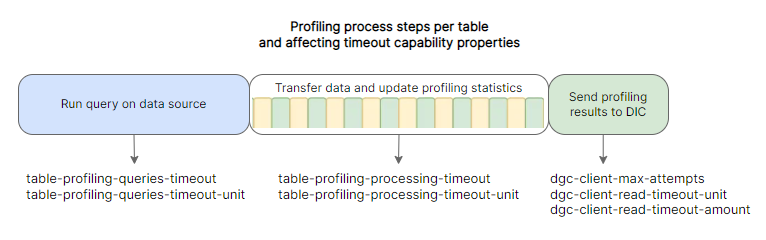
More information
Databricks Unity Catalog integration
Technical lineage for JDBC data sources and ETL tools (public beta)