Microsoft Fabric is an end-to-end data analytics platform with a suite of cloud services and tools for every data lifecycle stage—ingestion, preparation, storage, analysis, and visualization. When you integrate Fabric, you integrate the metadata from Fabric to Collibra Platform.
Collibra supports the integration of the following sources:
- SQL Server: the resulting assets represent databases, schemas, tables, and columns from SQL Server databases.
- Fabric data lakehouse: the resulting assets represent data lakehouses, files and tables from Fabric lakehouses.
- Fabric data warehouse: the resulting assets represent data warehouses, schemas, tables, views, and columns from Fabric warehouses.
- Mirrored Azure Databricks Unity Catalog: the resulting assets represent databases, schemas, tables, and columns from mirrored Azure Databricks Unity Catalog items in Fabric.
Column-level metadata for lakehouses, warehouses, and mirrored Azure Databricks Unity Catalog items is integrated directly by the Fabric synchronization capability. Column-level metadata for SQL Server databases additionally requires a JDBC connection.
Important Only one Microsoft Fabric synchronization capability per Microsoft Azure tenant is supported. Running multiple capabilities against the same tenant causes external ID collisions. Since the integration builds external IDs from Fabric data, each Fabric asset can only be represented once in Collibra.
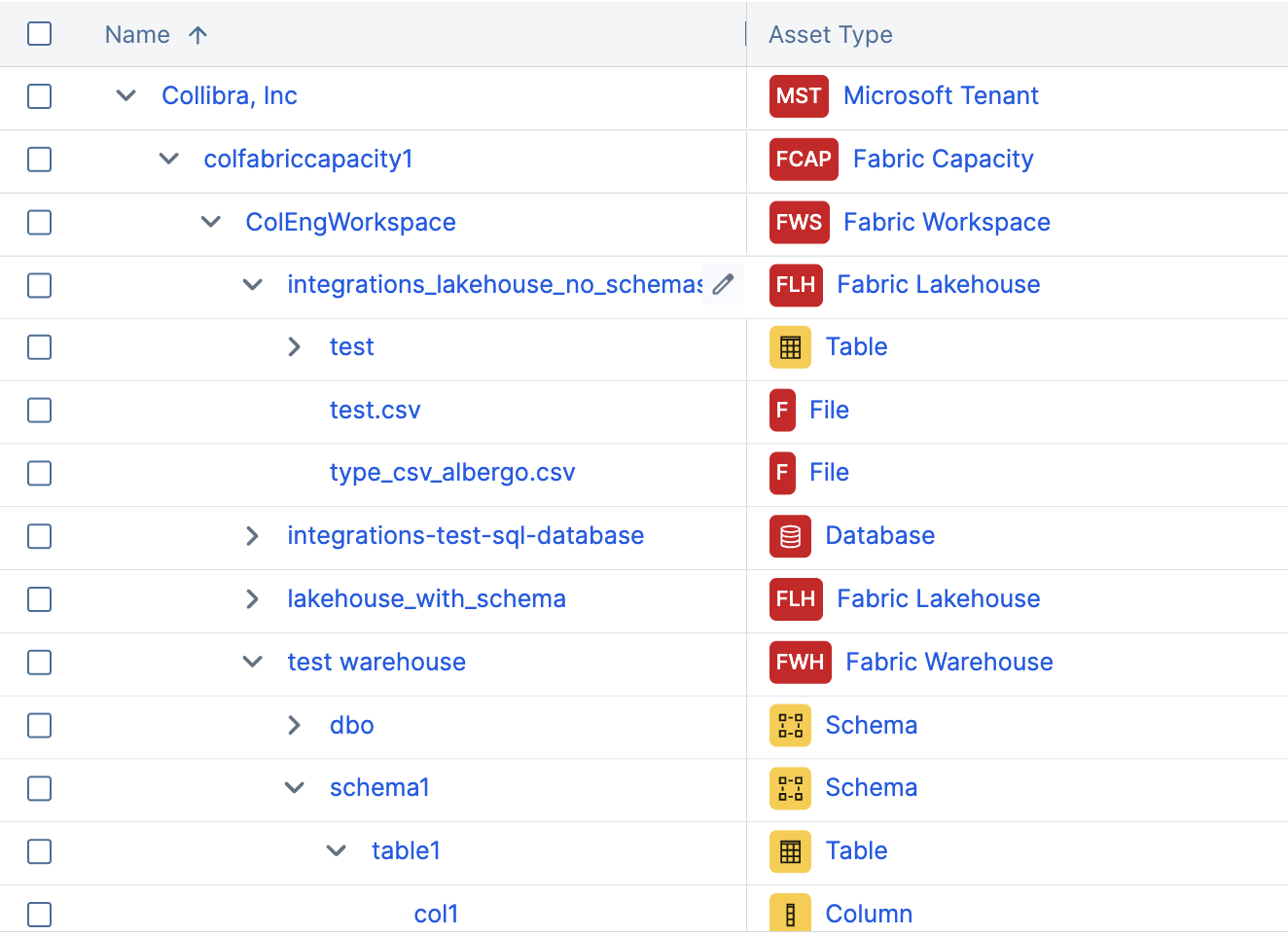
The following image shows the asset types in Collibra after the integration of Fabric.
Helpful resources
For more information about Fabric, go to the Microsoft Fabric documentation.