Warning We have announced the end of life of Jobserver and all related Jobserver integrations for September 30, 2024, with the exception of Public Sector customers using GovCloud or on-prem environments.
For information on registering a data source via Edge, go to Registering and synchronizing a data source via Edge.
If you refresh a schema where the data source contains a column that has been renamed, the ingestion process will detect a conflict. In the following example, the ingested schema contains a column that has been renamed.
In Collibra 2024.02, we've launched a new user interface (UI) in beta for Collibra Data Intelligence Platform! You can learn more about this latest UI in the UI overview.
Use the following options to see the documentation in the latest UI or in the previous, classic UI:
Steps
- Look up the new column with the search function or as follows:
-
On the main toolbar, click
 , and then click
 Catalog.
The Catalog Home opens. - In the submenu, click Data Sources.
- Optionally, add the Refresh Conflict column to the table.
- In the table, expand the relevant schema and table to find the columns with refresh conflicts.
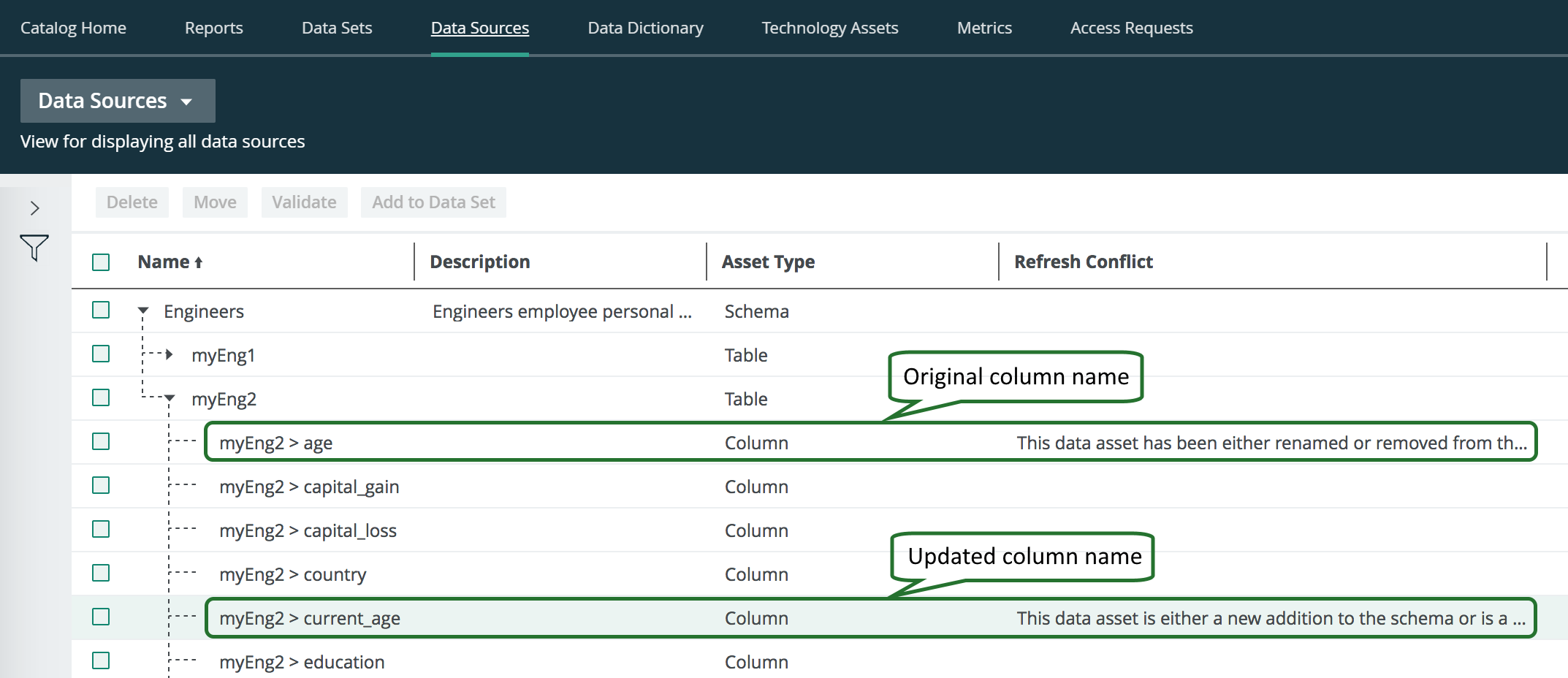
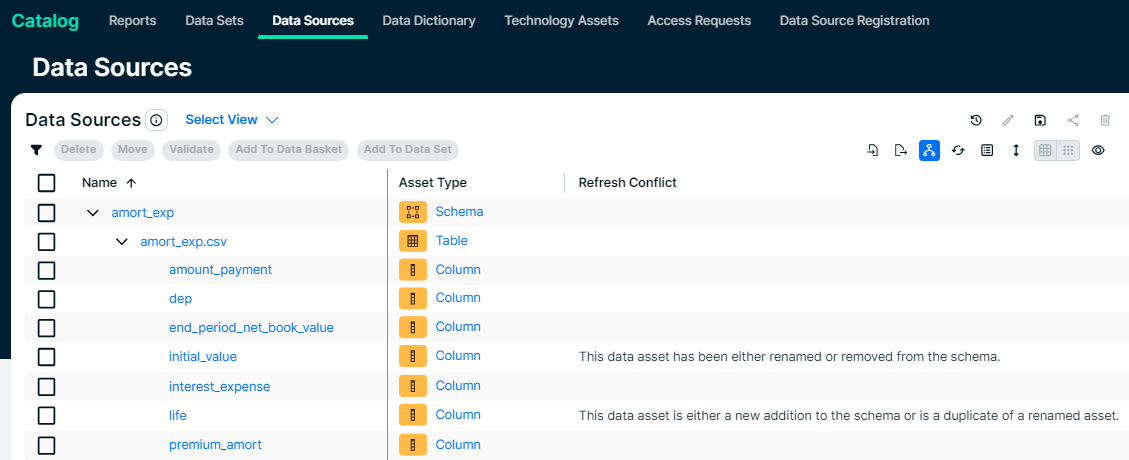
-
On the main toolbar, click
- Select the updated column name and click Delete above the table.
- Click YesDelete to confirm the deletion of the column asset(s).
- Double click the Refresh Conflict attribute of the renamed column.
- In the Update Attribute dialog box, click
 .
. - Click Save.
- Click the name of the original column.
The column asset page appears. - Click Actions > Edit.
- Change the name to the new ingested name.
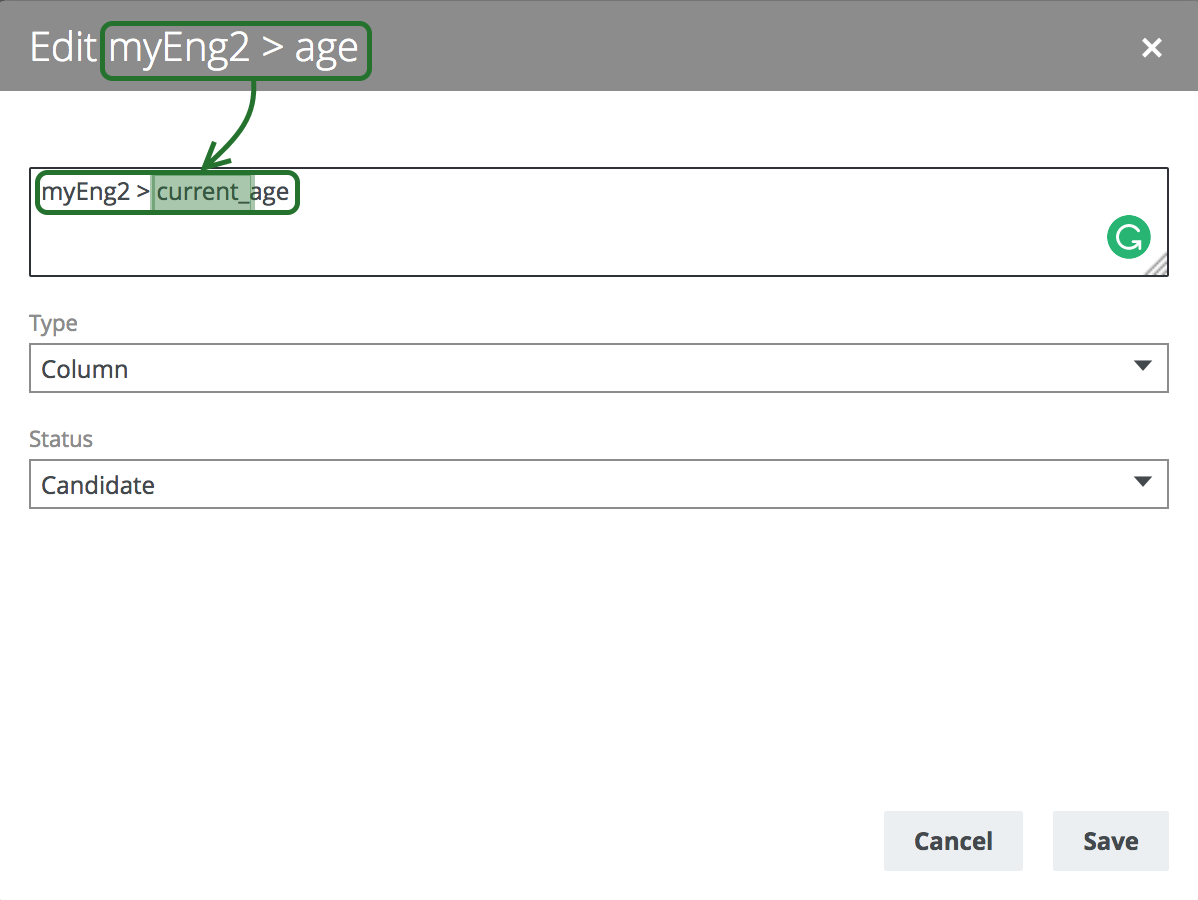
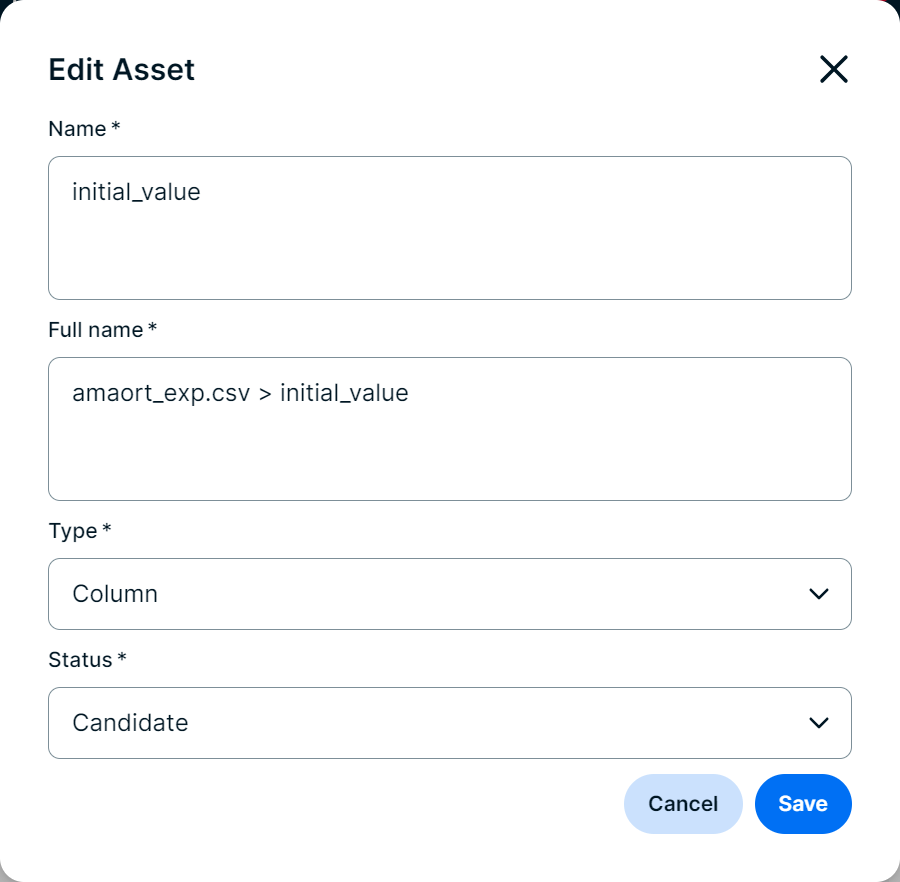
- Click Save.
- Refresh the page.
- Leave the column asset page open.
- In the Refresh Conflict section of the column asset page, hover over the message and click
 on the right-hand side.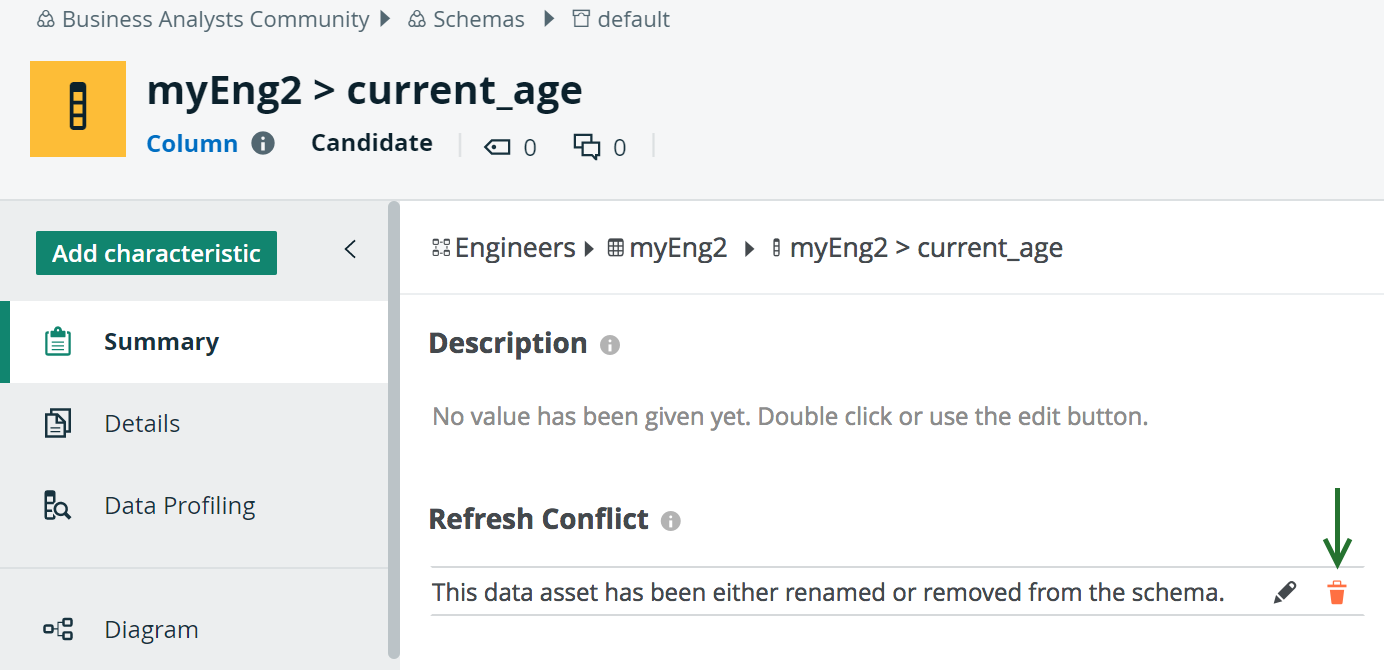
- Click Yes to confirm the deletion of the attribute.
- If necessary, repeat steps 4 to 12 for other renamed column assets.
What's next?
You can now safely refresh the schema with the new data source; however, keep in mind this may take some time.